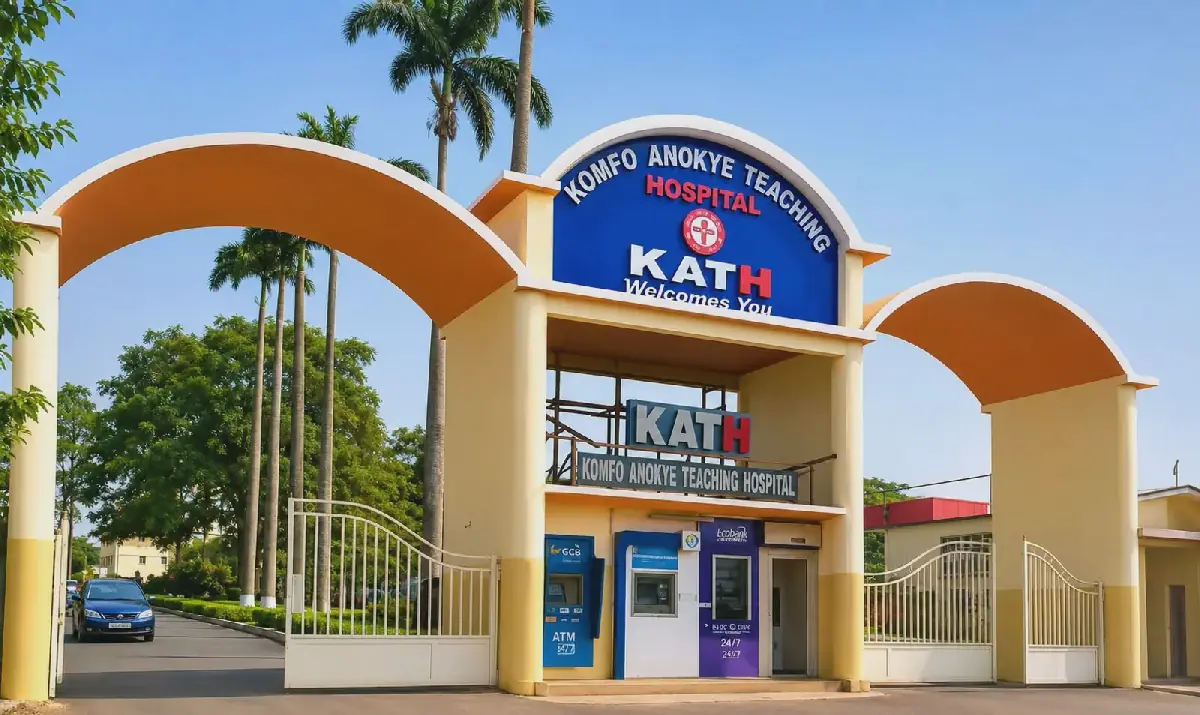
The Kumasi Metropolitan Assembly (KMA) has initiated an operation to decongest the area around the Komfo Anokye Teaching Hospital (KATH) in Ghana. Working with military personnel, the assembly commenced the exercise to clear unauthorized commercial vehicle loading points and street trading activities along the stretch between the Bekwai Roundabout and the KATH roundabout. This move aims to restore free movement of traffic and improve access to KATH, where congestion frequently obstructs ambulances and other vehicles transporting patients.
The operation follows a final directive issued by the Assembly for commercial drivers operating around the hospital to vacate the area before November 1, 2026. During the exercise, traders' goods have been confiscated, and vehicles found loading and dropping off passengers along the road have been impounded. While some commuters have welcomed the intervention, others have urged the Assembly to sustain it. Affected drivers and traders have expressed dissatisfaction with the exercise, highlighting the need for effective enforcement and lasting solutions.
KATH is one of Ghana's most important referral health facilities, serving patients from as many as 12 regions. The hospital's accessibility is crucial, and the congestion caused by commercial drivers and street traders has serious consequences for patients. An ambulance transporting a critically ill patient should not have to struggle through avoidable congestion before reaching a hospital. Every minute matters in an emergency, and the obstruction of emergency access can have severe outcomes.
The problem of congestion around KATH is not new. In January 2026, reports indicated that the Bekwai-Santase dual carriageway project had stalled for nearly a year, causing considerable traffic difficulties and delays to emergency medical services. Although construction subsequently resumed, the experience underscores how vulnerable access to KATH is when traffic management and road infrastructure are inadequate.
The KMA has moved beyond warnings to actual enforcement, which is commendable. The presence of no-parking and no-stopping signs means little if motorists can disregard them with impunity. Ghana's Road Traffic Regulations, 2026 (L.I. 2519), provide for sanctions against unauthorized stopping, parking, boarding, or alighting at prohibited locations. The law must be applied consistently, regardless of the identity or status of offenders.
However, clearing the area is only the beginning. Kumasi has a history of decongestion exercises that produce temporary results before traders and drivers reclaim the cleared spaces. In May 2025, the Kumasi Mayor acknowledged that about 80 percent of previously cleared zones had been reoccupied. The KMA must maintain regular monitoring, enforce the restrictions without favoritism, and work closely with transport unions to ensure that drivers use authorized terminals.
The success of this exercise must be measured by whether the road remains accessible, pedestrians can move safely, and ambulances can reach KATH without unnecessary delays. The Assembly must not allow this important intervention to become another temporary show of force. Kumasi needs a lasting solution, and KATH deserves nothing less. The involvement of military personnel should support, rather than replace, professional civilian enforcement.
Key points
- The Kumasi Metropolitan Assembly has launched an operation to decongest the area around Komfo Anokye Teaching Hospital.
- The exercise aims to restore free movement of traffic and improve access to KATH.
- The Assembly must maintain regular monitoring and enforce restrictions without favoritism to ensure a lasting solution.