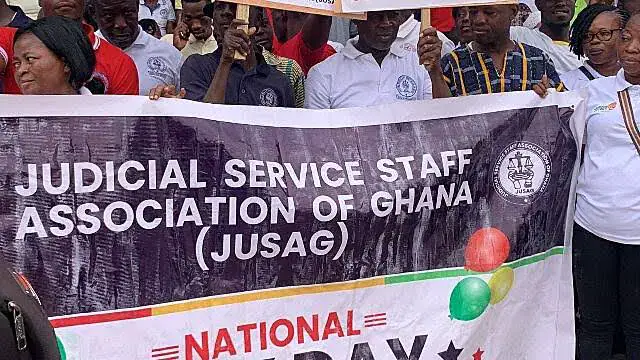
The Judicial Service Staff Association of Ghana (JUSAG) has initiated an indefinite nationwide strike, effective November 2, 2026. This decision comes after the government allegedly failed to approve and pay reviewed salaries and allowances for its members. According to Abdulai Yakubu, General Secretary of JUSAG, the strike is a result of growing frustration among members due to the government's inaction.
At a press conference held at the Supreme Court on Friday, October 31, Yakubu announced that all Judicial Service staff were directed not to report for work until the President approved the reviewed salaries and paid them in November, together with arrears covering January to October 2026. He emphasized that security staff would remain at their posts to safeguard the Service's properties during the strike.
Yakubu provided specific instructions for staff during the strike, including handing over official vehicles to the Transport Department and not operating them for the duration of the strike. Additionally, registrars were directed not to open or be compelled to open any registry or court for official business. He also urged staff to report any incidents of intimidation or coercion to JUSAG.
The decision to strike was not taken lightly, according to Yakubu. He recalled that JUSAG had notified the National Labour Commission on October 23 of its intention to embark on an indefinite strike due to the government's failure to approve the Judicial Council's recommendations on salary reviews. The notification outlined efforts made since December 2025 to secure a salary review for 2026.
Despite the notification, Yakubu expressed disappointment with the Ministry responsible for employment, which failed to act until October 26. The National Labour Commission had scheduled a meeting for November 6, four days after the strike began. The Ministry of Jobs, Labour and Employment also scheduled a meeting for November 3, after the commencement of the strike.
Yakubu criticized a proposal by the Ministry of Finance to pay outstanding arrears in three instalments without specifying a payment timeline. He described this proposal as being made without consultation with JUSAG, the principal party representing the affected beneficiaries. The government's handling of the matter has left the Association disappointed.
The strike has significant implications for the Judicial Service and the country as a whole. Key points include:
Key points
- The strike is over the government's failure to approve and pay reviewed salaries and allowances.
- JUSAG members are demanding payment of arrears from January to October 2026.
- The strike may have a significant impact on the administration of justice in Ghana.