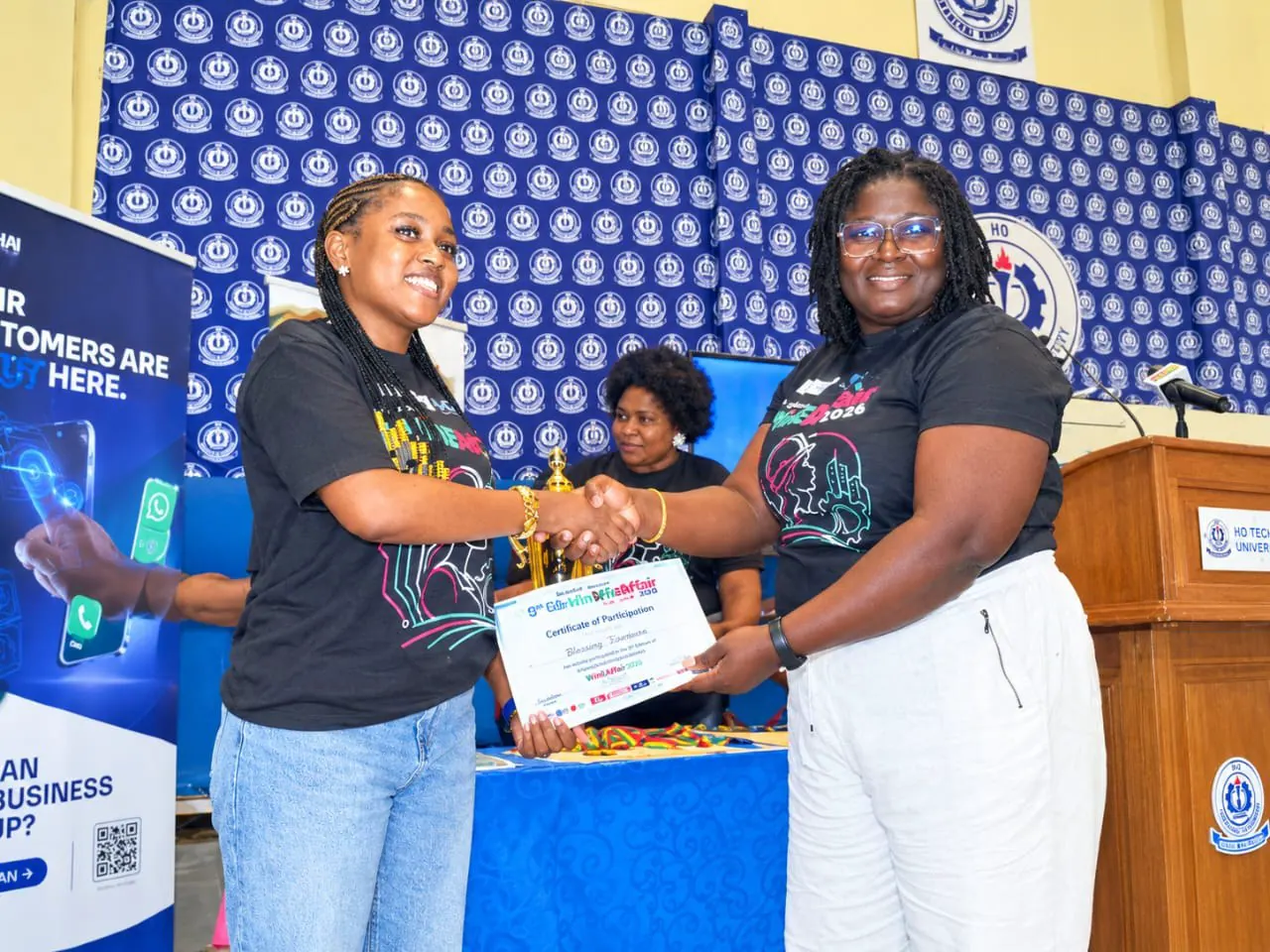
A team of six female engineering students from Ho Technical University (HTU) in Ghana has developed an artificial intelligence tool called NephroScan GH to predict the risk of Chronic Kidney Disease (CKD) using routine full blood count (FBC) data. The team, led by Sesinam Kumako, placed seventh among 19 participating universities at a Women in Engineering competition held in Ho. Their innovation aims to flag a person's risk of CKD before the disease advances to its late stages.
NephroScan GH was developed by gathering data directly from hospitals and using it to train mathematical models capable of identifying patterns and relationships among the various parameters measured in a full blood count. Unlike conventional CKD diagnosis, which typically requires kidney function tests, urine analysis, and imaging, NephroScan GH relies solely on FBC data. This approach could make early CKD screening cheaper and more accessible, as FBC tests are widely available and routinely ordered in Ghanaian hospitals and clinics.
The team faced challenges in building the prototype, particularly in sourcing enough data, as records of CKD patients were not always readily accessible. Team members spent long hours collecting information from both CKD and non-CKD patients to build reliable patterns for the models. Despite facing funding constraints, the team received support from the university, which enabled them to complete the project.
The HTU team finished seventh out of 19 universities that took part in the competition, known as WinEAffair 2026. Bolgatanga Technical University won the overall competition with a digital flood alert system, while the University of Development Studies placed second with a project on permeable pavement blocks. The University of Mines and Technology's TAPA campus placed third.
The team credited Ho Technical University Vice-Chancellor Professor Ben Q. Honyenuga for his support and encouragement throughout the project. The development of NephroScan GH highlights the potential for AI-powered solutions to address healthcare challenges in Ghana and other countries with limited specialist testing capacity.
Chronic Kidney Disease is a progressive condition in which the kidneys gradually lose their ability to filter waste from the blood, often with no symptoms in its early stages. Early detection tools like NephroScan GH could be valuable for health systems, enabling timely interventions and potentially reducing the burden on healthcare resources.
While the team is satisfied with their placement, they intend to improve in future editions of the competition. No details have been given on whether NephroScan GH will be tested in a clinical setting or piloted at any hospital, and no timeline has been provided for further development beyond the team's stated intention to improve their performance at next year's competition.
Key points
- The AI tool, NephroScan GH, uses routine full blood count data to predict kidney disease risk.
- The HTU team placed seventh among 19 participating universities at the Women in Engineering competition.
- The tool's development highlights the potential for AI-powered solutions to address healthcare challenges in Ghana.