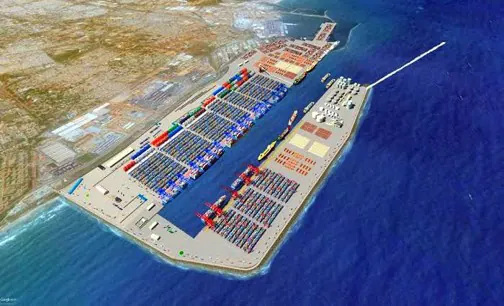
Ghana has become an unlikely hub for international narcotics trafficking, with the country's ports and airports being used as a corridor for drugs destined for European markets and beyond. According to Pan African Visions, the trend is clear, with seizures linked to Ghana now carrying a combined estimated value exceeding $1 billion. This has raised concerns about the country's security apparatus and its ability to control its borders, ports, and airspace.
The process by which drugs are trafficked through Ghana is straightforward, with cocaine usually coming in by sea or air and then being moved through the country's ports and airports. In March 2025, the National Intelligence Bureau stopped about 3.3 tonnes of cocaine that was reportedly being moved from the Western Region to Accra. However, it is unclear how many shipments have slipped through undetected. The country's geographic position, porous borders, and limited maritime surveillance capacity have made it an attractive route for transnational trafficking networks.
A recent case has highlighted the scale of the problem, with drugs worth €225 million, or about $261 million, concealed in a container carrying plastic waste from Ghana. Part of the shipment was reportedly bound for Antwerp, Belgium. The arrests that followed revealed that Ghanaian security authorities had arrested three persons connected to the most wanted drug lord in Europe, Jos Leijdekkers, who are also linked to a recent shipment of cocaine seized in France.
The involvement of foreign criminals and international syndicates operating on Ghanaian soil has raised concerns about corruption and the penetration of national and local structures by the drug trade. Smaller informal criminal networks in Ghana engage in a range of activities, including drug trafficking, arms trafficking, human trafficking, and cybercrime. These networks often utilize their local knowledge of internal waterways and operate with assistance from people on the inside.
The Minority in Parliament has called for a full-scale, independent parliamentary inquiry into Ghana's growing emergence as a transit hub for narcotics. The Minority said the country had featured repeatedly in major narcotics trafficking cases both locally and internationally over the past 18 months. This call has been backed by critics who have accused Ghanaian security agencies of being passive or lethargic in their response to the problem.
The government's response has been criticized for being reactive rather than proactive, with French authorities often intercepting shipments before action is taken locally. The Narcotics Control Commission (NACOC) has maintained that its operations are intelligence-led, but intelligence operations that consistently allow billion-dollar shipments to leave the country's shores only to be seized by foreign nations are not effective.
The institutional rot is evident, with evidence of systematic compromise and corruption within key nodes of the system. The NACOC arrested four persons at Kotoka International Airport for aiding and abetting drug trafficking, including two British nationals and two Ghanaians. This has raised concerns about the extent to which the cartels have corrupted the system and the need for urgent action to address the problem.
Key points
- Ghana's ports and airports have become a preferred route for international narcotics trafficking, with billions of dollars' worth of drugs seized in recent years.
- The country's geographic position, porous borders, and limited maritime surveillance capacity have made it an attractive route for transnational trafficking networks.
- Corruption and the penetration of national and local structures by the drug trade are significant concerns, with evidence of systematic compromise within key nodes of the system.