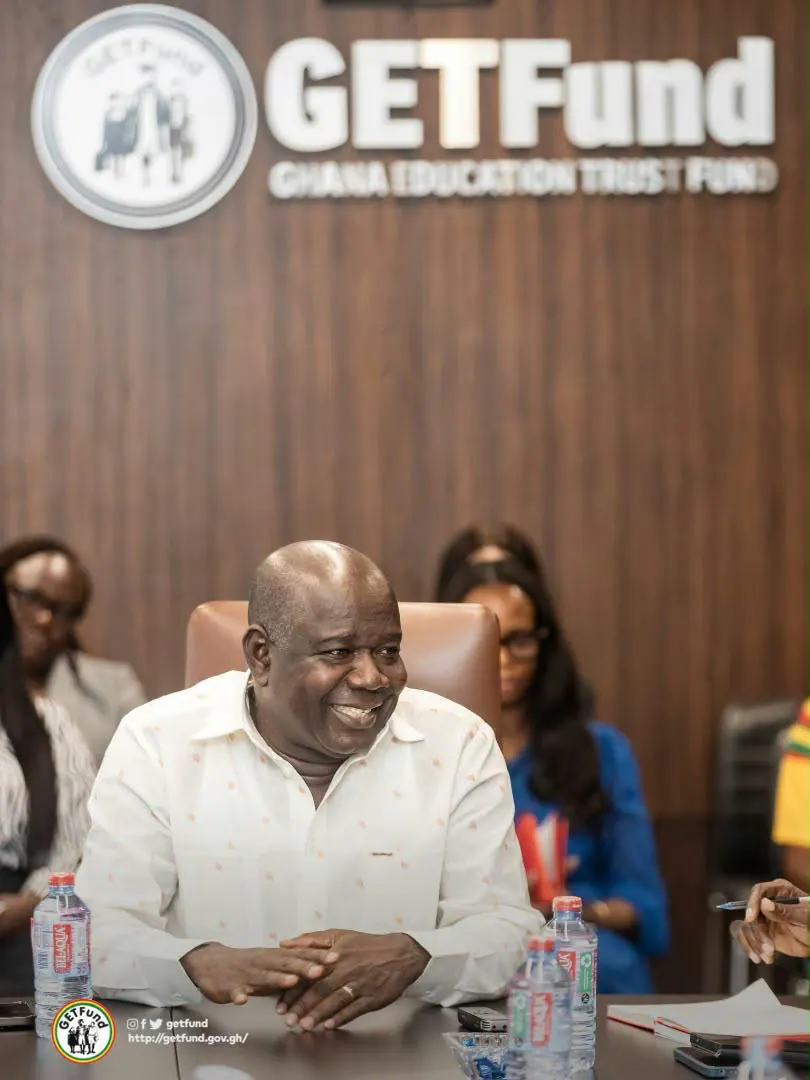
When Paul Adjei took over as head of Ghana's Education Trust Fund (GETFund) in January 2025, he faced a daunting task: a backlog of 3,564 unfinished projects and widespread shortages of essential infrastructure in schools and tertiary institutions. To address these challenges, Adjei launched the "Resetting Agenda," prioritizing project completion, urgent needs, and expanded access to education. This agenda has led to significant progress, with 2,031 new targeted emergency projects initiated across all 16 regions of Ghana.
Between January 2025 and September 2026, GETFund disbursed GH¢11.573 billion towards education projects and the Free Senior High School (SHS) program. Of this amount, GH¢6.607 billion was allocated to projects, with GH¢3.523 billion going to secondary education, GH¢2.223 billion to tertiary education, and GH¢860.85 million to basic education. An additional GH¢4.966 billion was spent on the Free SHS program. The pace of disbursements has accelerated, with Free SHS payments reaching GH¢3.155 billion by September 2026, a significant increase from the entire 2025 amount.
The Resetting Agenda extends beyond infrastructure development to include expanded scholarship programs. For the 2025/26 academic year, GETFund awarded 6,904 local scholarships, excluding those covered under the No Fees Stress Policy. The international scholarship program saw an even sharper increase, with awards rising from 260 in 2025/26 to 478 in 2026/27, representing an 83.8% increase. This growth was achieved through negotiations with partner universities, securing deeper fee discounts and allowing more students to benefit from the same financial resources.
The new projects initiated under the Resetting Agenda reflect a focus on addressing practical constraints in schools. These projects include 561 staff accommodation units, 492 classroom blocks, and 313 student accommodation units. The regional distribution of projects is based on identified infrastructure needs, with Volta having the highest number at 306 projects, followed by Northern with 191 and Ashanti with 188. This targeted approach aims to provide essential facilities and improve the learning environment.
In addition to new projects, Adjei's administration has prioritized completing the inherited backlog. By December 2025, GETFund undertook revaluation and cost-to-completion assessments for older projects. Management expects around 300 inherited projects to be completed by December 2026. This shift from simply carrying unfinished projects on the ledger to actively working towards completion marks a significant change in approach.
The administration has also been transparent about the progress of the Resetting Agenda. As of September 18, 2026, 13 of the 2,031 new projects were complete, while another 230 had reached at least 40% completion. The remaining 1,801 projects were below the 40% mark. Although this represents a substantial unfinished workload, the relatively short construction period for most projects means that the focus is now on sustaining construction momentum and turning project starts into completed facilities.
To further support education infrastructure, GETFund has introduced the Education Financing and Partnership Initiative (EFPI), allowing companies, banks, and individuals to contribute to verified education priorities. So far, the initiative has documented GH¢27.69 million in contributions, with Saka Homes making the largest donation. This broadening of financing partnerships is a key aspect of the Resetting Agenda, aiming to leverage additional resources for education development.
Key points
- GETFund has disbursed GH¢11.573 billion towards education projects and the Free SHS program between January 2025 and September 2026.
- The international scholarship program saw an 83.8% increase in awards from 260 in 2025/26 to 478 in 2026/27.
- GETFund has initiated 2,031 targeted emergency projects across all 16 regions of Ghana, addressing practical constraints in schools.