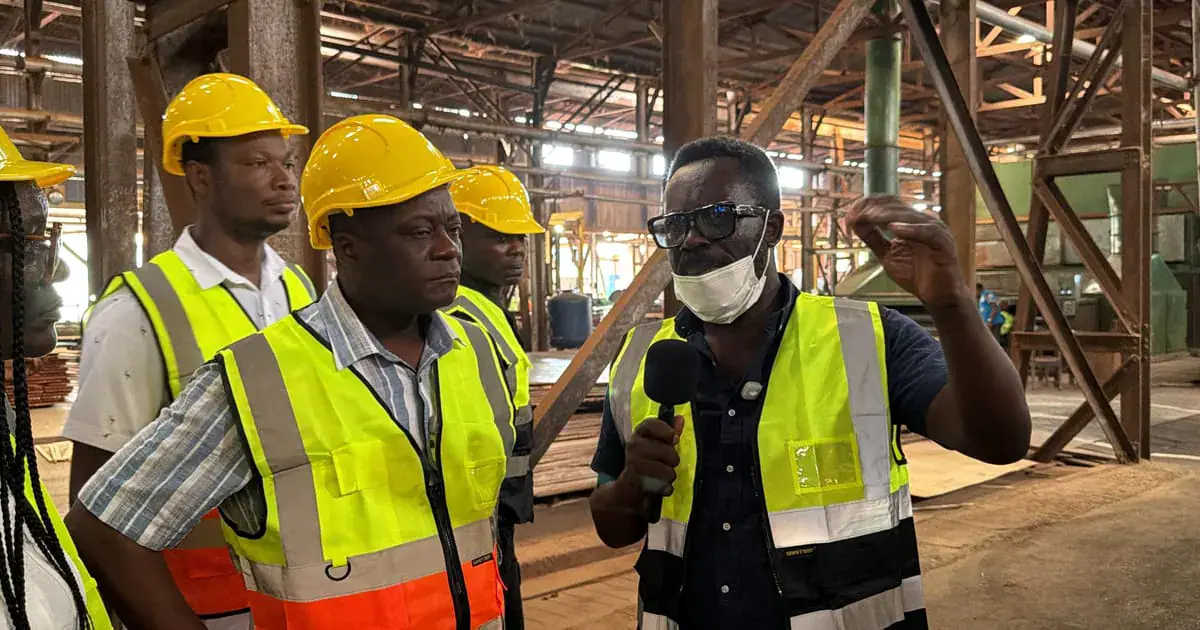
Companies in Ghana's Free Zones scheme are pushing for a policy review to enable them to compete fairly in the local market. They argue that current restrictions on domestic sales undermine their competitiveness, despite paying corporate taxes and import duties on raw materials and spare parts. This issue was highlighted during a visit by Western Regional Minister Joseph Nelson to Samartex Timber and Plywood Company Limited.
The Managing Director of Samartex, Dr. Richard Duah Nsenkyire, emphasized that companies that have completed their ten-year tax holiday should be allowed to serve local industries without restrictions. He noted that consumers often struggle to access locally manufactured products at affordable prices, forcing some to turn to the black market. Dr. Nsenkyire cited the example of institutions and private schools facing bureaucratic hurdles when trying to purchase locally manufactured wood products.
Dr. Nsenkyire explained that Samartex has the capacity to supply the domestic market but faces challenges due to regulatory procedures and associated costs. These factors make its products less competitive, and he argued that the situation weakens the incentive for companies to remain under the scheme after their tax holidays expire. The companies believe a policy review would improve their competitiveness and protect jobs.
Western Regional Minister Joseph Nelson acknowledged the concerns, describing the Free Zones policy as a useful initiative that was originally designed to attract investment and promote export-oriented production. However, he noted that the framework needs to be reconsidered for companies that have completed their tax holidays and are now paying taxes without enjoying the initial benefits.
Minister Nelson emphasized that the original idea of Free Zones is still good but requires adjustments for companies that have completed their tax holidays. He expressed concerns that the current framework does not provide any advantages for these companies. The call for a policy review adds to ongoing discussions about balancing the export-oriented objectives of the Free Zones framework with the need to strengthen local industries.
A policy review would enable established local manufacturers like Samartex to serve domestic demand while maintaining their export operations. This change would support Ghana's industrialisation agenda and make locally manufactured products more accessible to Ghanaian consumers. The companies believe this would have a positive impact on the local economy and job market.
The proposed changes would address the challenges faced by companies operating in the Free Zones scheme, allowing them to compete fairly in the local market. This, in turn, would promote economic growth and development in Ghana. The Western Regional Minister's acknowledgement of the concerns and the call for a policy review highlight the need for a balanced approach to the Free Zones framework.
Key points
- Companies operating in Ghana's Free Zones scheme are demanding a policy review to allow them to sell more products on the local market at competitive prices.
- The current restrictions on domestic sales undermine the competitiveness of these companies, despite their transition to paying corporate taxes and import duties.
- A policy review would enable established local manufacturers to serve domestic demand while maintaining their export operations, supporting Ghana's industrialisation agenda.