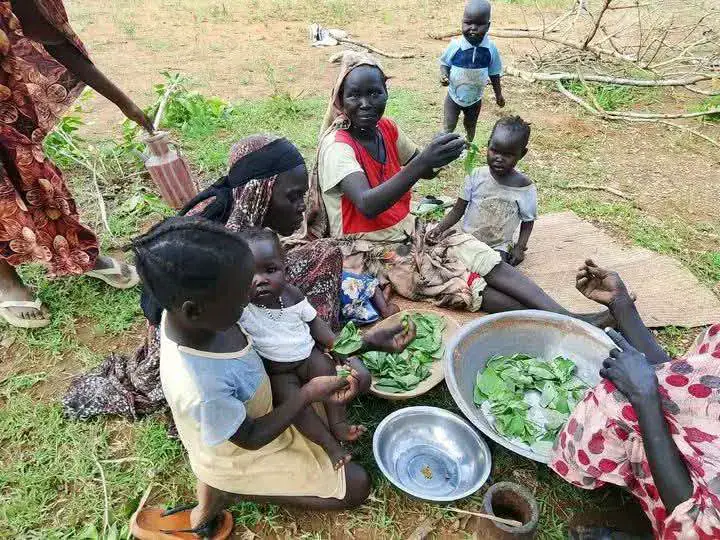
The International Organization for Migration (IOM) has reported that over 119,000 people, comprising nearly 24,000 families, have been displaced from various locations in Sudan's Blue Nile state over the past 10 months. This represents an increase of approximately 20,000 individuals in less than two months. The displacements have occurred in the localities of Qaysan, Al Karmak, Bau, and Wod El Mahi.
According to the IOM report, the displaced individuals have relocated to seven localities within Blue Nile state. The total number of displaced persons, which stands at 119,782, marks a 21% increase compared to the previous update on August 23, 2026, when the number was 99,277. The localities from which people were displaced include Qaysan, with 40,090 displaced individuals, Al Karmak with 31,165, Bau with 27,192, and Wod El Mahi with 21,335.
The displaced populations have been redistributed across seven localities in Blue Nile state. These localities include Damazin, which hosts 45,815 displaced individuals, Al Rossaeris with 36,950, Bau with 12,687, Wod El Mahi with 11,685, Qaysan with 10,275, Al Karmak with 1,385, and Al Tadamun with 985. The majority of displaced individuals in Blue Nile state reside with host families, accounting for 55% of the total.
Interestingly, recently displaced families have largely sought refuge in informal gathering sites (56%) or in schools and other public buildings (20%). Demographically, females comprise approximately 56% of the displaced population, while males make up 44%. Children under the age of 18 constitute nearly half of the displaced population, at 45%.
The IOM's report highlights the ongoing displacement challenges in the region. Blue Nile state continues to experience significant population movements due to various factors. The state's displacement dynamics have been influenced by developments in the localities of Qaysan, Al Karmak, Bau, and Wod El Mahi.
The humanitarian situation in Blue Nile state remains a concern, with many displaced individuals relying on host families or temporary shelter in informal sites. Efforts to address the needs of the displaced population are ongoing, with a focus on providing essential services and support.
The IOM's data provides critical insights into the displacement trends in Blue Nile state. The organization's reports aim to inform humanitarian responses and support the development of targeted interventions to address the needs of affected populations.
Key points
- Over 119,000 people displaced in Blue Nile state in 10 months.
- Displaced individuals primarily originate from Qaysan, Al Karmak, Bau, and Wod El Mahi localities.
- Females and children under 18 comprise a significant proportion of the displaced population.