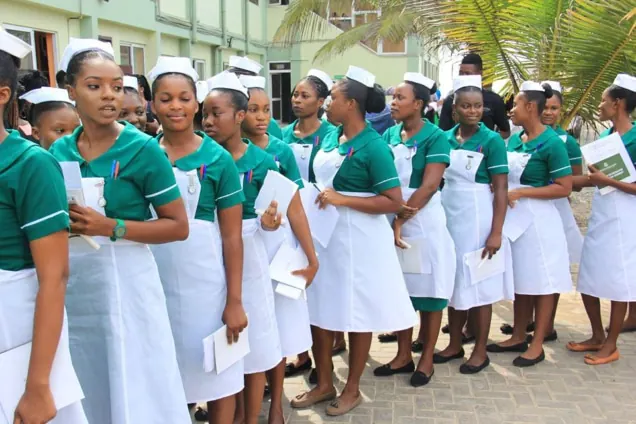
The Ghana Registered Nurses and Midwives Association (GRNMA) has expressed concerns that the proposed Free Primary Healthcare program could put additional pressure on nurses if the government does not increase recruitment and improve working conditions. The Association's Volta Regional Branch made the call during the launch of its week-long celebration in Ho on Wednesday, September 30, 2026. The theme of the celebration was “Our Nurses, Our Future: Empowered Nurses Save Lives.”
According to the GRNMA, making primary healthcare services free would likely attract more patients to health facilities, particularly at the lower levels of the health system, where staffing and resources are already inadequate. Dr. Oliver Commey, Director of Infectious Diseases at the Korle Bu Teaching Hospital, emphasized that nurses would play a key role in the implementation of the program and should therefore be adequately supported.
Dr. Commey noted that the removal of financial barriers to accessing healthcare would inevitably increase patient numbers at health facilities. He stated that nurses are already overwhelmed and would become doubly overwhelmed when the program is implemented. To mitigate this, Dr. Commey called for increased recruitment and the provision of essential resources to ensure nurses can cope with the expected increase in workload.
The success of the Free Primary Healthcare program depends largely on the availability of healthcare workers to provide the services. Dr. Commey emphasized that healthcare workers are essential in providing care, and their availability would determine the program's success. The GRNMA also highlighted that challenges affecting nurses go beyond salaries and include poor working conditions, inadequate equipment, and unsuitable work environments.
Mr. Courage Kwame-Kumah, Volta Regional Chairman of the GRNMA, stated that nurses at peripheral facilities are already working under difficult conditions and could face further pressure once Free Primary Healthcare is introduced. He cited inadequate accommodation, deteriorating health facilities, and inappropriate equipment as some of the challenges affecting nurses and midwives.
Mr. Kwame-Kumah linked the continued migration of nurses to the difficult conditions within the health sector, saying many practitioners are increasingly looking abroad for better working environments. He urged the government and other stakeholders to take practical steps to improve conditions of service, provide necessary equipment, and ensure decent accommodation for health workers.
The week-long GRNMA celebration aimed to recognize the contribution of nurses and midwives while highlighting issues affecting their welfare and the delivery of quality healthcare. The Association hopes that addressing these challenges will help retain nurses and midwives in the country and strengthen healthcare delivery. The GRNMA made the call on October 5, 2026, as part of its celebration.
Key points
- The Ghana Registered Nurses and Midwives Association has warned that the Free Primary Healthcare program may put additional pressure on nurses if the government does not increase recruitment and improve working conditions.
- The Association cited poor working conditions, inadequate equipment, and unsuitable work environments as some of the challenges affecting nurses and midwives.
- The GRNMA urged the government to take practical steps to improve conditions of service, provide necessary equipment, and ensure decent accommodation for health workers.