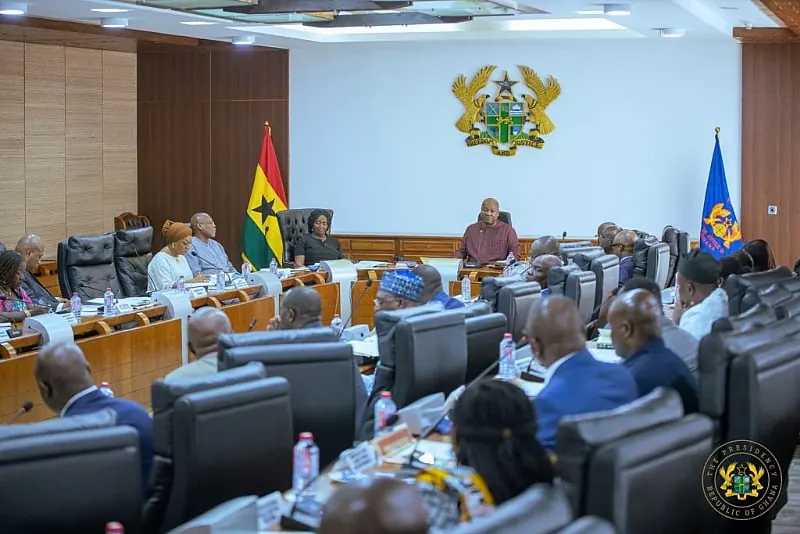
The recent debate over introducing Chinese Language (Mandarin) into Ghana's education system has sparked intense discussion. President John Dramani Mahama has clarified that Cabinet has not approved any policy introducing Chinese or Arabic as compulsory subjects in public schools. He stressed that he chairs Cabinet and that no such curriculum had been presented for Cabinet approval. The President also raised concerns about finding sufficient teachers to teach Chinese, given the current struggle to provide enough teachers for French.
The Minister responsible for education had previously declared the government's plan to introduce foreign languages, including Mandarin, in the Senior High School curriculum. The National Council for Curriculum and Assessment (NaCCA) had officially launched the Mandarin curriculum. This development has sparked a conversation about whether Ghana should institutionalize Chinese language as part of its foreign-language education strategy. The evidence suggests that this question deserves a more deliberate conversation.
Mandarin is increasingly becoming an economic skill, particularly with China being Ghana's largest trading partner. The two countries continue to deepen economic cooperation in areas including education, manufacturing, investment, technology, and job creation. At the August 2026 Ghana-China Joint Commission on Economic, Trade and Technical Cooperation, Ghana's Finance Minister, Dr. Cassiel Ato Forson, called for deeper Chinese investment in local processing, manufacturing, technology transfer, and employment.
Knowing Mandarin can be a valuable skill for Ghanaian students to participate in the increasingly interconnected Ghana-China economic relationship. Language has a utility that functions as an additional labor-market asset, particularly where workers interact with foreign companies, investors, institutions, and clients. A recent study on the "Perceptions of Chinese Culture in Ghana" found strong support for including foreign-language education, particularly Mandarin, and identified employment, student mobility, and exchange opportunities as anticipated benefits for Ghanaian students.
Preliminary evidence suggests that students with Mandarin proficiency in Ghana have better employment prospects in their first year after graduation than the national employment ratio. A study found that students graduating from the University of Ghana Confucius Institute had better employment status within the first year of graduation. This suggests that Mandarin can be a valuable skill for Ghanaian students.
Introducing Mandarin opportunities earlier in the education pipeline could allow interested students to develop language competence progressively. Traditional public universities in Ghana, including the University of Cape Coast, University of Ghana, and Kwame Nkrumah University of Science and Technology, have developed Chinese-language and international academic partnerships. These partnerships have supported Chinese-language students through overseas study opportunities.
One concern raised in the public debate is whether foreign-language education could come at the expense of Ghanaian languages. However, Mandarin should not be conceptualized as a replacement for Ghanaian languages, English, or French. A well-designed education system should create pathways for both. The President has identified a genuine implementation problem: teacher supply, which is a crucial aspect to consider when introducing Mandarin into the education system.
Key points
- President John Dramani Mahama clarifies that Cabinet has not approved a policy introducing Chinese or Arabic as compulsory subjects in public schools.
- Mandarin can be a valuable skill for Ghanaian students to participate in the increasingly interconnected Ghana-China economic relationship.
- The introduction of Mandarin into Ghana's education system requires careful consideration of teacher supply and implementation challenges.