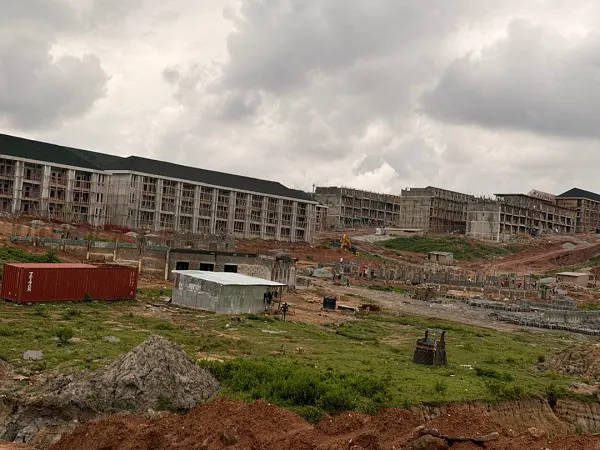
The Presidency has cited the ongoing Bola Ahmed Tinubu Barracks Phase II in Abuja as a tangible benefit of resources freed up by the removal of fuel subsidy. The project will provide accommodation for more than 1,000 soldiers and their families. Special Adviser to the President on Media and Public Communications, Dr. Sunday Dare, said the development showed how funds previously committed to fuel subsidy were being redirected to infrastructure and other projects.
The Bola Ahmed Tinubu Barracks Phase II is expected to serve more than 6,000 people, comprising soldiers and their family members, while providing other facilities required for a functional residential community. The project, approved and funded by the Federal Government under President Bola Ahmed Tinubu, comprises a block of 30 family quarters, six blocks of senior officers’ accommodation, an Army club, MAMI market, bridges, drainage systems and other supporting infrastructure.
Dr. Dare said the project represented part of the administration’s decision to redirect public resources following the removal of fuel subsidy. He described it as evidence that some of the government’s economic reforms were beginning to produce visible physical assets. He urged Nigerians to continue to support the administration’s Renewed Hope Agenda, arguing that the benefits of its policies were becoming increasingly evident across different sectors of the economy.
Beyond providing accommodation, the Presidency said the project formed part of a broader effort to improve the welfare of military personnel and strengthen the country’s security architecture. The project ensures that soldiers and their families have access to decent living conditions. At the Nigerian Army level, Chief of Army Staff, Lt.-Gen. Waidi Shaibu, is overseeing the implementation of a wider programme of military infrastructure and welfare projects.
The Abuja development is among barracks construction and expansion projects being undertaken by the Army, with similar works reported in Ekiti, Ebonyi and Osun states. The Army has previously identified improved housing as a major part of Shaibu’s “Soldier First” approach, linking personnel welfare with morale and operational effectiveness. Phase II of the Bola Ahmed Tinubu Barracks was already described by the Army in July as being at an advanced stage.
The project has also had a positive impact on the local economy, with thousands of Nigerians benefiting directly and indirectly from construction activities at the site. Engineers, artisans, labourers, technicians, suppliers and other service providers are participating in the project, generating incomes and economic activities even before the barracks is completed and occupied. One of the labourers at the site said securing employment on the project had changed his personal circumstances.
The Presidency said the emerging military infrastructure programme reflected a partnership in which the Federal Government provides policy direction and funding while the Army leadership, under Shaibu, is responsible for translating the investments into sustainable institutional and operational benefits. The administration linked the barracks project to its wider investments in military welfare, personnel, equipment, training and operational capacity as security forces confront terrorism, banditry, kidnapping and other threats across the country.
Key points
- The Bola Ahmed Tinubu Barracks Phase II in Abuja will provide accommodation for over 1,000 soldiers and their families.
- The project was funded by savings from the removal of fuel subsidy.
- The project is part of a broader effort to improve the welfare of military personnel and strengthen the country’s security architecture.