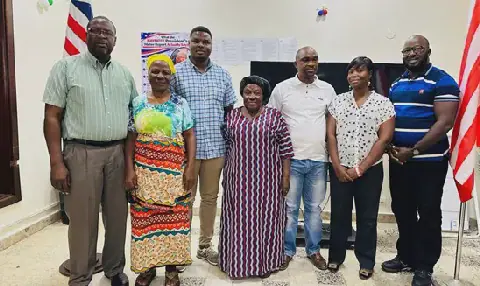
A recent field survey conducted in Damongo, Ghana, has revealed that every single respondent is aware of vote buying in the country's politics. The survey, which was part of the 'Democracy Not for Sale' project, found that 52.5% of respondents had personally witnessed a candidate offering money or gifts for votes, while 47.5% had heard credible reports. This unprecedented finding has prompted fresh warnings about the influence of money in Ghanaian politics.
The 'Democracy Not for Sale' initiative, organised by the Impact Makers Foundation in partnership with Joy News and the Multimedia Group, aims to examine how money shapes electoral behaviour across Ghana's 10 regions. The Damongo event was the fifth regional dialogue held under the project, with 55 structured interviews conducted, exceeding the region's calculated ideal sample size of 36. The project has a national goal of surveying 1,600 respondents across Ghana's regions, at a 95% confidence level with a margin of error of ±2.45%.
The survey also uncovered interesting age and occupational patterns. In Damongo, 80% of respondents aged 18–25 rated money's influence on election outcomes as high, the highest share of any age group. Students recorded the highest personal-witness rate of any occupational group surveyed, at 83.3%. This finding suggests that younger respondents are more aware of the influence of money in politics.
When asked about the hidden financiers of political campaigns, 68% of respondents pointed to government resources, funded ultimately by taxpayers, ahead of businessmen at 18% and criminal proceeds at 5%. Twenty percent said they did not know the source of the money but would accept it regardless. Panel members, including Superintendent Francis Ekoh and ASP Michael Adjei of the Ghana Police Service, noted that despite widespread acknowledgement of vote buying, no formal complaint had been filed in the district.
The dialogue also highlighted the challenges of distinguishing illegal inducement from customary gift-giving. Savannah Regional Minister Salisu Be-Awuribe cited Section 33 of PNDC Law 284, which criminalises inducing votes with money or gifts regardless of amount. However, an assembly member representing the Canteen electoral area linked the practice to poverty and youth unemployment levels in the region, both above the national average according to 2021 census data.
Despite the widespread awareness of vote buying, 82.6% of respondents said they would still vote for a candidate with fewer resources but better ideas over a wealthier rival. Younger respondents were most united behind this preference. Unlike other regions, Damongo respondents ranked mindset change first at 28%, followed by improving living standards at 25% and public education at 20%, with only 10% favouring strict jail time.
The findings of the survey and the dialogue suggest that in Damongo, many residents do not view gifts from politicians as vote buying, but as ordinary gestures of support or gratitude. The communique did not specify a date or location for the next regional dialogue under the project, and no timeline has been given for when the full national survey will be completed or released.
Key points
- Every respondent in Damongo was aware of vote buying in Ghanaian politics.
- The survey found that 52.5% of respondents had personally witnessed a candidate offering money or gifts for votes.
- Younger respondents in Damongo were more aware of the influence of money in politics than older respondents.