Ghana's political landscape has witnessed a significant shift in recent years, with the rise of social media platforms changing the way politicians and citizens interact. The traditional media ecosystem, comprising radio, TV stations, and newspapers, has given way to a decentralized digital media space, where anyone can express their opinions. However, this shift has also led to the proliferation of insults, character assassination, and tit-for-tat derogatory labeling, which has become a threat to social cohesion and national unity.
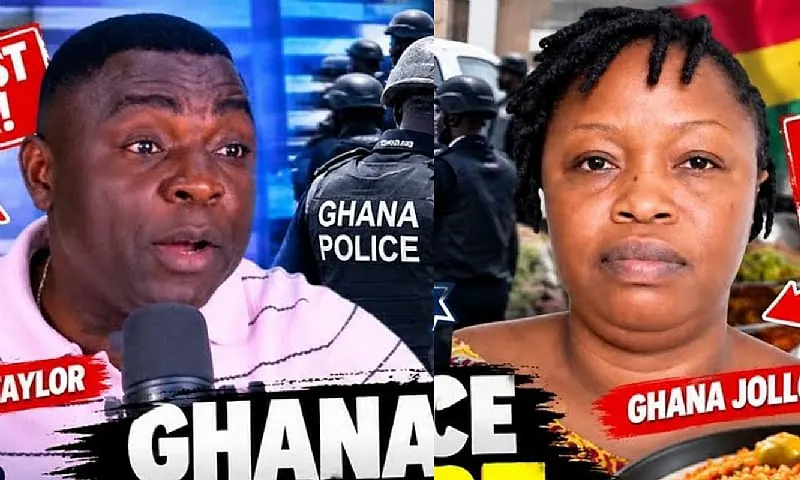
The phenomenon of insults in Ghana's digital media space has been fueled by the actions of outspoken broadcasters like Kevin Taylor, who has been using his social media platform, With All Due Respect TV, to launch scathing attacks on members of the New Patriotic Party (NPP), public officials, private persons, traditional leaders, and religious figures. While his supporters and sympathizers, mostly members of the National Democratic Congress (NDC), have championed his contents as necessary anti-corruption oversight or bold dissent against the NPP, his critics have condemned his methods as destructive to civil debate.
The reaction to Kevin Taylor's actions has been swift and fierce, with the emergence of a TikTok personality known as Ghana Jollof, who has been using her platform to fight fire with fire. Ghana Jollof has been launching raw and explosive monologues against the NDC membership, especially the leadership, and Kevin Taylor and his associates. Commentators note that Ghana Jollof represents a direct replication and acceleration of Kevin Taylor's tactics, with both individuals engaging in a vicious cycle of insults and counter-insults.
The situation has been likened to the competition between Ghana and Nigeria over which country makes the better Jollof meal, with the digital media space becoming a battleground for insults and counter-insults. Just as the Jollof meal can become uneatable if too much pepper is added, the excessive use of insults and character assassination is ruining the national Jollof pot, hence a threat to social fabric and national cohesion.
The impact of this phenomenon on Ghana's political discourse cannot be overstated. The shift from respectful debates to highly decibel confrontations with insults has become a norm, with social media platforms like TikTok, Facebook, and Twitter (X) being used to weaponize vitriol attacks. This has led to a situation where politicians and citizens are more interested in scoring points off each other than engaging in meaningful discussions about policy issues.
The fragility of the digital media monopoly has been exposed, with Ghana Jollof using viral short-form videos and algorithms to weaponize rhetorical rudeness against Kevin Taylor and his associates. This has created a vicious circle, where each side feels compelled to respond in kind, leading to an escalation of insults and counter-insults.
The way forward, according to Major Mohammed Bogobiri (rtd), is for the intelligentsia community, traditional and religious opinion leaders to speak out against this culture of insults and promote a more respectful and issue-based debate. This can be achieved by promoting a culture of constructive criticism, where politicians and citizens can engage in meaningful discussions about policy issues without resorting to insults and character assassination.
Key points
- The culture of insults in Ghana's digital media space is a threat to social cohesion and national unity.
- The phenomenon has been fueled by the actions of outspoken broadcasters like Kevin Taylor and the reaction of TikTok personality Ghana Jollof.
- The way forward is for the intelligentsia community, traditional and religious opinion leaders to promote a more respectful and issue-based debate.