Former Tamale Central Member of Parliament Inusah Fuseini has expressed concerns over the New Patriotic Party's (NPP) suit at the Supreme Court seeking an interpretation of constitutional provisions on presidential term limits. He argues that the 1992 Constitution of Ghana is clear in restricting any individual to two terms as President. According to Fuseini, Article 66(2) of the Constitution leaves little room for ambiguity, stating that a person cannot be elected to the office of President more than twice.
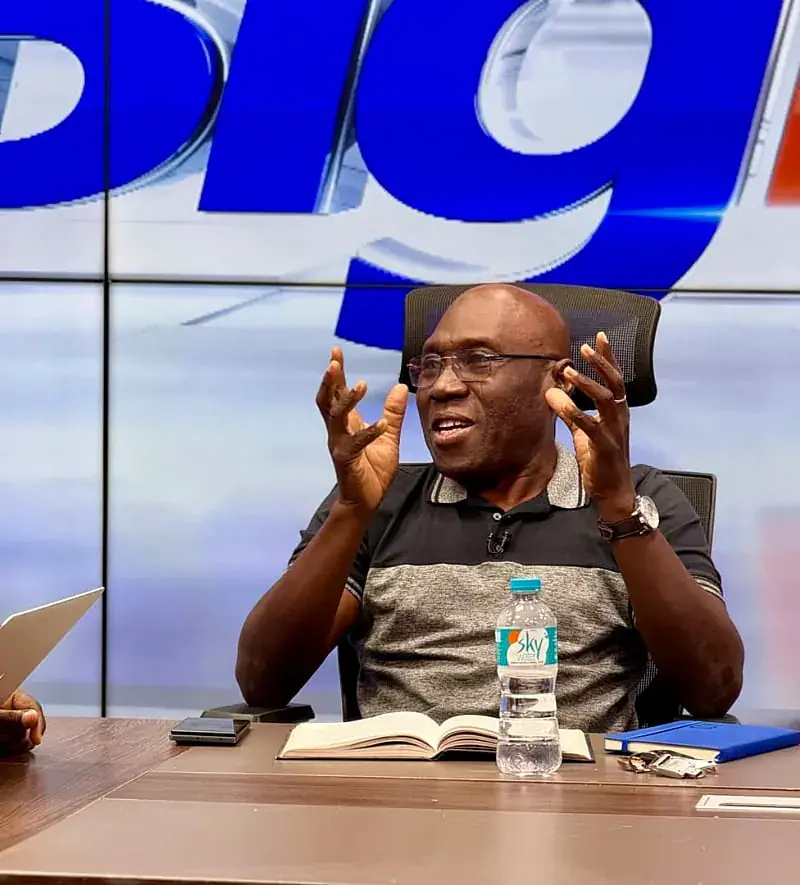
Fuseini made these comments on The Big Issue on Channel One TV on Saturday, October 31, 2026. He emphasized that the constitutional provision focuses on the number of times a person is elected President, not on whether there is a break between periods in office. Fuseini's remarks come in response to the NPP's suit against the Attorney-General, seeking an interpretation of Articles 58(2) and 66(1), (2), and (3)(a) of the 1992 Constitution.
The NPP is seeking a declaration from the Supreme Court that no individual can be elected President more than twice or occupy the office for more than eight years, regardless of whether the two terms are served consecutively or separated by a period out of office. However, Fuseini questioned the necessity of the suit, arguing that the Constitution is unequivocal on the matter. He noted that the framers of the Constitution deliberately imposed term limits on the presidency while allowing Members of Parliament to seek re-election without restriction.
Drawing on his own political experience, Fuseini noted that he had served more than four terms in Parliament because the Constitution does not impose term limits on legislators. He explained that Article 66(1) provides for a four-year presidential term, while Article 66(2) expressly states that a person “shall not be elected to hold office as President of Ghana for more than two terms.” Fuseini insisted that the provision does not need to distinguish between consecutive and non-consecutive terms because the restriction applies to the number of times an individual can be elected President.
Beyond his interpretation of the law, Fuseini questioned the basis of the NPP's decision to invoke the Supreme Court's jurisdiction. He argued that no person has attempted to contest for a third presidential term under the disputed provisions. Therefore, he stated that the Supreme Court has no speculative jurisdiction and cannot speculate on what anybody will do.
Fuseini further questioned why the court should be invited to rule on a constitutional issue that has not arisen in practice. He warned that such proceedings risk becoming an unnecessary drain on public resources. According to him, the emphasis should actually be put on election, not the person. This, he believes, is the intention of the Constitution.
The Supreme Court will have to consider the NPP's suit and determine whether the Constitution needs clarification on presidential term limits. Three key points have emerged: the NPP is seeking a clear interpretation of the Constitution on presidential term limits; Fuseini believes the Constitution is clear and does not need interpretation; and the outcome of the suit may have significant implications for Ghana's democracy. KEY_POINT: The NPP's suit seeks to clarify constitutional provisions on presidential term limits. KEY_POINT: Fuseini argues that the Constitution is clear and does not need interpretation. KEY_POINT: The outcome of the suit may have significant implications for Ghana's democracy.