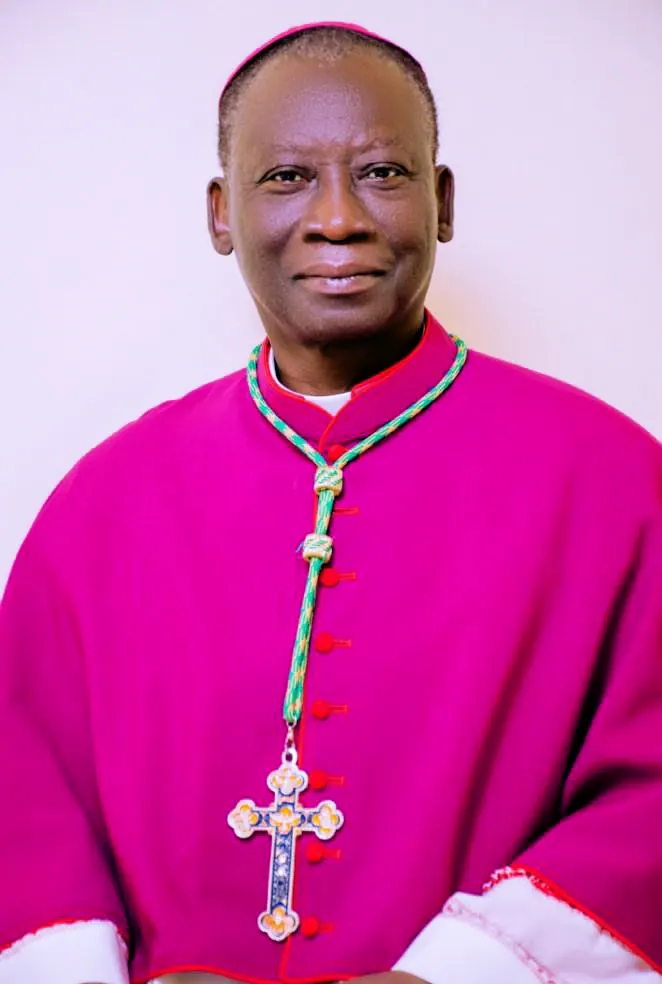
The Ghana Catholic Bishops' Conference has urged the government to consider declaring a state of emergency on drug use, warning that the growing availability of drugs is putting Ghana's youth at risk. According to Most Rev. Matthew Gyamfi, President of the Conference, the country's response to the drug problem must extend beyond international cocaine trafficking to the increasing use of drugs within local communities. The Conference has observed drug use among young people in communities across the country.
Most Rev. Gyamfi noted that substances, including marijuana and other drugs, are readily available in some communities, and called for stronger action to prevent their sale and use. He argued that Ghana must fight drug trafficking internationally while simultaneously tackling drug use domestically. The Conference has also linked the drug problem to broader social challenges, including unemployment, vulnerability, and a lack of opportunities for young people.
The Catholic Bishops' Conference has committed to intensifying drug-awareness education within Catholic institutions. Most Rev. Gyamfi said representatives of Catholic youth organisations from across West Africa had recently met in Accra, where drug abuse was among the issues discussed. The Church will increase education and counselling for young people, as well as people working in Catholic institutions, including hospitals, nursing colleges, and colleges of education.
Most Rev. Gyamfi acknowledged that the Church's ability to enforce anti-drug measures is limited compared with that of the state. He said education and appeals to conscience therefore need to be backed by effective state structures and enforcement. The Conference has also called for a combination of enforcement, education, counselling, and rehabilitation rather than relying exclusively on punishment.
Most Rev. Gyamfi compared the drug problem to illegal mining, saying both pose long-term threats to Ghana's future. He said, "This is very similar to galamsey. It is very, very similar. Galamsey is destroying our nation. Now drugs are also working slowly but persistently to also destroy our youthful population." The call for stronger action comes as Ghanaian authorities face renewed scrutiny over narcotics trafficking.
The Ghanaian government has faced criticism following the seizure in France of a major cocaine consignment allegedly linked to Ghana. Most Rev. Gyamfi said the Bishops' Conference would continue to use its presence in communities to raise awareness about the dangers of drug abuse. He urged national authorities to treat drug abuse as an urgent national issue requiring sustained intervention.
The Catholic Bishops' Conference has observed that some young people may become involved with drugs due to social pressure or a desire to cope with difficult circumstances. Most Rev. Gyamfi said, "There is unemployment. There is this. We feel that there is no future. You need some iota of happiness. And you think that you have to take this to get that." The Conference will continue to advocate for a comprehensive approach to addressing the drug problem.
Key points
- The Ghana Catholic Bishops' Conference has called for a state of emergency on drug use, citing risks to youth and similarities to galamsey.
- Most Rev. Matthew Gyamfi compared the drug problem to illegal mining, saying both pose long-term threats to Ghana's future.
- The Conference has committed to intensifying drug-awareness education within Catholic institutions and advocating for a comprehensive approach to addressing the drug problem.