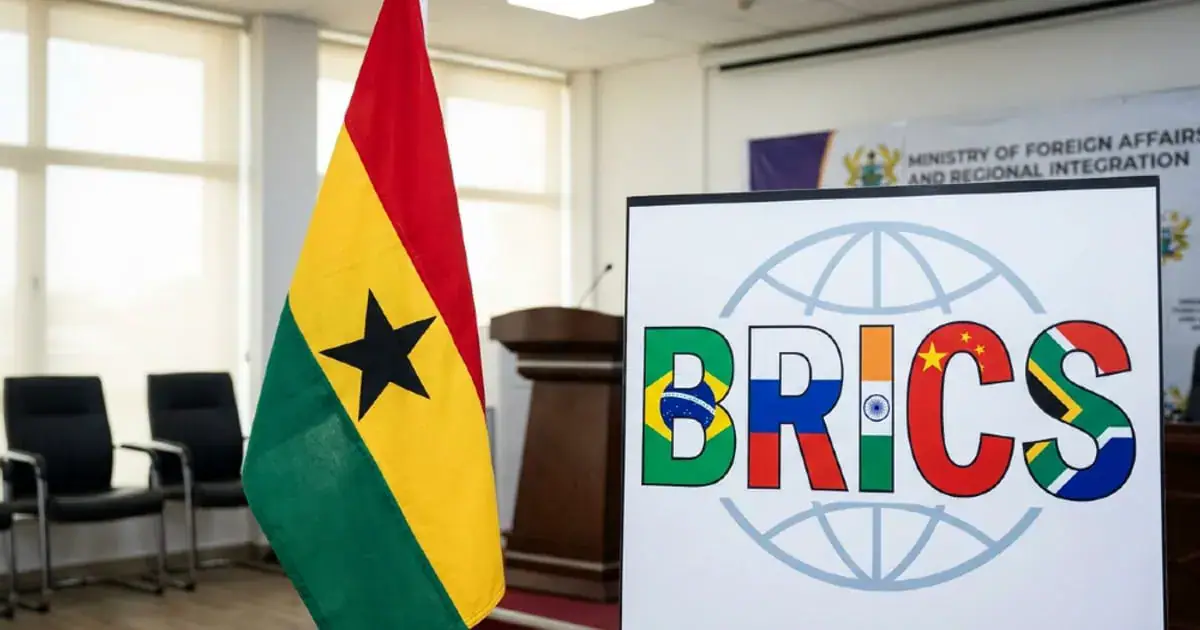
The Government of Ghana, under President John Dramani Mahama, has applied to join the BRICS bloc as a partner, seeking to expand its economic options and diversify international partnerships. Foreign Affairs Minister Samuel Okudzeto Ablakwa disclosed that Cabinet has decided Ghana will join BRICS, citing potential for alternative economic and diplomatic partnerships. This move aims to deepen Ghana's engagement with emerging economies and broaden its international economic ties. BRICS comprises Brazil, Russia, India, China, and South Africa, and its membership could open new economic avenues for Ghana, including trade diversification and Foreign Direct Investment.
Ghana already enjoys excellent relations with BRICS member countries, making it a natural fit for the bloc. However, concerns have been raised that Ghana may become a market for powerful BRICS economies, exposing its natural resources to further exploitation without a clear industrial strategy. The country's membership in BRICS may not necessarily translate to significant benefits, as industrial giants like China, India, Brazil, and Russia may reap more rewards. To mitigate this risk, Ghana must develop a robust industrial strategy to safeguard its interests and ensure equitable benefits from the partnership.
Corruption poses a significant threat to Ghana's stability, development, and integrity, depriving the country of much-needed development. The National Commission for Civic Education estimates that Ghana loses over $3 billion annually to corruption, which could be invested in infrastructure, job creation, and essential services. To benefit from BRICS membership, Ghana must address corruption, particularly in business registration and work permits, to prevent frustration and exit of expatriate investors. The Office of the Special Prosecutor advocates for investigations and prosecutions to curb corruption, as well as comprehensive prevention programs.
Irregularities in Ghana's public financial system, as captured in Auditor-General's reports, also pose a threat to the benefits of BRICS membership. The Public Accounts Committee highlighted GH₡5.2 billion in irregularities, with GH₡4.8 billion in tax infractions recorded in the 2025 audit report. The committee's chair, Abena Osei-Asare, expressed concern about the recurrence of similar audit findings, indicating that public institutions are not learning from their mistakes. Unresolved issues in public finance management could undermine the benefits of BRICS, as revenues from Foreign Direct Investment may not be properly accounted for.
The Auditor-General's reports have consistently highlighted irregularities in public finances, which seem to persist due to unpaid surcharges. A total of GH¢280.5 million in surcharges remains unpaid, with only GH¢57.2 million collected through the Auditor-General's recovery accounts since 2022. To ensure the benefits of BRICS are realized, Ghana must strengthen internal controls across public institutions to prevent financial irregularities and safeguard public funds. Effective internal auditing is critical to ensuring proper management and channeling of public resources.
The concerns surrounding Ghana's BRICS membership are not limited to economic and financial issues. The decision may also affect Ghana's relations with traditional partner countries that have ideological differences with BRICS member countries. However, Ghanaian authorities argue that the decision affirms the country's policy of non-alignment, which has historically allowed it to navigate complex international relationships. This non-alignment policy has enabled Ghana to secure support from the United States for the Akosombo Dam project while also collaborating with the Soviet Union on the Ghana Nuclear Reactor Project.
Ultimately, Ghana's BRICS membership will not be a magic wand for its economic problems. To reap the benefits, the country must address corruption, irregularities in public finances, and develop a robust industrial strategy. By doing so, Ghana can unlock new economic opportunities, diversify its partnerships, and strengthen its position within the global economy. The government must prioritize these critical issues to ensure that Ghana's BRICS membership yields tangible benefits for its citizens.
Key points
- Corruption and financial irregularities must be addressed for Ghana to benefit from BRICS membership.