Ghana's economic and social development is being hindered by a pervasive culture of dishonesty, mistrust, and exploitation. This phenomenon is evident in various aspects of everyday life, including business transactions and interactions between individuals. The widespread nature of this problem has significant implications for the country's growth and prosperity. Experts argue that addressing this issue is crucial for Ghana's sustainable development. The culture of dishonesty and mistrust affects various sectors, including construction, trade, and employment.
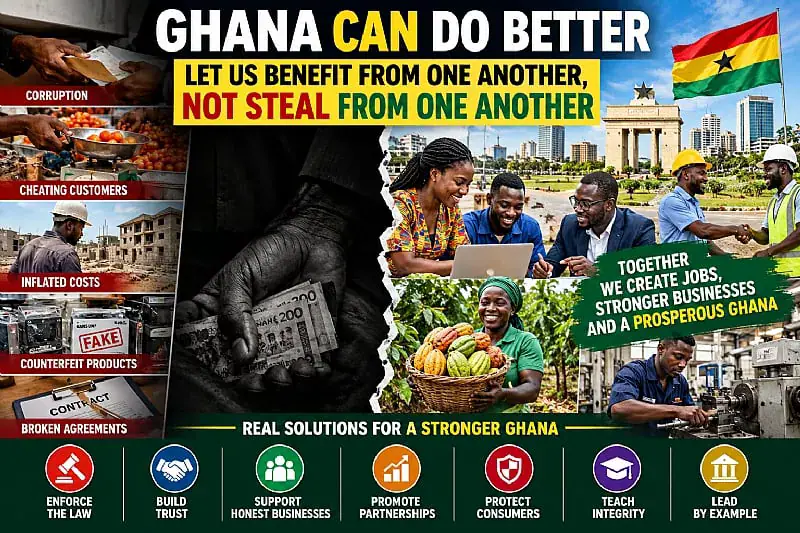
The construction sector is one area where this problem is particularly prevalent. Homeowners often engage artisans to undertake construction work, only to discover that the cost of materials has been inflated or that inferior materials have been used. Similarly, customers who purchase electrical appliances or spare parts from markets often find that the products are counterfeit or do not meet the promised quality. These experiences contribute to the growing mistrust among Ghanaians, making it challenging to build lasting relationships and create prosperity.
The issue of dishonesty and mistrust also affects the trading sector. Traders often manipulate weighing scales to cheat customers, while some landlords demand excessive rent advances despite legal restrictions. In workplaces, some employees misuse company resources, while some employers delay salaries or fail to honour agreed conditions of employment. These malpractices not only harm individuals but also undermine the country's economic growth.
The consequences of this culture of dishonesty and mistrust extend beyond individual financial losses. When people cannot trust one another, entrepreneurs become reluctant to establish partnerships, investors hesitate to provide capital, and business owners fear delegating responsibilities. As a result, many promising Ghanaian businesses remain small, limiting job creation, industrial expansion, and the development of competitive local enterprises.
The problem of dishonesty and mistrust is equally serious in public administration. The Auditor-General's annual reports have repeatedly identified financial irregularities in public institutions, including unsupported payments, procurement breaches, and weaknesses in financial management. These findings demonstrate the importance of stronger accountability in managing public resources.
To address this problem, Ghana needs to strengthen accountability and law enforcement, promote honest business practices, and encourage business partnerships and cooperatives. Trade associations and professional bodies should establish clear standards for pricing, product quality, and customer protection. Additionally, institutions such as the Ghana Standards Authority and relevant regulatory agencies should intensify public education and enforcement against counterfeit goods and unfair commercial practices.
Ultimately, Ghana's sustainable wealth comes from creating value, not stealing value. A trustworthy artisan attracts repeat customers, an honest trader builds customer loyalty, and a responsible employee contributes to business growth. Leadership must set the example by demonstrating transparency and accountability. By moving from a culture of cheating to a culture of cooperation and from personal greed to shared prosperity, Ghana can build a brighter future for its citizens.
Key points
- Strengthening accountability and law enforcement is crucial to addressing Ghana's culture of dishonesty and mistrust.
- Promoting honest business practices and encouraging business partnerships and cooperatives can help create a culture of cooperation and shared prosperity.
- Leadership must set the example by demonstrating transparency and accountability to inspire citizens to embrace integrity.