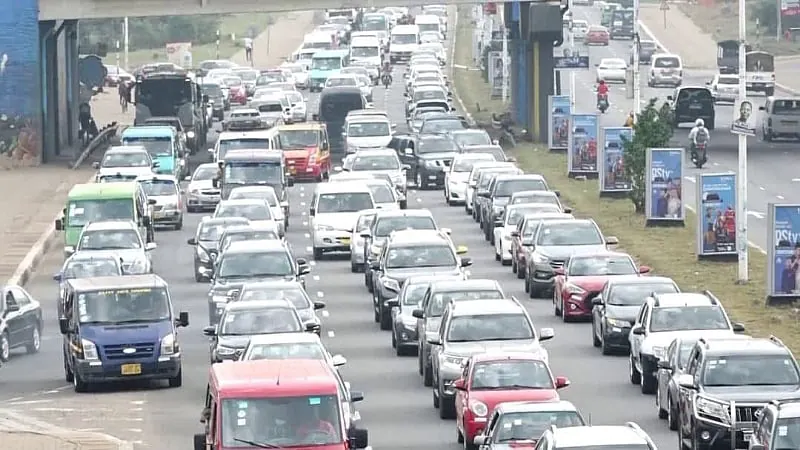
The Aayalolo contra-flow programme, which began on September 29, 2026, is an initiative by the Ghanaian government to mitigate Accra's notorious traffic crisis. By allocating dedicated contra-flow lanes for high-capacity Aayalolo buses, the government aims to transport more passengers at once and encourage private motorists to switch to public transport. According to Local Government Minister Mahama Ayariga, the primary objective is to attract private car users, rather than displacing trotro operators.
Accra's traffic crisis is a multifaceted issue, fundamentally stemming from a public-transport, urban-planning, and commuting crisis. Many workers reside in affordable housing located far from their workplaces, leading to lengthy commutes. The unreliability of existing public transport systems forces these workers to endure long waiting times and unpredictable journeys. As a result, private cars become a necessary response to the inadequacies of the public transport system.
To effectively compete with the convenience of private cars, the government must ensure that public transport is reliable, frequent, affordable, comfortable, and predictable. While the Aayalolo contra-flow programme may increase the speed of the buses, it does not automatically translate to a better transport system. A crucial question arises: how many private cars will actually be removed from the roads due to this programme?
The programme's success should not be measured solely by the speed of Aayalolo buses. Key indicators of success include the number of private vehicles removed from the roads, the daily number of commuters carried, the amount of time saved, and whether the intervention reduces total congestion or simply prioritises one category of vehicles. The government has clarified that Aayalolo will cater to longer-distance journeys, while trotros continue to serve shorter routes.
Implementing a sustainable solution to Accra's traffic crisis requires a comprehensive approach, incorporating reliable mass transit, improved interchange systems, enhanced pedestrian infrastructure, stronger traffic management, and coordinated land-use planning. The programme also necessitates a serious effort to bring jobs and housing closer together, ultimately reducing the reliance on private cars.
The Ghanaian government deserves recognition for attempting an innovative public transport solution, as the country desperately needs bold interventions to address its traffic woes. However, it is crucial to measure the results honestly and avoid misconstruing the programme as a definitive solution to Accra's traffic crisis. The real test lies in whether the average Ghanaian worker can commute to work and return home more efficiently, affordably, and with reduced stress.
Until tangible improvements are observed in the daily commutes of Ghanaian workers, caution is warranted in touting the Aayalolo contra-flow programme as a solution to Accra's traffic crisis. The programme's impact on the ordinary Ghanaian worker's quality of life will serve as a crucial yardstick in evaluating its effectiveness. Key points to consider include the programme's ability to reduce congestion, increase public transport usage, and provide a reliable alternative to private cars.
Key points
- The Aayalolo contra-flow programme aims to reduce Accra's traffic congestion by prioritising high-capacity buses on dedicated lanes.
- The programme's success depends on its ability to attract private car users and reduce congestion.
- A sustainable solution to Accra's traffic crisis requires a comprehensive approach incorporating reliable mass transit, improved infrastructure, and coordinated land-use planning.