The Ghanaian government has initiated a reintegration support program for its citizens who were airlifted back from South Africa following xenophobic attacks. According to Harold Agyemang, Coordinating Director for Political and Economic Affairs at the Ministry of Foreign Affairs, the program aims to help returnees settle back into Ghanaian society. The government engaged with returnees to understand their preferred trades and occupations before designing support packages. This effort is crucial as over 1,600 Ghanaians were evacuated from South Africa since May 2026.
Some returnees have already secured formal employment and successfully reintegrated into Ghanaian society. The Ministry of Foreign Affairs reports that those who worked in the informal sector in South Africa have received orientation and support to start their own businesses back home. Additionally, the Ministry of Gender, Children and Social Protection is working to empower female returnees through entrepreneurial support programs and grants. These initiatives are designed to help returnees rebuild their livelihoods in Ghana.
However, some returnees have expressed frustration and disappointment with the reintegration process. They have complained about delays in receiving promised incentives and dissatisfaction with aspects of the reintegration packages. Agyemang acknowledged these challenges, stating that it is not possible to absorb every returnee into formal employment at the same time. The government is working to address these concerns and speed up the process.
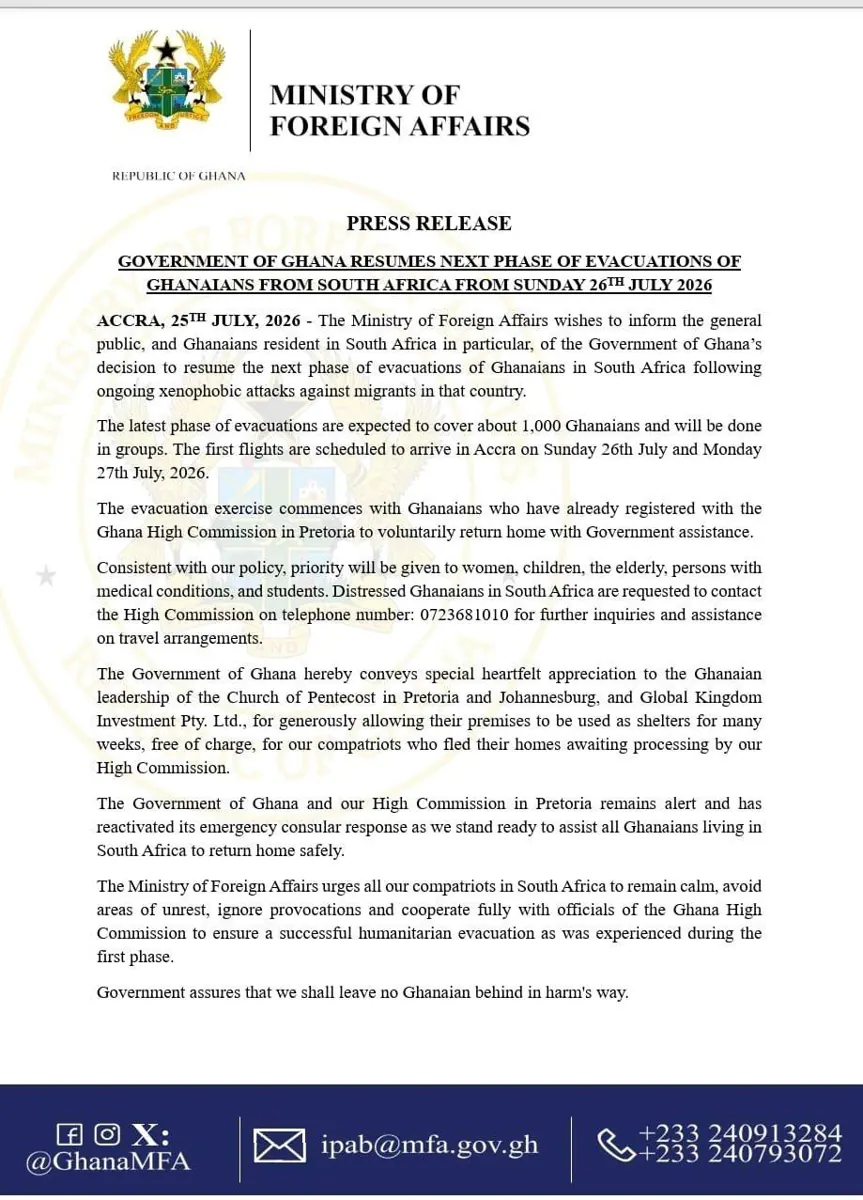
The Ghanaian government has been working to evacuate its citizens from South Africa since the xenophobic attacks began. The first batch of returnees arrived in May 2026, and subsequent evacuations took place in July 2026. The government fully funded all evacuation flights and has committed to supporting returnees in their reintegration efforts. This process is critical for the hundreds of returnees who left jobs, homes, and businesses behind in South Africa.
Agyemang emphasized the importance of opposing xenophobia and promoting regional integration. He argued that foreigners are often unfairly blamed for social and economic troubles that are not of their making. African nations have a moral obligation to support fellow Africans and promote migration and regional integration as central to the continent's development ambitions.
The reintegration process remains uneven, with formal sector placements moving faster than support for those needing to start their own ventures. The government is working to address these gaps and ensure that all returnees receive the support they need. However, no specific timeline has been given for when all returnees will be fully reintegrated or for resolving complaints about delayed incentives.
The Ghanaian government's efforts to support returnees are crucial for their successful reintegration into society. The Ministry of Foreign Affairs and other government agencies are working together to provide support and resources to returnees. While challenges remain, the government's commitment to this process is essential for the well-being and livelihoods of the returnees.
Key points
- The Ghanaian government has rolled out reintegration support for returnees from South Africa, but some face delays and frustration.
- Over 1,600 Ghanaians were evacuated from South Africa since May 2026.
- The government is working to address concerns and speed up the reintegration process.