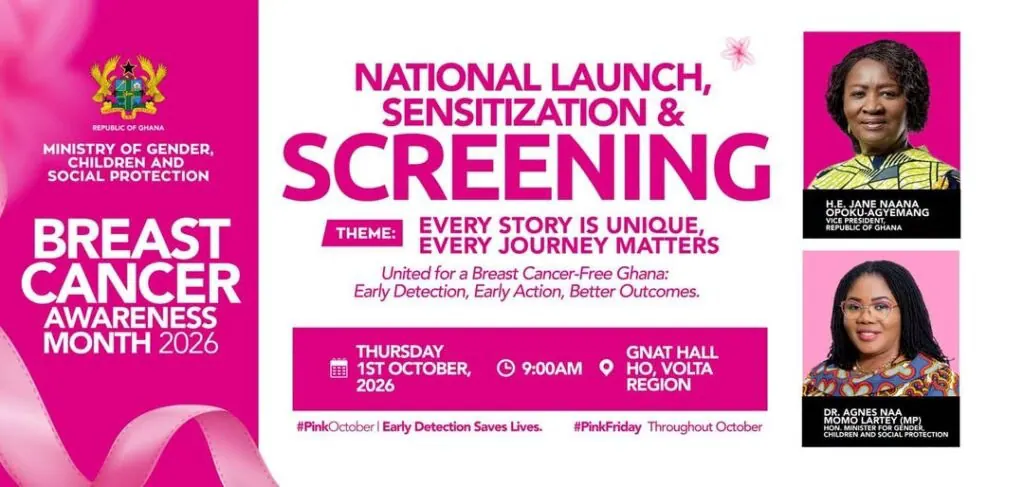
As part of Breast Cancer Awareness Month, observed every October, Ghana's Ministry of Gender, Children and Social Protection launched a national campaign to encourage early detection of breast cancer. The campaign, themed "Every Story is Unique, Every Journey Matters," aims to improve survival outcomes through routine screening. Many Ghanaian women, especially those in the informal sector, often lack access to regular health insurance-covered check-ups, making screening exercises crucial for early detection.
Personal accounts of breast cancer experiences are fuelling calls for routine screening. Madam Monica Appiah, a trader, shared the story of her cousin, who delayed seeking medical help for a breast lump, instead using home remedies. The lump worsened into a large, untreated wound, ultimately leading to her death. Madam Appiah's story highlights the importance of prompt medical attention and regular screening. Her account is one of several shared as part of this year's Breast Cancer Awareness Month.
Misconceptions about breast cancer are still widespread. A male student at the University of Media, Arts and Communication, Godfred Aboagye Bonsu, was surprised to learn that men can also develop breast cancer during a chest screening exercise. Other students, including Ana Wood and Ophelia Ablendu, called for more regular and free screening exercises in public places, alongside education to correct myths about the disease.
Health professionals stress that breast cancer develops when abnormal cells in breast tissue multiply uncontrollably and, left unchecked, can spread to other organs. Warning signs include unusual pain, nipple discharge, and changes in the size or shape of the breast. These symptoms are sometimes masked or ignored, rather than investigated, leading to delayed diagnosis and treatment.
The national launch of Breast Cancer Awareness Month took place on October 1 at GNAT Hall in Ho, Volta Region. The event aimed to sensitize the public about the importance of early detection and encourage women to seek medical help promptly. For many Ghanaian women, screening often only happens when free exercises are organised by hospitals, schools or community groups.
The accounts gathered suggest that where screening does reach people early, outcomes improve significantly. Eunice Adjei, a trader, shared the story of her sister, whose lump was caught during a screening exercise while still at an early stage, allowing her to undergo surgery and recover. This highlights the importance of regular screening and prompt medical attention.
The public is calling for more frequent and free screening exercises throughout the year. While no additional national events or deadlines were specified, members of the public interviewed emphasized the need for health facilities, schools, churches and other organisations to hold more screening exercises. Early detection can save lives, and Ghanaians are urged to take advantage of screening exercises to improve survival outcomes.
Key points
- - Personal stories are fuelling calls for routine breast cancer screening in Ghana. - Misconceptions about breast cancer are still widespread, and education is needed to correct myths. - Early detection through screening can significantly improve survival outcomes.