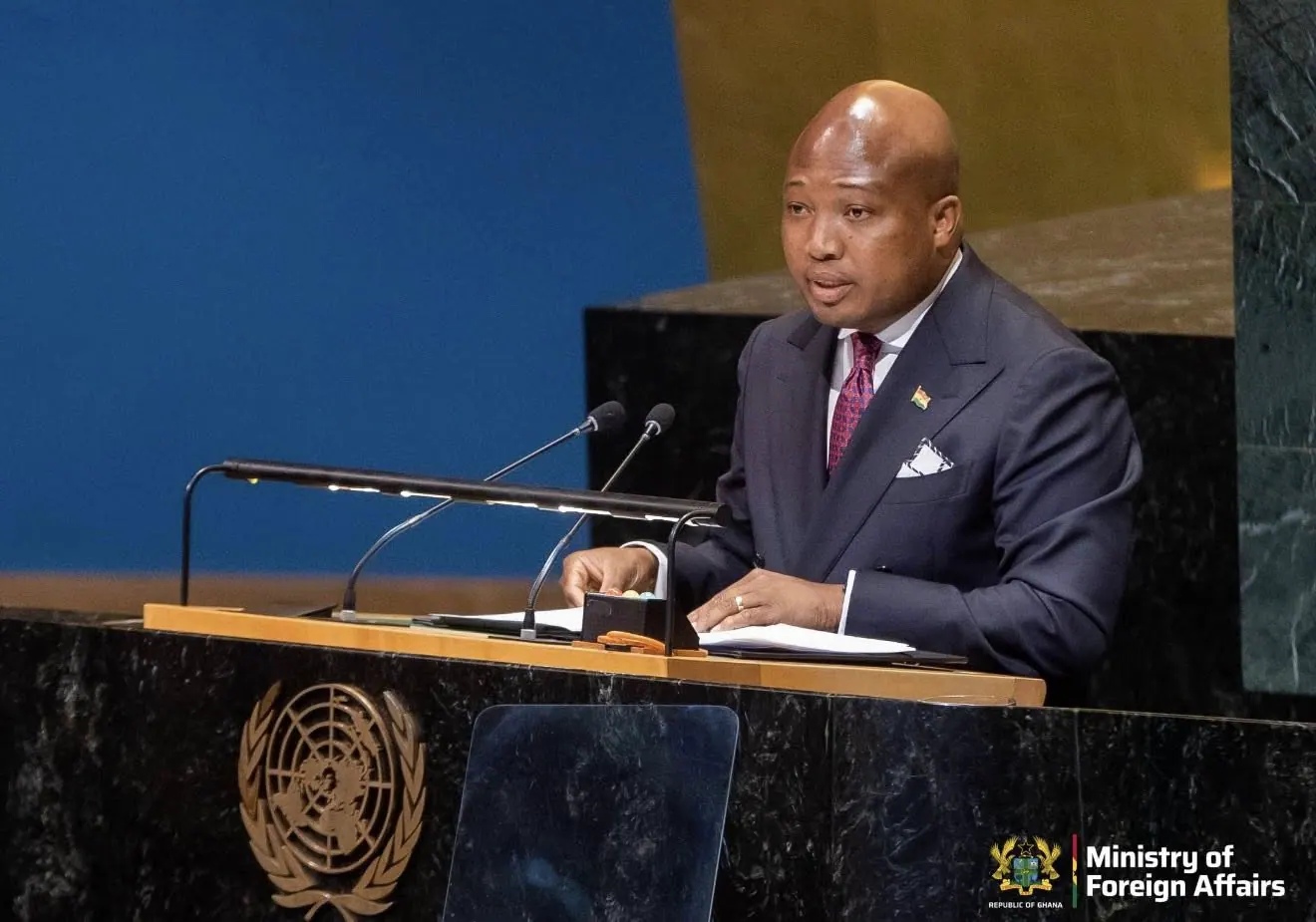
Ghana has rejected calls to abolish the International Criminal Court (ICC), arguing that the institution should be strengthened to hold perpetrators of crimes against humanity accountable. Foreign Affairs Minister Samuel Okudzeto Ablakwa made this statement at the United Nations General Assembly, marking the 25th anniversary of the Durban Declaration and Programme of Action. He emphasized that the ICC needs protection, not condemnation.
The 25th anniversary of the Durban Declaration serves as a renewed call to action against racism, racial discrimination, and historical injustice. Mr. Ablakwa noted that 25 years after the declaration's adoption, the world still grapples with anti-Black racism, xenophobic attacks, and conflicts in Palestine and Sudan. He stressed that severe consequences are necessary for those who commit crimes against humanity and violate the declaration's principles.
The Foreign Affairs Minister questioned Africa's continued absence from the permanent membership of the United Nations Security Council, despite the continent's population of approximately 1.4 billion. He highlighted the need for stronger international action to address historical and contemporary injustices. Mr. Ablakwa cited a Ghana-led United Nations resolution declaring the trafficking of enslaved Africans a grave crime against humanity as a significant development in reparatory justice efforts.
Mr. Ablakwa called for greater accountability for human rights violations. He emphasized that the legacy of slavery and the trafficking of enslaved Africans continues to contribute to present-day inequalities. The Minister urged the international community to work towards reparatory justice and ensure that perpetrators of crimes against humanity are held accountable.
The Durban Declaration and Programme of Action were adopted 25 years ago to combat racism, racial discrimination, and related intolerance. Ghana's position on the ICC reflects its commitment to upholding human rights and accountability. The country's stance has implications for international relations and global governance.
The issue of reparatory justice remains a pressing concern. The Ghana-led United Nations resolution acknowledges the historical injustices faced by Africans. Mr. Ablakwa's statement underscores the need for collective action to address these injustices and prevent future occurrences.
Ghana's opposition to abolishing the ICC reflects its commitment to human rights and accountability. The country's call for stronger action against crimes against humanity aligns with its obligations under international law. The international community will likely continue to debate the role of the ICC in promoting global justice.
Key points
- Ghana rejects calls to abolish the International Criminal Court, seeking stronger action against crimes against humanity.
- The 25th anniversary of the Durban Declaration serves as a renewed call to action against racism and historical injustice.
- Africa's absence from the UN Security Council's permanent membership remains a contentious issue.