The Ghanaian government has announced a 9% increase in salaries for public sector workers under the Single Spine Salary Structure (SSSS), effective 2026. This move is part of the government's review of the salary structure. Additionally, the national daily minimum wage will be increased from GH₵19.97 to GH₵21.77, effective from January 1 to December 31, 2026. The review was conducted by the National Tripartite Committee (NTC), which comprises representatives from the government, employers, and labour unions.
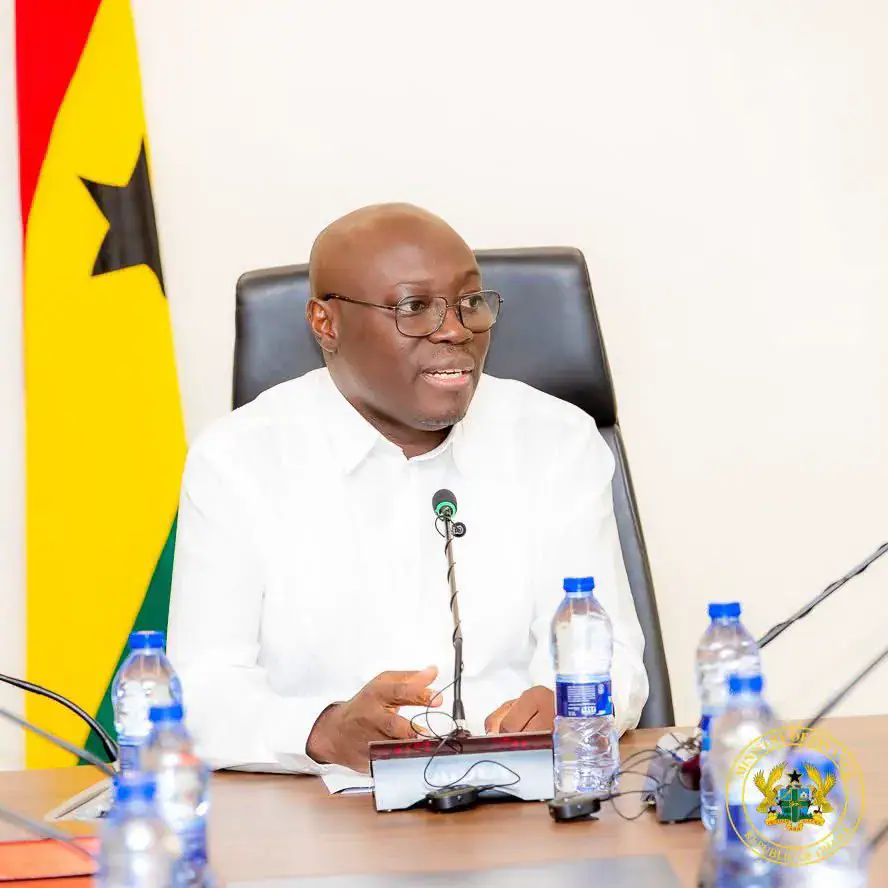
The agreement was made official on Sunday, November 9, after the government, represented by the Fair Wages and Salaries Commission (FWSC) and the Ministry of Finance (MoF), and Organised Labour signed the agreement. During the signing ceremony, Finance Minister Dr. Ato Forson pledged the government's commitment to upholding its side of the agreement. He commended the efforts of Organised Labour and highlighted the government's efforts to reduce inflation from the current 8 percent to ease the burden on Ghanaians.
In July this year, Dr. Cassiel Ato Forson indicated that wages and salaries exceeded the budget by GH¢1.3 billion for the first six months of the year. According to the 2025 budget statement, compensation of employees, comprising wages and salaries, pensions, gratuities, and social security, has been programmed at GH¢76.2 billion for the entire year. The Finance Minister revealed that the government has experienced significant pressures on the compensation budget for the first half of 2025, mainly emanating from wages and salaries.
The wage pressures, the minister said, were largely driven by last-minute recruitments undertaken by the previous government in the last quarter of 2024, especially in the education, health, and security sectors. These sectors faced significant pressures on the compensation budget in the first half of 2025. The minister also noted that ad-hoc reviews of conditions of service undertaken in previous years have distorted the Single Spine Pay Policy and further burdened the public wage bill.
In 2024, compensation of employees amounted to GH¢67,189 million (5.7% of GDP), above the target of GH¢63,683 million (6.2% of GDP) by 5.5 percent. Wages and salaries constituted 89.8 percent of the total compensation and amounted to GH¢60,352 million (5.1% of GDP), 5.9 percent above the target of GH¢57,005 million (5.6% of GDP). The government has taken measures to sanitize the public sector payroll and rid it of ghost names.
The government engaged the Ghana Audit Service to undertake a nationwide payroll audit across all 16 regions of the country. The Finance Minister revealed that the Ghana Audit Service has completed 91% of the payroll audit. The Service has identified 53,311 separated staff—these are staff who are either retired, resigned, terminated, on leave without pay, or deceased, and yet remain on the government payroll.
According to the sector minister, the Audit Service expects to recover GH¢150.4 million of unearned salaries from the separated staff over the 2023 and 2024 period. The government will enforce the monthly payroll validation process to ensure the accuracy of the public sector payroll. The 9% increase in salaries and the hike in minimum wage are expected to ease the burden on public sector workers and contribute to the government's efforts to reduce inflation.
Key points
- The Ghanaian government has announced a 9% increase in salaries for public sector workers under the Single Spine Salary Structure (SSSS), effective 2026.
- The national daily minimum wage will be increased from GH₵19.97 to GH₵21.77, effective from January 1 to December 31, 2026.
- The government has taken measures to sanitize the public sector payroll and rid it of ghost names, with the Ghana Audit Service completing 91% of the payroll audit.