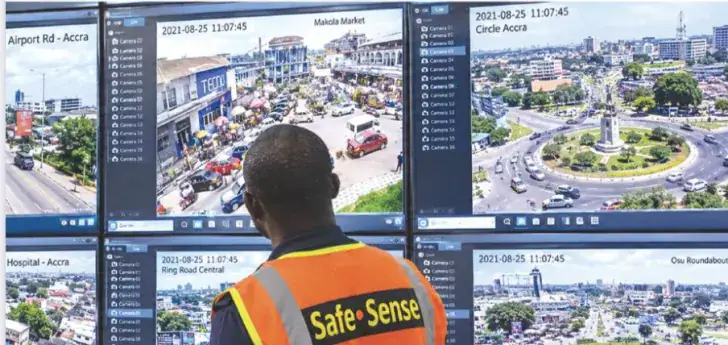
The Ghana Police Service has launched TraffiTech-GH, an automated system designed to enforce road traffic laws and regulations to improve road safety. The system, which initially targets speeding motorists, uses cameras and sensors to automatically take pictures and/or videos of vehicles that flout road traffic laws and regulations. This move is expected to significantly reduce road crashes and fatalities in the country. According to the Director of Education, Research and Training at the Motor Traffic and Transport Department (MTTD), Assistant Commissioner of Police (ACP) Alexander Kwaku Obeng, the system will promote compliance with road traffic regulations through automated detection and evidence-based enforcement.
The introduction of TraffiTech-GH comes after a series of public education campaigns and the issuance of electronic caution notices, which have contributed to a reduction in road crashes, injuries, and deaths. In September 2026, road crashes declined by 9.4 per cent compared to the same period in 2025, while vehicles involved in crashes reduced by 12.19 per cent. The number of persons injured also declined by 15.02 per cent, while road fatalities dropped by 7.82 per cent. Motorcycle-related crashes recorded a 7.43 per cent reduction. ACP Obeng attributed the decline to the intensified public education campaign and the issuance of electronic caution notices.
The police have deployed mobile speed cameras in patrol vehicles and tripod-mounted cameras at selected locations across the country to detect speeding violations. The initial focus on speeding is informed by road safety data indicating that excessive speed accounts for between 60 per cent and 62 per cent of serious injuries and fatalities resulting from road crashes. The cameras are being deployed in major urban centres, including Accra, Takoradi, Kumasi, Sunyani, Tamale, Koforidua, Tema, and Ho.
Motorists who exceed the prescribed speed limits will receive electronic tickets, with fines determined by the extent of the violation in accordance with the relevant road traffic regulations. The minimum fine is GH¢240 for motorists caught driving between five and 20 kilometres per hour above the prescribed speed limit, with higher penalties applying to greater violations. Vehicle owners have 14 days to pay the fines or contest the violations through the designated electronic platform.
The system allows motorists to challenge tickets, particularly in cases involving inaccurate vehicle ownership records or registration details. ACP Obeng urged vehicle owners who have transferred their vehicles permanently to other persons to ensure that the change of ownership is duly registered with the Driver and Vehicle Licensing Authority (DVLA). Failure to transfer ownership within the stipulated two-week period could leave the previous owner liable for traffic violations committed with the vehicle.
The police have established a cyber team to identify and deal with persons who would attempt to defraud motorists or undermine the system. ACP Obeng expressed optimism that the combined effect of public education, automated enforcement, and compliance by motorists would translate into fewer crashes, injuries, and deaths by the end of the year. He appealed to motorists to exercise restraint, particularly during the Christmas season, when increased travel and pressure to make more trips often contribute to dangerous driving.
The police have issued more than 200,000 electronic caution notices since the sensitisation campaign began, with over 50,000 issued since the latest phase of the exercise commenced in September. The notices contain details of the offending vehicle, its registration number, the owner's name, the time, date, and location of the violation, as well as photographic evidence and a six-second video of the offence. The system is intended to complement conventional traffic enforcement and improve road safety by confronting motorists with evidence of their driving behaviour.
Key points
- The Ghana Police Service has launched TraffiTech-GH to enforce road traffic laws and regulations.
- The system initially targets speeding motorists and uses cameras and sensors to detect violations.
- The police are optimistic that the system will significantly reduce road crashes and fatalities in the country.