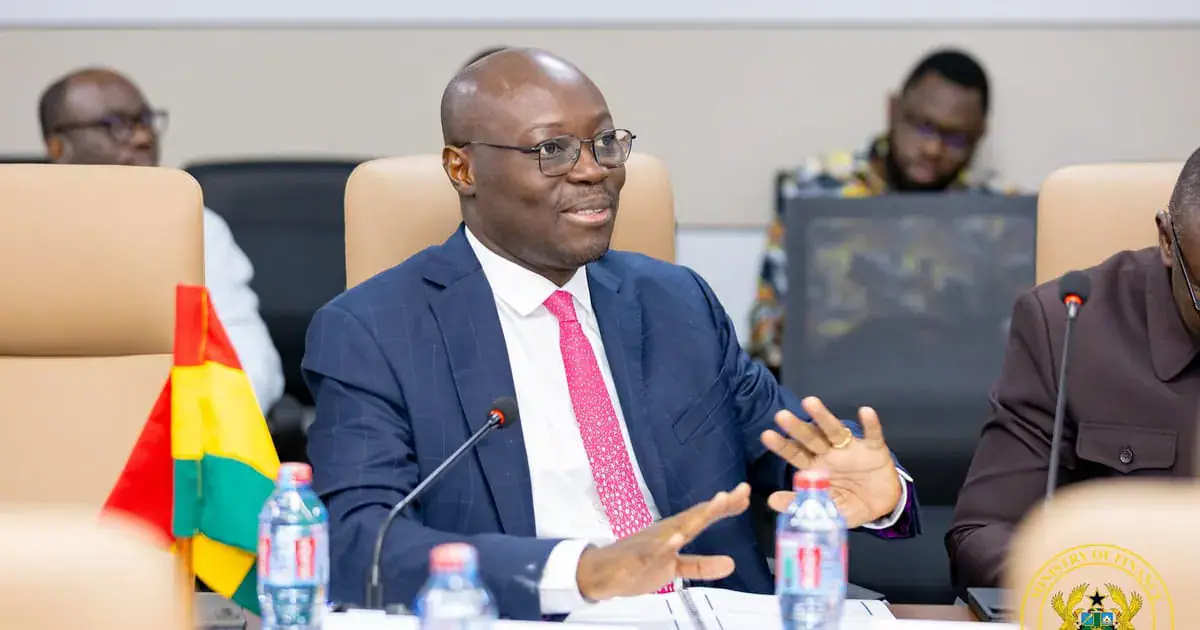
Ghana's Finance Minister, Dr. Cassiel Ato Forson, has emphasized the need for the country to refine its gold locally, rather than sending it abroad for processing. During an engagement with the University of Ghana's faculty and students, Dr. Forson questioned the long-standing practice of exporting gold for refining, highlighting the missed opportunities for job creation and industry development. He stressed that it's time for Ghana to stop this practice and focus on building a domestic gold industry.
Dr. Forson pointed out that Ghana has been producing gold for a long time, with companies extracting gold and sending it to South Africa for refining before exporting it to Europe. He argued that the country should be more deliberate about developing its gold industry, with refining providing a foundation for employment and other businesses along the value chain. The minister cited the Ghana Gold Board's (GoldBod) monthly purchase of three tonnes of gold as an opportunity to support local processing and generate jobs.
According to Dr. Forson, even modest initial employment gains could be achieved, with the potential to create two or three jobs. However, he emphasized that the benefits would extend beyond direct job creation, as developing the industry locally could encourage other commercial activities and allow more of the value generated by gold to remain in Ghana. This, he believes, would lead to the creation of other value chains and contribute to the country's economic growth.
Dr. Forson also envisioned the emergence of a gold souk, or gold trading market, as part of a broader domestic industry. He suggested that a developed refining industry could attract supplies from other gold-producing countries in West Africa, positioning Ghana as a regional centre for processing and trading the precious metal. This could include gold from Burkina Faso, Niger, Mali, and Côte d'Ivoire.
The minister acknowledged that Ghana had not pursued the opportunity for local value addition with sufficient purpose. He agreed that the country needed to be more deliberate about developing its gold industry and creating jobs. Dr. Forson's comments highlight the need for a strategic shift in Ghana's approach to its gold industry, with a focus on local refining and job creation.
Evans Effah, a digital media expert, reported on Dr. Forson's statement, highlighting the Finance Minister's call for a deliberate push to refine Ghana's gold locally. As the Online Editor at 3News.com, Effah has extensive experience in content creation, audience growth, and media relations. His reporting provides valuable insights into the country's economic development and industry trends.
The call for local gold refining comes as Ghana seeks to maximize the benefits from its mineral wealth. With gold being a significant contributor to the country's economy, Dr. Forson's proposal aims to create a more sustainable and equitable industry that benefits local communities and the broader economy. By developing a domestic gold industry, Ghana can retain greater value from its mineral resources and create new opportunities for economic growth and development.
Key points
- Ghana's Finance Minister, Ato Forson, urges the country to refine its gold locally to create jobs and retain mineral wealth value.
- The Ghana Gold Board buys three tonnes of gold every month, providing an opportunity for local processing and job creation.
- A developed refining industry could position Ghana as a regional centre for processing and trading gold, attracting supplies from other West African countries.