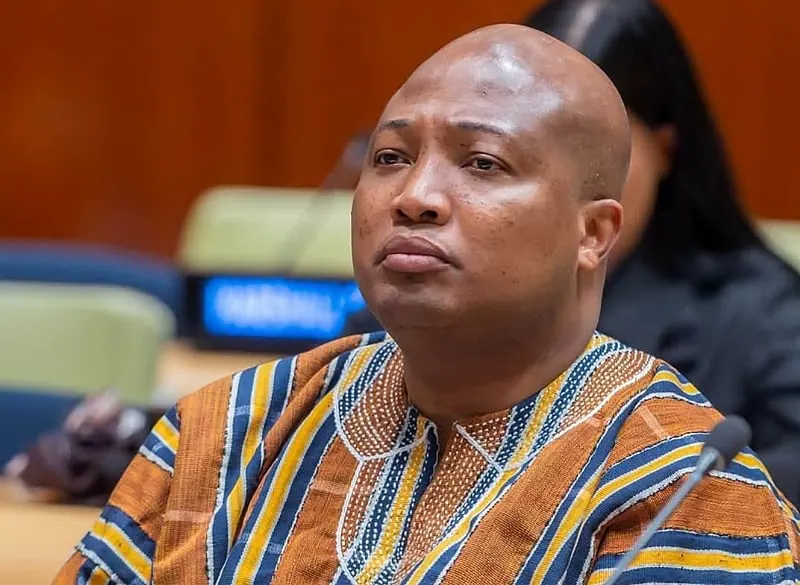
Ghana's Foreign Affairs Minister, Samuel Okudzeto Ablakwa, announced on October 6, 2026, that the country's Cabinet has decided to apply for membership in BRICS, a grouping of large emerging economies. This decision was made during the official visit of India's External Affairs Minister, Dr. Subrahmanyam Jaishankar, to Accra. Minister Ablakwa described this as a significant development, marking a new phase in Ghana's international relations.
The aim of Ghana's application is to diversify its international partnerships, widen economic opportunities, and strengthen cooperation with countries of the Global South. With India's membership in BRICS, Ghana sees New Delhi as a key partner in its bid and has already sought help from India with the application process. This move is part of a broader effort to deepen cooperation between Ghana and India in various sectors, including agriculture, science and technology, railways, pharmaceuticals, ICT, defense, and technology.
The current members of BRICS include Brazil, Russia, India, China, South Africa, Egypt, Ethiopia, Indonesia, Iran, and the United Arab Emirates, with Saudi Arabia's status being described as disputed or evolving. While Ghana's decision to apply for membership is significant, it is essential to note that acceptance into the bloc is a separate matter. The application date, category of membership Ghana will seek, and response from existing BRICS members are yet to be disclosed.
Ghana's potential membership in BRICS offers several benefits, including access to a broader range of partners and increased bargaining power. As a leader in the African Continental Free Trade Area, Ghana could act as a bridge between BRICS and West Africa. Additionally, the BRICS-founded New Development Bank, established to fund infrastructure and sustainable development in developing economies, presents opportunities for Ghana to explore potential participation.
However, there are also concerns and challenges associated with Ghana's application. The country's relationship with Western partners, particularly the United States, is sensitive, with tariffs on Ghanaian goods and duty-free AGOA access set to expire on December 31, 2026. Ghana must carefully weigh how its BRICS application will be received by Washington and other Western partners, especially while trade deals and AGOA renewal remain uncertain.
BRICS is a diverse grouping with internal disagreements, and Ghana would be joining a club whose politics it does not control. The benefits of membership, such as dialogue, project opportunities, and diplomatic standing, are not automatic and depend on specific deals, financing terms, and Ghana's capacity to negotiate them. Furthermore, Ghana's economy is still recovering from its debt crisis, and any new commitments should be carefully evaluated against fiscal discipline, transparent contracting, and parliamentary oversight.
As Ghana moves forward with its application, several questions remain unanswered. What exactly does Ghana hope to achieve from membership, and will it seek full membership or a lighter tier of association with the bloc? How will Ghana protect its AGOA access, its relationship with the IMF, and its Western trade ties? The answers to these questions will determine whether Ghana is ready to benefit from BRICS membership and turn it into jobs, investment, and a stronger voice for its people.
Key points
- Ghana's Cabinet has decided to apply for BRICS membership to diversify international partnerships and strengthen cooperation with Global South countries.
- The benefits of BRICS membership for Ghana include increased bargaining power and access to a broader range of partners.
- Ghana must carefully weigh the potential implications of its BRICS application on its relationships with Western partners, particularly the United States.