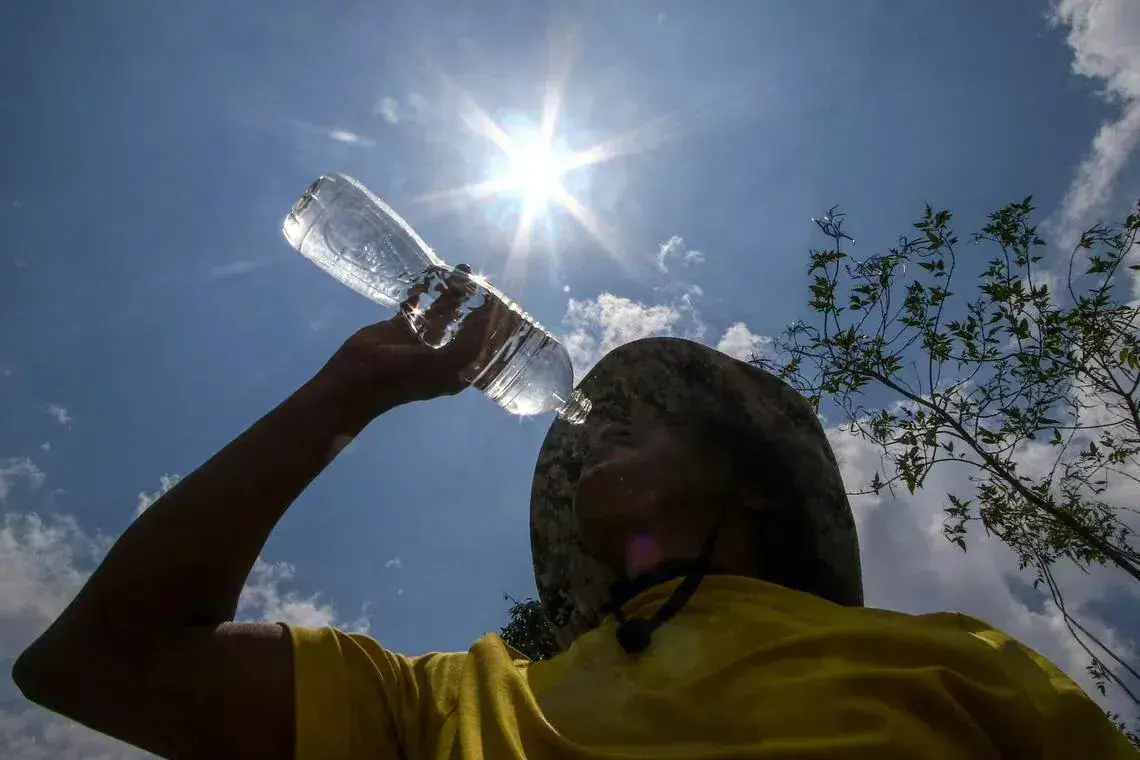
The Ghana Meteorological Agency (GMet) has warned Ghanaians to prepare for a harsher dry season than usual, citing a strengthening El Niño weather pattern that could push temperatures and heat stress to dangerous levels. In an advisory issued on October 30, 2026, GMet directed the public to a technical report covering expected weather conditions and precautionary measures for the first half of 2027. According to the agency, much of Ghana could experience a hotter and drier dry season starting late November 2026.
GMet has identified northern Ghana as the area most likely to feel the worst of the heat stress, which is expected to peak between February and April 2027. This period is typically the hottest stretch of the year in northern Ghana. The agency's warning is based on projections from the United States National Oceanic and Atmospheric Administration's Climate Prediction Center (NOAA/CPC), which indicate a 96 percent likelihood of the El Niño event reaching very strong intensity between November 2026 and January 2027.
The El Niño event, confirmed in June 2026, has continued to intensify since then and is expected to peak between October 2026 and January 2027 before gradually easing during the first half of 2027. However, its effects could still be felt into the early months of 2027. GMet noted that long-term, human-caused warming remains the main driver of recent extreme temperatures in West Africa, with El Niño adding to that existing risk.
Ghana has already experienced unusually hot weather in recent days, with GMet projecting afternoon temperatures of 38°C in Bolgatanga, 36°C in Tamale, and 34°C in Kumasi on October 31, 2026. The agency's outlook for October to December 2026 points to warmer-than-average temperatures across most of the country, alongside below-normal rainfall in many areas.
Beyond the heat itself, GMet's report warns of possible water shortages, increased dust, and a higher risk of bushfires during the dry season, conditions that could also complicate farming activity in affected areas. The agency identified older people, young children, outdoor workers, people with long-term illnesses, and residents of crowded urban housing as groups needing particular attention during the hottest stretch.
GMet stressed that its projections are climate risk assessments rather than guarantees, and that actual rainfall and temperature patterns could still shift depending on conditions in the Pacific and Atlantic oceans. The agency is uncertain how strongly El Niño will influence the Harmattan season, noting that weather systems over the Sahara and North Atlantic play a bigger role in determining how intense and prolonged the dusty winds become.
The Ghana Meteorological Agency has urged the public to take precautions to stay safe during the hot and dry season. The agency's warning comes as part of its efforts to provide early warnings and support to communities that may be affected by the changing weather patterns.
Key points
- A very strong El Niño event is expected to make Ghana's dry season hotter and drier than usual, with heat stress risk peaking in northern Ghana between February and April 2027.
- The Ghana Meteorological Agency has identified vulnerable groups, including older people, young children, and outdoor workers, who need to take extra precautions during the hot and dry season.
- The agency's projections indicate that Ghana can expect warmer-than-average temperatures and below-normal rainfall across most of the country from October to December 2026.