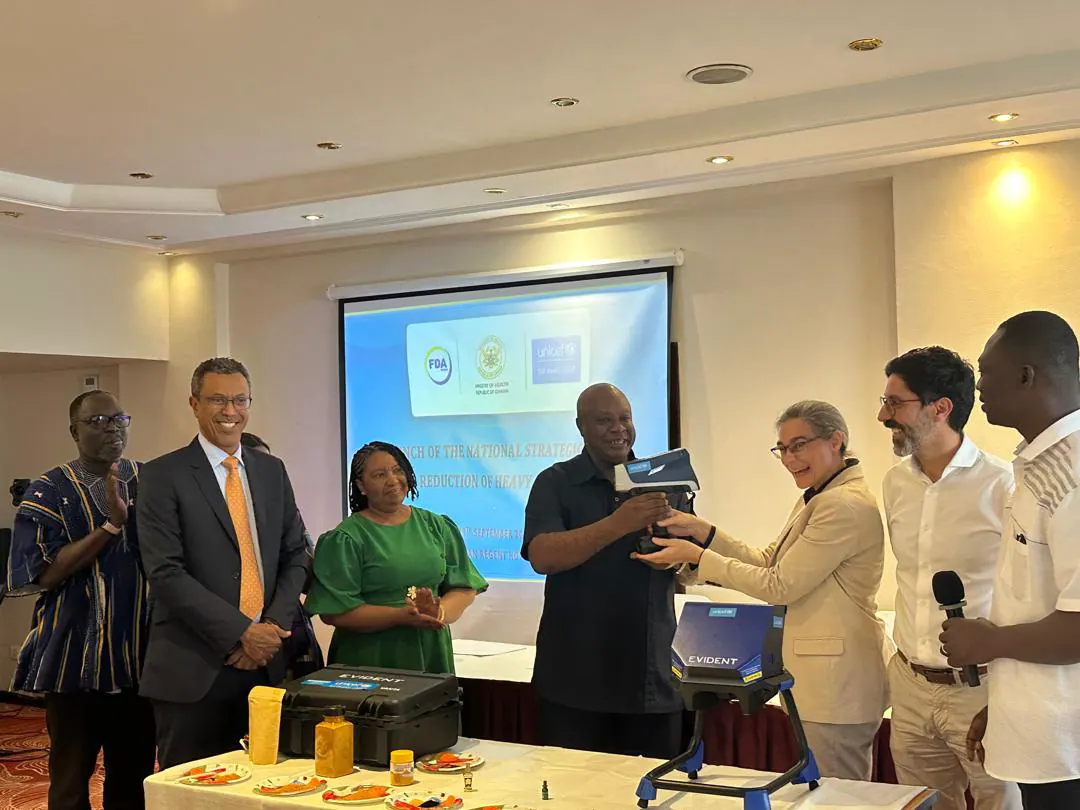
The Ghanaian government has introduced a National Strategic Plan aimed at reducing heavy metals in food, enhancing food safety systems, and minimizing exposure to toxic substances like lead, cadmium, mercury, and arsenic. This initiative provides a framework for improving surveillance, laboratory capacity, regulatory measures, research, and inter-institutional collaboration to prevent contamination throughout the food supply chain.
Launched by the Deputy Minister of Health, Prof. Dr. Grace Ayensu-Danquah, the plan is described as a national policy commitment rather than a routine program document. She emphasized that food safety is crucial for Ghana's development, impacting public health, consumer confidence, trade, and industrial growth. The Deputy Minister highlighted the significance of addressing heavy metal contamination, stating it requires a coordinated and rigorous approach.
Evidence from the Food and Drugs Authority (FDA) and its partners has identified specific food products that require stricter regulatory attention due to contamination. For instance, 29 percent of cereal-based mixed food samples exceeded cadmium limits, while 42.09 percent of turmeric samples had lead concentrations above permitted thresholds. Additionally, 24.6 percent of bentonite clay products tested exceeded lead limits, indicating areas where control measures need strengthening.
According to Prof. Dr. Ayensu-Danquah, heavy metals can enter the food system through various pathways, including environmental contamination from mining and industrial activities, agricultural practices, and processing and packaging. The Deputy Minister emphasized that the statistics do not warrant generalized alarms but rather support targeted regulatory actions to address specific commodities with high contamination levels.
The FDA's Deputy Chief Executive in charge of the Food Division, Roderick Kwabena Daddey-Adjei, stated that the strategic plan was developed through extensive consultations with stakeholders, including government institutions, development partners, academia, industry, and civil society organizations. The plan aims to reduce heavy-metal contamination through enhanced monitoring, regulatory action, research, capacity building, and multi-sectoral collaboration.
UNICEF's Deputy Representative in Ghana, Emmanuele Collet, highlighted that lead exposure is a child-rights issue, citing a blood lead-level survey conducted by the Ghana Health Service, Pure Earth, and UNICEF, which found elevated lead levels among children. Another study identified lead contamination in consumer products, including turmeric, emphasizing the urgency of addressing lead exposure, particularly among children.
Effective implementation of the plan will require coordinated actions across sectors, adequate resource mobilization, and strong partnerships. The FDA and its partners are committed to working together to address the challenge of heavy metal contamination in Ghana's food systems, ensuring a safer and healthier food supply for the population.
Key points
- Ghana launches National Strategic Plan to reduce heavy metals in food
- Plan aims to strengthen food safety systems and reduce exposure to toxic substances
- Lead exposure is a significant concern, particularly among children, according to UNICEF