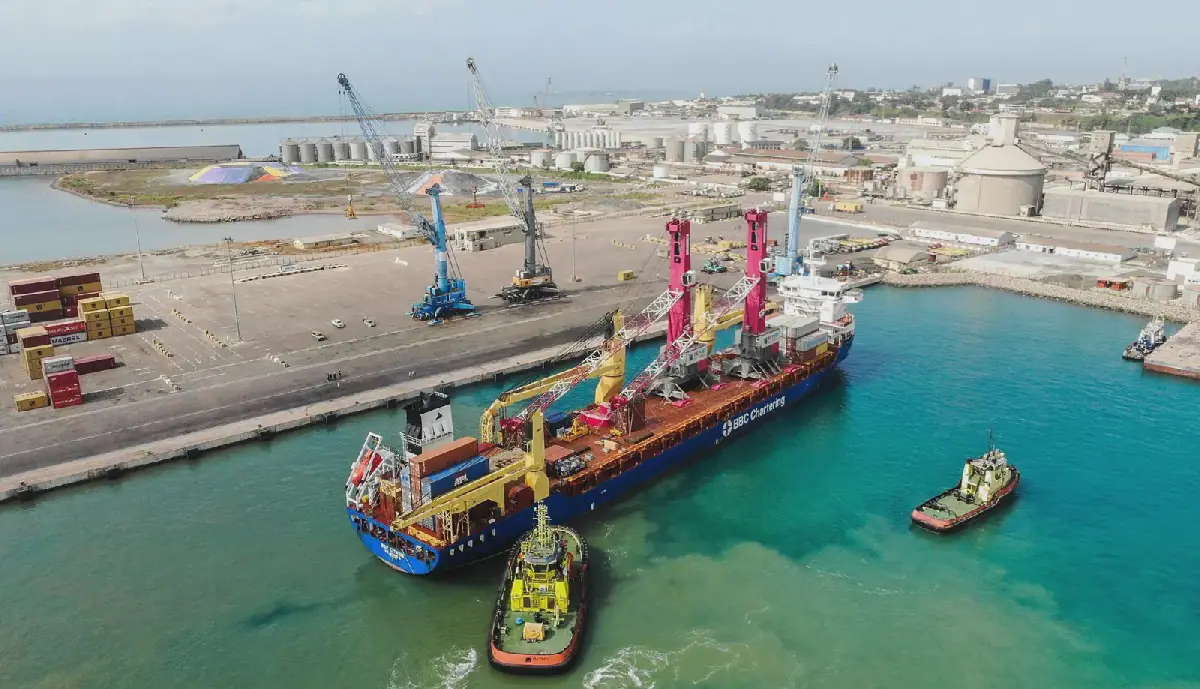
Ghana's President John Dramani Mahama has initiated two significant investments at the Port of Takoradi, aimed at transforming the facility into a maritime services hub. The projects, worth over $235 million, include a $137 million integrated ship repair and maintenance facility, known as Project Shiprite, and a $98.41 million expansion of the port's Berth 19. These developments are expected to bolster Ghana's maritime infrastructure and increase its share of regional shipping activity.
Project Shiprite, being developed by Prime Meridian Docks Ghana Limited under a 25-year concession agreement with the Ghana Ports and Harbours Authority, is designed to serve cargo vessels, offshore installations, and other maritime operators. The facility is expected to be completed within 18 months and will provide an alternative to shipyards in Europe or Durban, South Africa, for specialised repairs and maintenance. This will reduce time and cost for operations and increase maritime services revenue retained within the region.
The Project Shiprite facility is anticipated to create 430 jobs, with 30 per cent of these positions reserved for women. This initiative aims to expand women's participation in a sector where technical and operational roles have traditionally been less accessible to them. The project will also provide opportunities for local suppliers, engineering firms, equipment providers, and technical training institutions.
The second investment, Berth 19, will add a 300-metre facility designed to accommodate vessels of up to 75,000 deadweight tonnes. Funded by the port authority's own resources, the project is expected to take 26 months to complete and will strengthen the port's capacity to handle bulk cargo, including mineral exports and imported materials used by local industries.
The success of these investments will depend on execution, including construction timelines, transparent concession arrangements, maintenance standards, local workforce development, and reliable transport links. Ghana's wider infrastructure plans, such as the Western Railway Line, will also be crucial to the projects' long-term performance. Better rail and road connections could link the port to production centres and inland markets, including landlocked countries that depend on coastal infrastructure for international trade.
The development of Takoradi Port offers a wider opportunity for West Africa, as stronger maritime infrastructure can reduce dependence on distant service providers, retain more value within African economies, and support trade across the Gulf of Guinea. Ghana's challenge now is to turn these construction projects into productive regional assets, with their real value measured by the businesses they support, the skills they develop, and the trade opportunities they create.
The commitment to reserve jobs for women must also translate into meaningful technical training, recruitment, and career progression. For Ghana to turn its strategic position along the Gulf of Guinea into a stronger maritime services economy, it must ensure that these investments deliver their intended economic benefits and create a sustainable maritime industry.
Key points
- The investments at Takoradi Port aim to capture a larger share of regional shipping activity and retain more maritime services revenue within Ghana and the region.
- The projects are expected to create jobs and stimulate local economic growth, with 30 per cent of positions reserved for women.
- The success of the investments will depend on effective execution, including transparent concession arrangements, maintenance standards, and reliable transport links.
Reporting sources
- Ghana’s Takoradi Port Expansion: Building a Maritime Services Hub · African Leadership Magazine