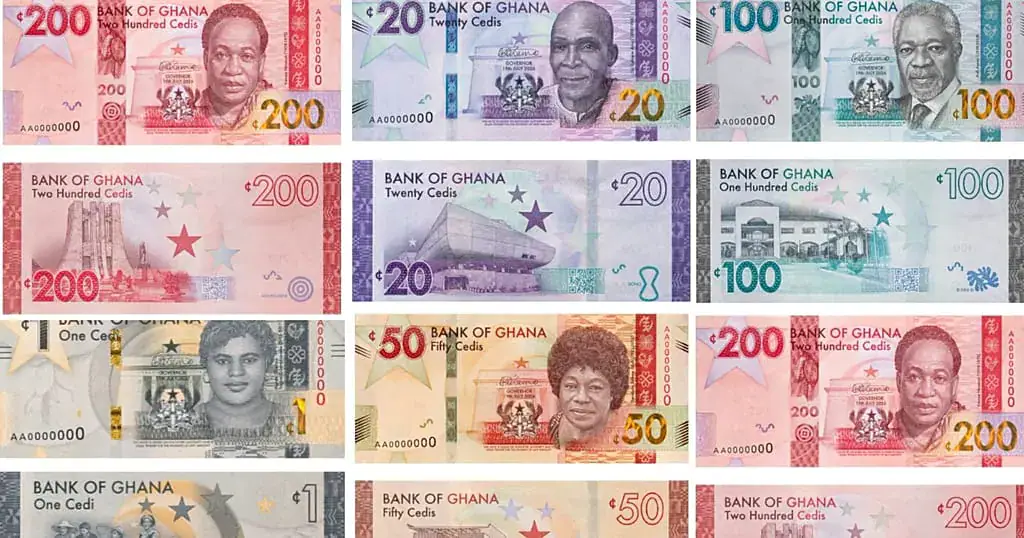
The Bank of Ghana has introduced a new series of banknotes, known as the Heritage Series, which features prominent historical figures and national landmarks. The new notes will enter circulation on 1 December 2026 and will coexist with the existing currency. The redesign aims to modernize the currency and strengthen protection against counterfeiting. The series retains Ghana's eight denominations: GH₵1, GH₵2, GH₵5, GH₵10, GH₵20, GH₵50, GH₵100, and GH₵200.
Each banknote highlights a different aspect of Ghana's history, culture, and national identity. The GH₵1 note honors Agnes Oforiwa Tagoe-Quarcoopome, a pioneering Accra market trader, and features Makola Market. The GH₵2 note celebrates religious heritage, featuring Cardinal Peter Dery and the Larabanga Mosque. The GH₵5 note focuses on education, featuring James Emman Kwegyir Aggrey and Achimota School. Other denominations feature notable figures and landmarks, including Annie Ruth Jiagge, Ephraim Amu, Theodosia Okoh, Kofi Annan, and Kwame Nkrumah.
The new banknotes also feature traditional Adinkra symbols and improved security features to prevent counterfeiting. According to Bank of Ghana Governor Johnson Asiama, the redesign includes greater durability and modern designs. The notes have been made more convenient to handle and carry, with the existing GH₵200 note being redesigned to be smaller and more practical.
President John Dramani Mahama, who attended the launch, urged Ghanaians to treat the currency with pride. He emphasized the importance of upholding the confidence in the cedi to continue to serve Ghana securely and well for generations to come. The Bank of Ghana has assured the public that existing cedi notes will remain valid when the new series enters circulation.
The central bank plans a nationwide public education campaign to help people identify the new designs and their security features. The public is urged to handle the notes carefully, avoiding writing on them, crumpling them, or using them for decorative purposes. Officials say protecting the banknotes from damage will help extend their lifespan and reduce the cost of replacing worn-out currency.
The new banknotes aim to promote Ghana's history, culture, and national identity. The redesign is part of a broader effort to modernize the country's currency and financial systems. The Bank of Ghana's director of currency management, Dominic Owusu, noted that the existing GH₵200 note was particularly large, making it difficult for some people to handle.
The introduction of the new banknotes is expected to have a positive impact on Ghana's economy and financial sector. The central bank's efforts to promote financial education and awareness will help to ensure a smooth transition to the new currency. The new banknotes will feature improved security features, making it more difficult for counterfeiters to produce fake notes.
Key points
- The new banknotes feature prominent historical figures and national landmarks to promote Ghana's history and culture.
- The redesign includes improved security features and modern designs to prevent counterfeiting.
- The existing cedi notes will remain valid when the new series enters circulation.