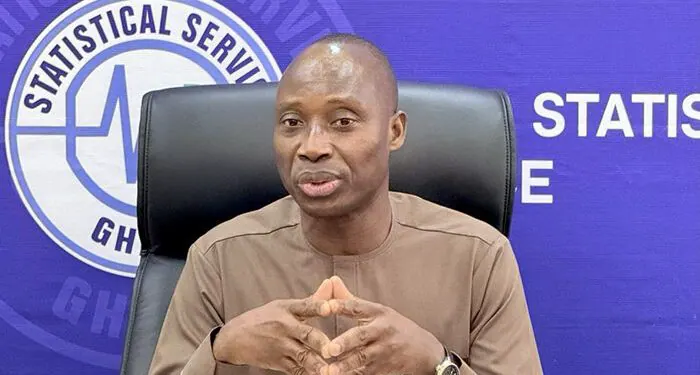
Ghana's accommodation sector has experienced a significant decline in revenue generated from available rooms between November 2024 and January 2025. According to the Ghana Statistical Service (GSS), the national Revenue per Available Room (RevPAR) fell from GH¢603 in November 2024 to GH¢490 in January 2025, representing a decline of about 19%. This decline indicates that accommodation businesses are not effectively converting their room capacity into revenue.
The decline in RevPAR came as national room occupancy also weakened, falling from 46.6% in December 2024 to 44.1% in January 2025. The Average Daily Rate (ADR), which measures the average price paid for occupied rooms, also declined from GH¢1,351 in November to GH¢1,112 in January. However, the sector recorded a modest recovery in February, with RevPAR rising to GH¢524. This suggests that accommodation performance depends on both room prices and occupancy.
The GSS's Accommodation Unit Survey shows that the national room occupancy and ADR have a significant impact on RevPAR. The survey also found that high prices do not necessarily translate into strong revenue performance when a significant proportion of available rooms remains unoccupied. This highlights the need for accommodation businesses to focus on optimizing their room capacity and pricing strategies.
Greater Accra recorded the highest RevPAR among the regions throughout the four-month period. Its RevPAR stood at GH¢1,165 in November 2024 before falling to GH¢852 in January 2025 and recovering to GH¢935 in February. The region also recorded the highest Average Daily Rate during the period. This suggests that Greater Accra remains a key market for accommodation businesses in Ghana.
The accommodation industry in Ghana has considerable unused capacity. Available room capacity remained between approximately 5.0 million and 5.2 million room-nights from November 2024 to January 2025, while occupied rooms ranged between 2.25 million and 2.42 million during the same period. In February, available capacity declined to 4.69 million room-nights, while occupied rooms fell to 2.10 million. This highlights the need for accommodation businesses to focus on improving their utilization of existing capacity.
The GSS recommends that tourism authorities and businesses pay closer attention to occupancy, pricing, RevPAR, guest mix, and length of stay when making investment and operational decisions. For areas with low utilization, the Service suggests that factors such as destination attractiveness, accessibility, infrastructure, marketing, and service quality need to be examined. This will help accommodation businesses to optimize their performance and improve their revenue.
The GSS cautions that the results cover only four months of a 12-month data collection programme and should therefore be treated as an emerging baseline rather than evidence of long-term trends. The Service's findings highlight the need for further research and analysis to understand the trends and patterns in Ghana's accommodation sector. The data will help policymakers and businesses to make informed decisions about the sector.
Key points
- Ghana's accommodation sector recorded a 19% decline in Revenue per Available Room (RevPAR) between November 2024 and January 2025.
- The decline in RevPAR was driven by a weakening in national room occupancy and Average Daily Rate (ADR).
- The GSS recommends that tourism authorities and businesses focus on optimizing room capacity and pricing strategies to improve revenue performance.