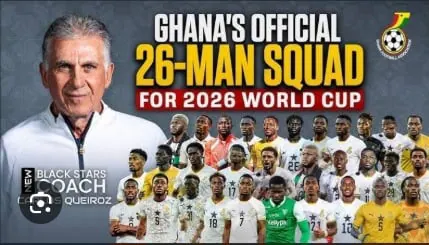
Ghana's national football team, the Black Stars, has hit a new low with back-to-back losses to Côte d'Ivoire and The Gambia in the 2027 Africa Cup of Nations qualifiers. The team's catastrophic performance has exposed deep-seated issues within the Ghana Football Association (GFA). The immediate resignation of Head Coach Carlos Queiroz has brought to the fore concerns about the GFA's administrative foundation and its relationship with the state. Critics argue that the GFA has been operating like a private club, shielded from public oversight.
A crisis meeting between the Ministry of Sports and Recreation and the GFA Executive Council on October 2, 2026, resulted in an emergency roadmap to address the team's woes. However, past experiences suggest that government directives and cosmetic restructuring may not yield desired results if the core financial dynamic remains unchanged. To break the cycle of dependence on state funding, a radical policy shift is being proposed, focusing on financial self-sustainability, structural audits, and local coaching development.
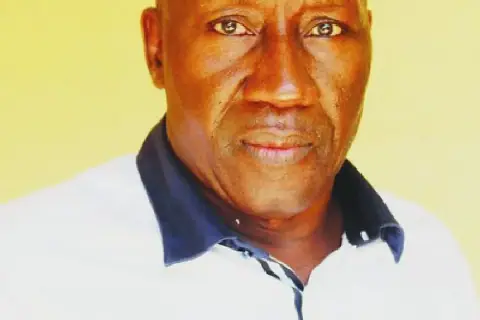
Atitso Akpalu, a key stakeholder, has proposed a blueprint for a self-sustaining and accountable Ghana football ecosystem. The plan involves a transition towards absolute financial self-sustainability, coupled with an unyielding structural audit framework and systematic re-engineering of local coaching development. Akpalu advocates for the implementation of "Zero-State Funding" for the GFA, where the Ministry of Sports and Recreation ceases direct budgetary allocations to the GFA's corporate operations and senior men's team expenses.
To ensure accountability and transparency, Akpalu recommends independent, triple-tier forensic auditing of the GFA's finances. The GFA must submit to mandatory annual forensic audits executed by international firms, with reports made fully public. Additionally, state-owned facilities like the Accra Sports Stadium must be leased commercially, with match-day gate proceeds routed through an independent escrow account to ensure the state is compensated for venue maintenance.
The proposed blueprint also focuses on self-sustainability funding models to build an independent football economy. The GFA is encouraged to commercialize corporate sponsorship and broadcast rights, packaging and selling digital and broadcast rights of domestic leagues and youth tournaments to international streaming markets. A sovereign football wealth fund via transfer levies is also proposed, where a fixed percentage of international transfers of players from Ghanaian clubs and academies is ring-fenced for grassroots development.
To empower local coaching and domestic talent, the Technical Search Committee is urged to prioritize elite local coaching talent or highly qualified African tacticians. The GFA must establish a permanent, state-of-the-art coaching academy within Ghana, subsidizing CAF License A, B, and C coaching courses for former domestic players and local youth coaches. A unified developmental curve linking youth academies directly to senior squads must be institutionalized, with local coaches on long-term contracts.
The overhaul of Ghana's football administration also involves decentralizing talent, focusing on the Under-20 divisions, women's game, and inter-colleges revolution. The GFA must prioritize the advancement of the Under-20 divisions, accelerate the thriving women's game, and leverage the historical power of academic sports. With these reforms, Ghanaian football can build a resilient economy that stands on its own feet, free from dependence on state funding.
Key points
- Financial decoupling of the GFA from the state
- Implementation of self-sustainability funding models
- Empowerment of local coaching and domestic talent