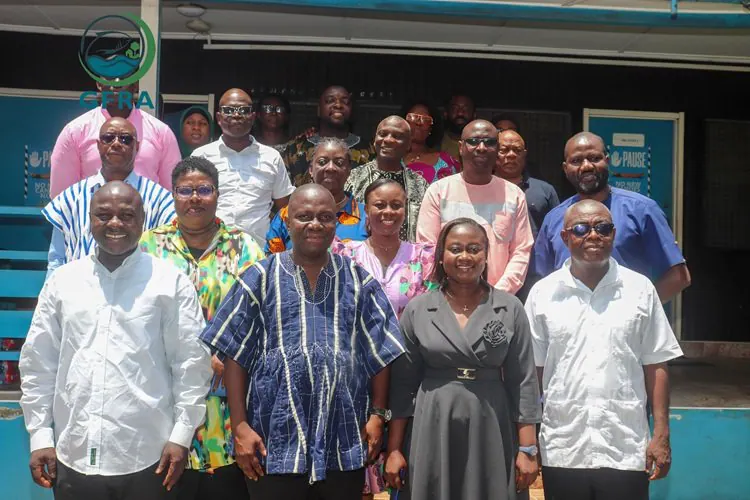
The Governing Board of Ghana's Fisheries Commission, with support from Global Fisheries and Resilience Action, has launched two national-level fisheries co-management committees in Accra. The committees, inaugurated on September 15, aim to strengthen participatory and science-based fisheries management under Ghana's new fisheries law. This development is part of a broader process to align Ghana's fisheries co-management structures with the Fisheries and Aquaculture Act, 2025.
The first committee, the Scientific and Technical Committee, is chaired by Dr. Angela Lamptey. Its mandate includes providing scientific and technical advice to inform fisheries management decisions. The committee's scope now covers inland fisheries and aquaculture, in addition to its existing responsibilities relating to marine fisheries. This expansion aims to provide comprehensive advice on various aspects of fisheries management.
The second committee, the Fisheries Management Operational Committee, is chaired by Mr. Daniel Owusu. Its primary function is to translate scientific and technical advice into coordinated operational action. The committee will develop annual implementation plans, coordinate among relevant divisions of the Fisheries Commission, and ensure consistent institutional representation as required by the Fisheries and Aquaculture Act, 2025.
The two committees are expected to bridge the gap between scientific advice and fisheries management implementation. They will provide a structured platform for collaboration among government institutions, technical experts, and fisheries stakeholders. This collaboration aims to ensure that fisheries management decisions are informed by scientific research and technical expertise.
The inauguration of these committees marks a significant step towards strengthening Ghana's fisheries management. The Fisheries Commission's efforts are aimed at aligning with the country's new fisheries law, which seeks to promote sustainable and responsible fishing practices. The committees will play a crucial role in ensuring that Ghana's fisheries are managed in a sustainable and science-based manner.
The Global Fisheries and Resilience Action has been supporting the Fisheries Commission in its efforts to enhance fisheries management. The Inshore Exclusion Zone Enforcement and Transparency Project has been instrumental in providing support for the inauguration of these committees. This project aims to promote sustainable fisheries management and improve the livelihoods of fishing communities.
The launch of these committees has been well-received by stakeholders, who see it as a positive step towards promoting sustainable fisheries management in Ghana. The committees are expected to make a significant impact on the country's fisheries sector, and their work will be closely monitored by stakeholders.
Key points
- The Fisheries Commission has launched two national-level fisheries co-management committees to enhance science-based management.
- The committees aim to strengthen participatory and coordinated fisheries management under Ghana's new fisheries law.
- The launch of these committees marks a significant step towards promoting sustainable and responsible fishing practices in Ghana.