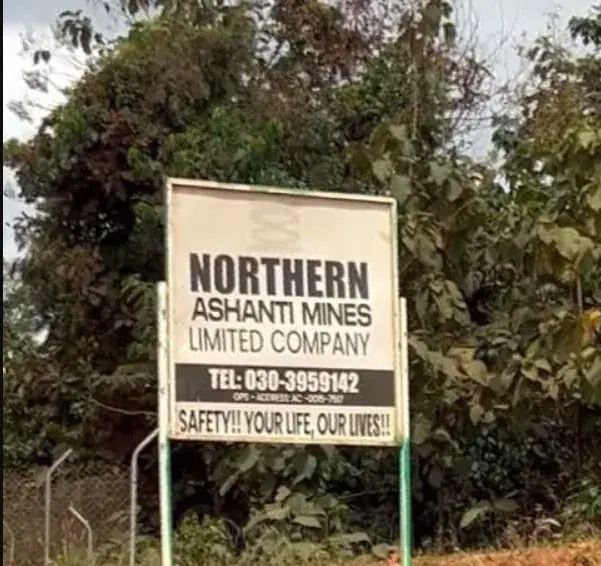
The Asanda Farmers Association has expressed concerns over the Minerals Commission's decision to revoke Northern Ashanti Mines' licence, citing potential negative impacts on debt recovery. The association's Secretary, Emmanuel Aidoo, described the revocation as harsh and argued that dialogue, rather than licence withdrawal, should have been the first option. According to Aidoo, the company owes $8.3 billion, and shutting it down would make recovering this debt impossible.
Aidoo emphasized that the government stands to gain more from keeping the company operational than from shutting it down. He suggested that talks between the state and Northern Ashanti Mines could help iron out operational shortcomings. The association's intervention comes as the dispute over the company's alleged debts and the licence revocation continues to escalate. Aidoo pointed out that some members of the farmers' group benefit directly from the mine's operations, with some of their children employed by the company.
The farmers' association is not alone in its concerns, but it is at odds with Asante Akyem chiefs, who publicly backed the Minerals Commission's decision to revoke Northern Ashanti Mines' lease. The chiefs' endorsement of the revocation puts traditional authorities in the area at variance with the farmers' group over how the company's alleged debts should be handled. Aidoo warned that revoking licences of indigenous mining firms could have serious consequences for Ghana, including significant job losses that should be treated as a national security concern.
Aidoo cited the precedent set by the government in its dealings with another mining firm, Adamus, which was granted a reprieve. He appealed for similar treatment for Northern Ashanti Mines, arguing that the company has employed many Ghanaians and has a good reputation beyond Ghana's borders. The association's concerns highlight the complexities surrounding the licence revocation and the need for a balanced approach to addressing the issues.
The Minerals Commission, responsible for regulating and managing Ghana's mineral resources, had not issued fresh comment on the farmers association's remarks at the time of this report. The sources do not detail how the $8.3 billion debt figure was arrived at or what it is owed for. The commission's decision to revoke the licence has sparked a heated debate, with various stakeholders weighing in on the issue.
The Asanda Farmers Association's intervention underscores the potential impact of the licence revocation on local communities and the economy. The association's concerns are rooted in the potential consequences of the company's shutdown, including job losses and the impact on local businesses. Aidoo's call for dialogue between the government and Northern Ashanti Mines reflects the association's desire for a solution that balances the interests of all parties involved.
The dispute over Northern Ashanti Mines' licence revocation and alleged debts highlights the challenges of regulating and managing Ghana's mineral resources. The situation underscores the need for effective communication and collaboration between stakeholders, including government agencies, mining companies, and local communities. The outcome of this dispute will likely have significant implications for Ghana's mining sector and the economy as a whole.
Key points
- The Asanda Farmers Association warns that revoking Northern Ashanti Mines' licence will make recovering the company's alleged $8.3 billion debt impossible.