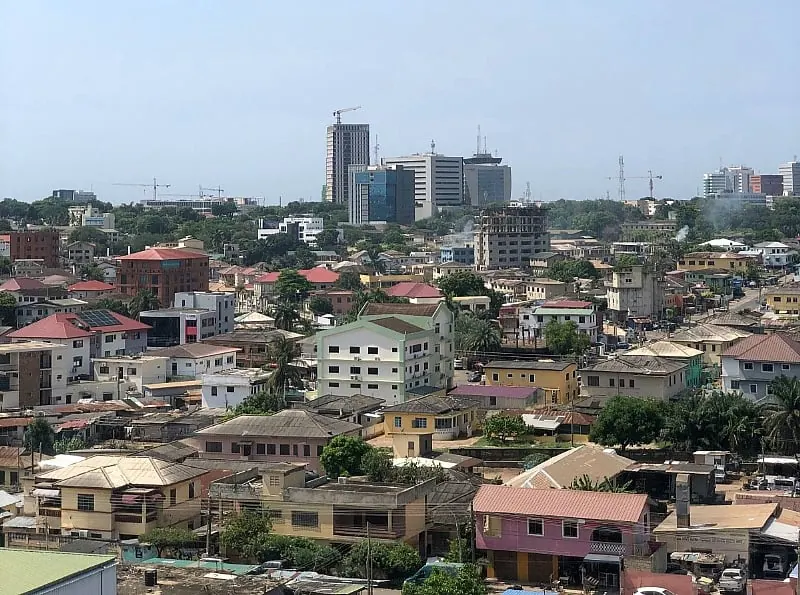
Ghanaian President John Dramani Mahama has proposed a novel solution to the country's housing crisis, suggesting that instead of building new estates, the government should focus on completing unfinished houses. During the National Conference on Housing Finance on October 7th, Mahama described the number of unfinished houses across the country as "mind-boggling." He observed that many of these houses were abandoned due to a lack of GH¢40,000, approximately $2,500, needed to complete them.
Mahama's proposal involves identifying unfinished houses by area, getting engineers to do bills of quantities, assessing owner incomes, and providing targeted top-up financing. This approach would allow the government to convert current rent into a rent-to-own mortgage. The plan is supported by the GH¢3 billion Revolving National Housing Fund, which offers developers a borrowing rate of 10.4% and workers an ownership rate of 8.4% in cedis over 15 to 20 years. An additional GH¢1 billion seed fund has been allocated from the 2027 budget.
Another potential source of funding for the housing initiative is dormant bank accounts. Under Act 930 and the Bank of Ghana's dormant account directive, accounts with no customer-initiated activity for two years become dormant and are eventually swept to the Bank of Ghana. While the total amount in dormant accounts is not publicly disclosed, estimates suggest it could be between GH¢500 million and GH¢1 billion. Finance Minister Dr. Cassiel Ato Forson has announced that the government is developing a policy to use unclaimed balances for national development, protecting ownership and promoting transparency.
The proposed policy for utilizing dormant accounts is modeled after the British Dormant Assets Act, which created a £1.7 billion Reclaim Fund. This fund keeps a prudent reserve for reclaiming owners and deploys the rest to social good, including housing. To ensure transparency and prevent corruption, the Ghanaian government is considering several measures, including shortening the window for looting, investing unclaimed balances in government securities, and adopting a 40/60 rule for lending to the housing revolving fund.
To implement the policy, the government plans to create a digital map of every uncompleted house, with details such as GPS, photo, completion stage, and bill-of-quantities. This information will be open to public scrutiny, with funds paid directly to artisans and suppliers. Traditional Councils and Assembly members will co-validate the list to ensure its accuracy. The Kwahu West area, with its thousands of stalled self-builds, has been identified as a potential pilot site for this initiative.
The initiative aims to recycle existing resources, rather than imposing new taxes on Ghanaians. By linking the two dead capitals – dormant money and unfinished houses – the government hopes to provide affordable housing solutions. President Mahama's proposal has been praised for its creativity, and the government is expected to implement the plan with transparent and accountable measures.
The success of the initiative will depend on effective implementation and public participation. Key aspects of the plan include publishing the entire unclaimed balances registry on a public portal, searchable by Ghana Card and *707#, and investing the interest from dormant accounts in government securities to capitalize the National Housing Fund at zero cost. With careful execution, the initiative could provide a significant boost to Ghana's housing sector and help address the country's housing crisis.
Key points
- The Ghanaian government is exploring a novel approach to addressing the housing crisis by recycling dead capital, including unfinished houses and dormant bank accounts.
- The proposed policy for utilizing dormant accounts is modeled after the British Dormant Assets Act and aims to promote transparency and protect ownership.
- The initiative aims to provide affordable housing solutions without imposing new taxes on Ghanaians, by linking dormant money and unfinished houses.