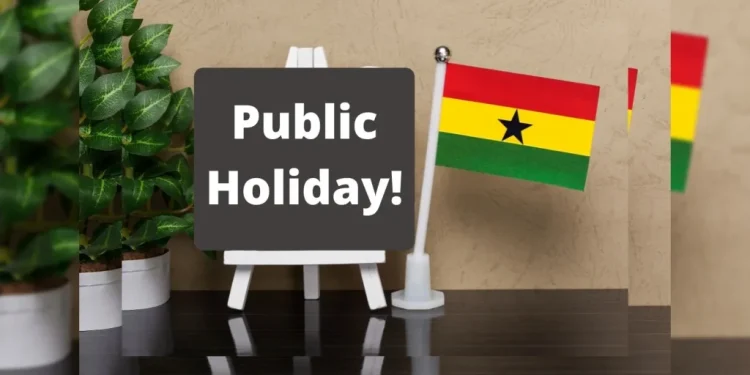
The Interior Ministry of Ghana announced today, September 21, a statutory national public holiday to commemorate Ghana's first president, Osagyefo Dr. Kwame Nkrumah. This declaration was made through a formal statement signed by the Interior Minister, Muntaka Mohammed - Mubarrak. The public holiday is to mark Founder's Day, which is a significant celebration in honour of Dr. Nkrumah's contributions to Ghana's independence and development.
Dr. Kwame Nkrumah was born on September 21, 1909, in Nkroful, a small town in Ghana's Western Region. He attended Achimota School in Accra before pursuing higher education abroad. Nkrumah studied at Lincoln University and the University of Pennsylvania in the United States and later in London. During his time abroad, he became deeply involved in Pan-Africanist movements and student politics, laying the groundwork for his future role in Ghana's independence struggle.
Nkrumah returned to the Gold Coast in 1947 and quickly rose to prominence as General Secretary of the United Gold Coast Convention (UGCC). His radical approach to independence led him to break away and form the Convention People's Party (CPP) in 1949. Through mass mobilisation and grassroots activism, he became the face of Ghana's independence struggle. In 1950, he was arrested for political agitation but was released after the CPP won a decisive electoral victory.
In 1952, Nkrumah became Prime Minister under colonial rule, and by March 6, 1957, he led Ghana to independence, making it the first sub-Saharan African nation to achieve this milestone. He declared Ghana a republic in 1960 and became its first President. His administration focused on industrialisation, education, and infrastructure, with notable projects such as the Volta River Project (Akosombo Dam). Nkrumah was also a leading voice for African unity, helping to establish the Organisation of African Unity (OAU) in 1963.
The date and meaning of Ghana's Founders' Day have undergone changes over the years. In 2009, President John Atta Mills introduced Founders' Day on September 21 to honour Dr. Nkrumah as the sole founder of the nation. In 2017, President Nana Akufo-Addo changed the holiday to August 4, renaming it Founders' Day in the plural form to recognise the collective efforts of the "Big Six" and other nationalists. However, in 2025, President John Dramani Mahama reversed this decision through the Public Holidays and Commemorative Days (Amendment) Act, 2025.
The 2025 amendment reinstated September 21 as Founder's Day, once again honouring Nkrumah alone, and removed August 4 from the holiday calendar. This change took effect from 2026 onward. Today, as Ghana observes this public holiday, citizens reflect on Dr. Nkrumah's enduring legacy and his contributions to the country's development. His vision for rapid industrialisation, education expansion, and continental unity continues to inspire generations of Ghanaians.
Despite his achievements, Nkrumah's government faced challenges, including economic strain and political opposition. On February 24, 1966, while on a state visit abroad, Nkrumah was overthrown in a military coup. He spent his remaining years in exile in Guinea, where President Ahmed Sékou Touré named him Honorary Co-President. Nkrumah died on April 27, 1972, in Bucharest, Romania, and his remains were later reburied at the Kwame Nkrumah Mausoleum in Accra.
Key points
- The Ghanaian government has declared September 21 a public holiday to commemorate the birthday of Dr. Kwame Nkrumah, the country's first president.
- Dr. Nkrumah played a crucial role in Ghana's independence struggle and became the country's first president in 1960.
- The date and meaning of Ghana's Founders' Day have undergone changes over the years, with September 21 being reinstated as the holiday in 2025.