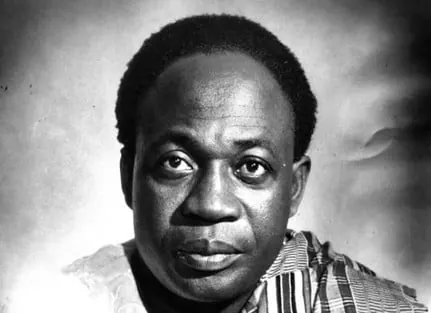
Kwame Nkrumah, Ghana's first president, played a pivotal role in the country's fight for independence. Born in 1909, Nkrumah was a key figure in the Fifth Pan-African Congress in Manchester in 1945. He became the General Secretary of the United Gold Coast Convention and later formed the Convention People's Party. Nkrumah's leadership led to Ghana gaining independence on March 6, 1957. His government's ambitious projects, including the construction of Tema and Akosombo, reflected his vision for a modern Ghana.
Nkrumah's presidency was marked by significant achievements, but also controversy. He implemented the Preventive Detention Act in 1958, which allowed for the detention of opponents without trial. His government became increasingly authoritarian, and opposition was suppressed. The economy also faced significant challenges, leading to growing discontent. In 1966, a military coup overthrew Nkrumah, and he spent the remainder of his life in exile, passing away in 1972.
After his death, Nkrumah's legacy was subject to revisionism. The National Liberation Council, which took power after his overthrow, attempted to erase his image from Ghana's national narrative. His statue was toppled, and institutions associated with him were renamed. However, in the 1970s and 1980s, there was a gradual rehabilitation of Nkrumah's legacy. His remains were returned to Ghana in 1972 and buried at Nkroful.
In the 1990s, Nkrumah's legacy continued to evolve. His remains were transferred to a memorial park in Accra in 1992, and a new statue was erected. In 1998, Parliament restored his name to the Kwame Nkrumah University of Science and Technology. Roads, institutions, and monuments were named after him, cementing his place in Ghana's national landscape.
Today, Ghana continues to debate how to remember Nkrumah. The national calendar has been a subject of contention, with different governments establishing different commemorative days. In 2009, President John Evans Atta Mills established September 21 as Founder's Day, while in 2017, President Nana Addo Dankwa Akufo-Addo changed it to August 4. In 2025, Parliament restored September 21 as Founder's Day.
As the generation that knew Nkrumah as a living person disappears, the responsibility of remembering him falls on historians, schools, and the state. The passage from living to inherited memory raises questions about the purpose of commemorating Nkrumah. What is the significance of his legacy, and how should it be celebrated? These questions are crucial in understanding Ghana's complex history and its ongoing impact on the country's identity.
Nkrumah's legacy extends beyond Ghana, symbolizing Pan-African aspiration across Africa and its diaspora. His name carries recognition globally, evoking emotional attachment and fierce debate. As Ghana continues to grapple with its past, it must also consider the implications of its commemorative culture and how it chooses to remember its first president.
Key points
- Ghana's public commemorative culture has been preoccupied with whether Nkrumah deserves remembrance.
- Nkrumah's legacy continues to be a subject of debate in Ghana, with different generations and political traditions offering varying perspectives.
- The passage from living to inherited memory places a different responsibility upon historians, schools, museums, universities, and the state to preserve and interpret Nkrumah's legacy.