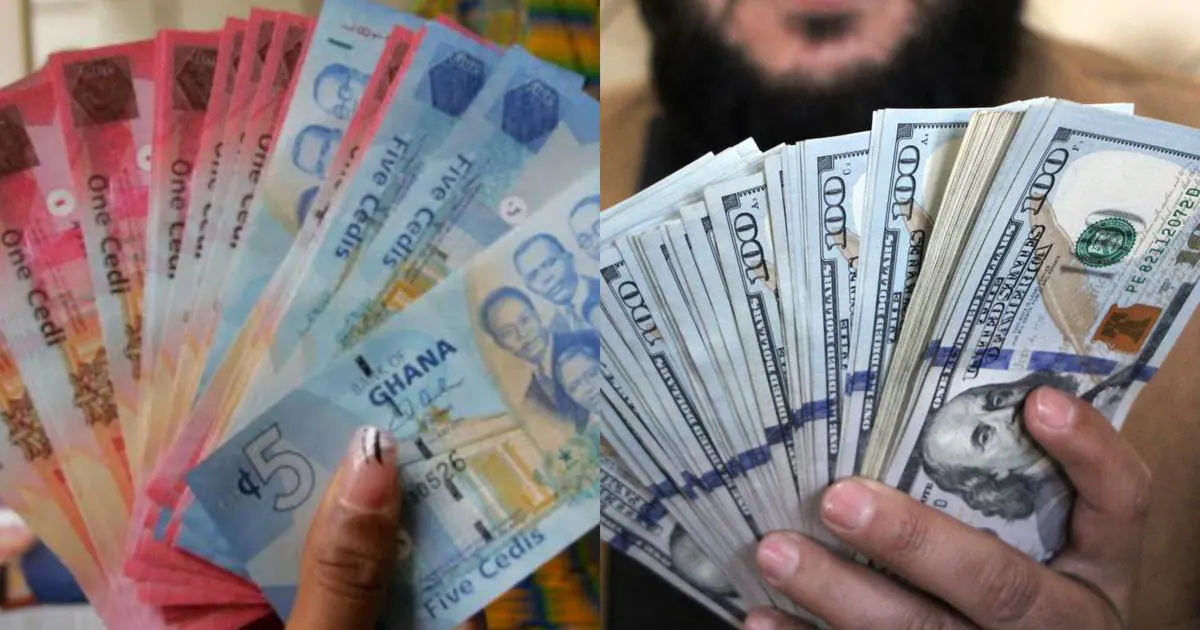
The Ghana cedi has depreciated against the US dollar, British pound, and euro, according to the Bank of Ghana's daily exchange rates for September 22, 2026. The cedi's decline could lead to higher import costs and increased expenses for foreign currency payments. This development may impact the prices of goods and services in Ghana.
The Bank of Ghana's rates indicate that the US dollar is buying at GH¢11.5442 and selling at GH¢11.5558. Compared to the previous rates of GH¢11.5142 for buying and GH¢11.5258 for selling on September 18, the dollar's buying and selling rates have increased by GH¢0.0300. This upward trend may affect businesses and individuals relying on dollar-denominated transactions.
The British pound has also strengthened against the cedi, with a buying rate of GH¢15.4381 and a selling rate of GH¢15.4547. These rates are higher than the previous GH¢15.3646 for buying and GH¢15.3811 for selling. The pound's increase is GH¢0.0735 on the buying rate and GH¢0.0736 on the selling rate, reflecting a notable shift in exchange rates.
The euro's buying rate has risen by GH¢0.0210, while its selling rate has increased by GH¢0.0222. The latest figures show that the cedi has weakened against all three major currencies compared to the previous Bank of Ghana rates. This movement may put upward pressure on the cost of imported goods and services.
The Bank of Ghana rates represent average interbank rates used by commercial banks for transactions at the close of business on the previous trading day. However, actual rates offered by individual banks, forex bureaux, and other providers may vary. This discrepancy may lead to differences in exchange rates for individuals and businesses.
The weaker cedi could have far-reaching implications for Ghana's economy, particularly for businesses relying on imports and foreign currency transactions. As the cedi continues to depreciate, the cost of living and doing business in Ghana may increase. Stakeholders will be monitoring the situation closely to assess the impact on the economy.
The latest exchange rates come as Ghana continues to navigate economic challenges. The government's efforts to stabilize the cedi and manage inflation will be crucial in mitigating the effects of the currency's decline. As the situation develops, individuals and businesses must stay informed about exchange rates and adjust their strategies accordingly.
Key points
- The Ghana cedi has weakened against the US dollar, British pound, and euro.
- The Bank of Ghana's rates show increased exchange rates for the dollar, pound, and euro.
- The cedi's decline may lead to higher import costs and increased expenses for foreign currency payments.