The Government of Ghana has made a strategic decision to apply for membership in the BRICS international organization, comprising Brazil, China, Egypt, Ethiopia, India, Indonesia, Iran, Russia, South Africa, and the United Arab Emirates. This move aims to expand Ghana's geopolitical and economic frontiers, anchored on its national interest and the freedom of choice in the evolving multipolar world. According to Foreign Minister Samuel Okudzeto Ablakwa, Ghana seeks to position itself as a reliable friend of all nations.
BRICS, formed in 2009, has grown to represent over a quarter of the global economy and nearly half the world's population. The bloc has established institutions such as the New Development Bank, the BRICS Contingent Reserve Arrangement, and the BRICS PAY payment platform. These mechanisms promote de-dollarization initiatives, increasing trade settlements in national currencies. The organization's growing influence has drawn both praise and criticism from commentators and world leaders, with some viewing it as an alternative to the G7.
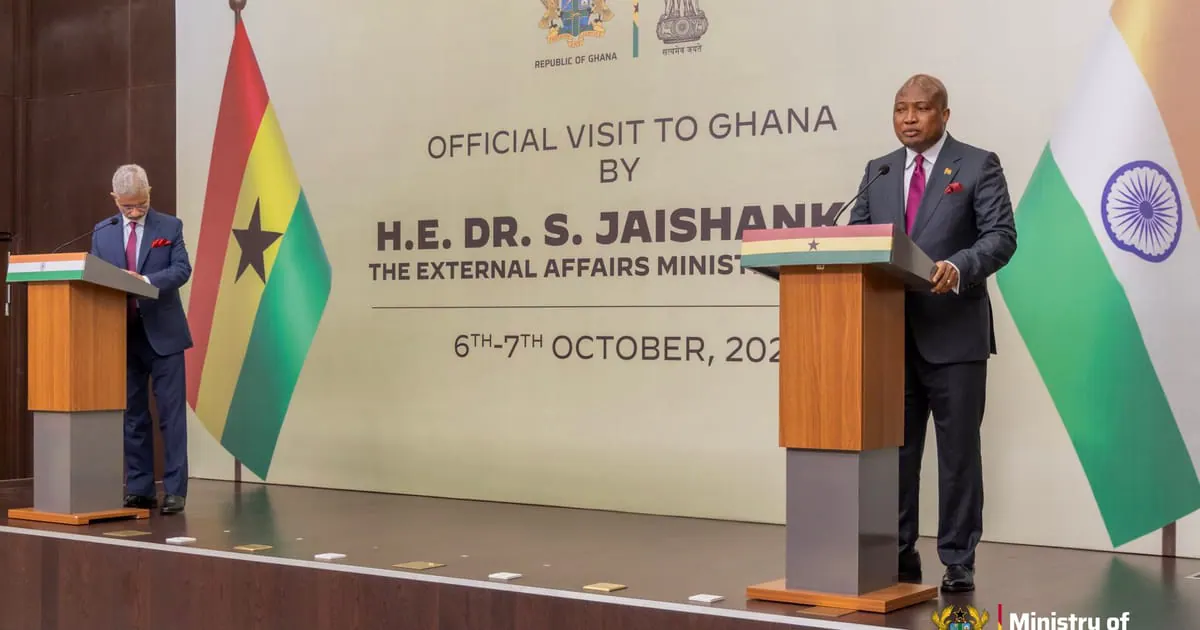
During a working visit by Indian External Affairs Minister Dr. S. Jaishankar to Ghana on October 7, Minister Ablakwa announced the cabinet's decision to apply for BRICS membership. He emphasized Ghana's commitment to expanding its relationships while prioritizing national interests. The visit also led to agreements on further cooperation in railway projects, with India financing additional railway constructions in Ghana.
Ghana and India have strengthened their bilateral ties, with India set to increase investments in Ghana's pharmaceutical sector. This development supports the Mahama Administration's initiative to boost local pharmaceutical production capacity under the President's Accra Reset health sovereignty initiative. The two nations are also deepening cooperation in digital technology and artificial intelligence.
Minister Ablakwa expressed satisfaction with the progress made in Ghana-India relations, citing the signing of two significant agreements on scientific research collaboration and agricultural cooperation. The agreements aim to enhance cooperation between the two countries. Ghana will also coordinate efforts as Chair of the African Union to develop an Africa-India strategy at next year's Africa-India summit.
The Ghana-India Comprehensive Partnership has made significant gains under the leadership of President Mahama and Indian Prime Minister Modi. Minister Ablakwa drew parallels with the vision of former leaders Jawaharlal Nehru and Kwame Nkrumah, highlighting the strong bilateral ties between the two nations. The partnership encompasses various sectors, including defense, technology, and agriculture.
As Ghana seeks to expand its geopolitical and economic frontiers through BRICS membership, the country aims to leverage its relationships with existing member states. With a growing global influence, BRICS presents opportunities for Ghana to engage in multilateral policies and cooperation. The decision to apply for membership reflects Ghana's strategic efforts to position itself in the evolving global landscape.
Key points
- Ghana applies for BRICS membership to expand its geopolitical and economic frontiers.
- The decision reflects Ghana's aim to position itself as a reliable friend of all nations.
- Ghana-India relations have strengthened, with agreements on railway projects, pharmaceutical investments, and technology cooperation.