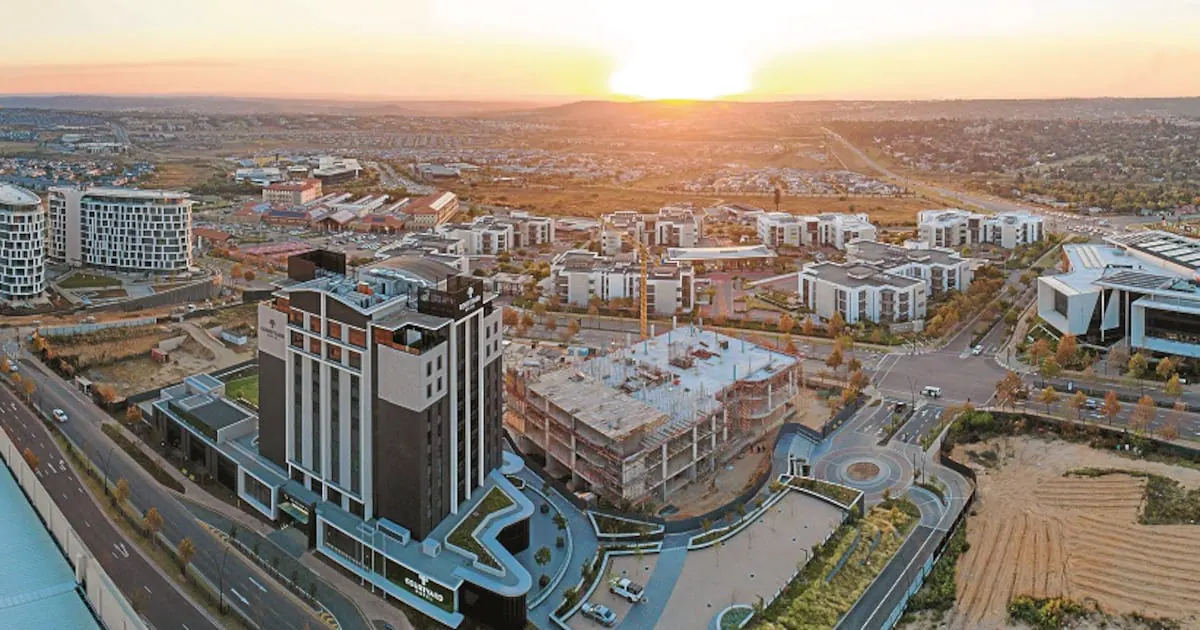
South Africa's office market is slowly recovering from the post-pandemic downturn, with office vacancies falling to their lowest level in over six years. The national office vacancy rate declined to 11.8% in the third quarter, down from a peak of 16.8% in mid-2022. This improvement is attributed to increasing demand and limited supply, with positive net absorption of almost 70,000m² during the quarter.
The recovery is becoming more widespread, extending beyond higher-quality office stock, according to Sapoa. The association noted that the combination of improving occupancy, positive absorption, and limited speculative development indicates a progressively tighter office market. However, conditions vary significantly across different nodes and grades. A-grade vacancies declined to 9.5%, while B-grade vacancies eased to 15.9%, and C-grade offices recorded a significant quarterly improvement with vacancies falling to 15.6%.
Prime offices remain the tightest segment, with vacancies of just 4.7%, although this is a slight increase from the previous quarter. Average asking rentals in the prime segment rose to R234/m² per month, widening the premium over lower grades. A-grade rentals averaged R149/m², while B- and C-grade space reached R123/m² and R101/m², respectively. Across the market, asking rentals increased by 7.2% year-on-year, indicating that improving occupancy is enabling landlords to push rents, particularly in buildings with strong locations and quality.
The improvement in secondary stock may be partly due to the conversion of older or less competitive offices to residential and other uses, removing surplus space from the market. Sapoa noted that the persistent vacancy gap between prime and secondary stock highlights the continued importance of quality, location, and building competitiveness. Supply is becoming increasingly disciplined, with about 70.4% of office space under development already pre-let, indicating a development pipeline driven by identifiable tenant demand rather than speculative construction.
The recovery, however, remains uneven geographically. Cape Town recorded the lowest vacancy rate among major markets at 6.9%, followed by Tshwane at 8.9% and Durban at 9.3%. Johannesburg remained under greater pressure, with vacancies of 14.7%, while Gqeberha recorded the highest rate at 15.7%. The pace of recovery since early 2022 also varies, with Durban recording the largest improvement and Gqeberha experiencing a more modest decline.
Sapoa noted that the figures indicate a broadening recovery geographically, but at different speeds, reflecting differences in occupier demand, local economic conditions, development activity, and the amount and competitiveness of existing office stock. Office development remains constrained as the market focuses on absorbing and repositioning existing stock, while developers remain cautious about adding new supply. This cautious approach is helping the market absorb excess space without creating a fresh wave of vacancies.
Key points
- The national office vacancy rate in South Africa has fallen to 11.8% in the third quarter, the lowest level in more than six years.
- Prime offices remain the tightest segment, with vacancies of just 4.7%.
- The recovery in the office market is becoming more widespread, extending beyond higher-quality office stock.