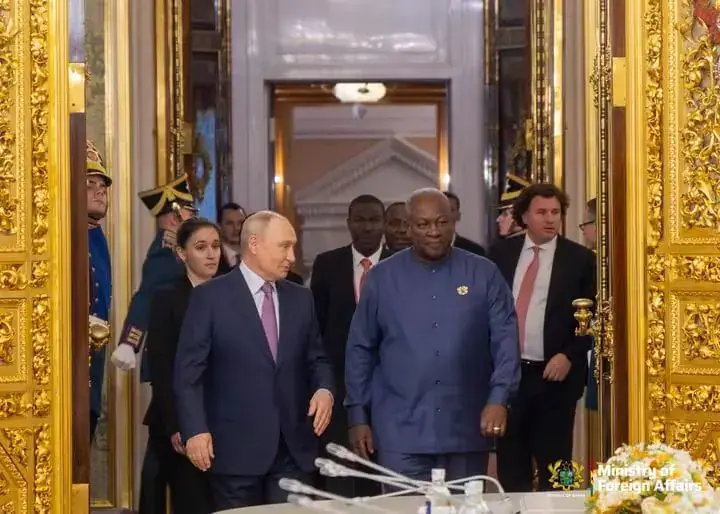
Ghanaian President John Dramani Mahama has secured six key bilateral agreements with Russian President Vladimir Putin on the sidelines of the Third Russia-Africa Summit in Moscow. The agreements cover energy security, defence cooperation, agricultural support, higher education, security, and diplomatic relations. Ghana's Minister for Foreign Affairs, Samuel Okudzeto Ablakwa, announced the development in an official statement. These agreements mark a significant shift in Ghana's strategic partnerships.
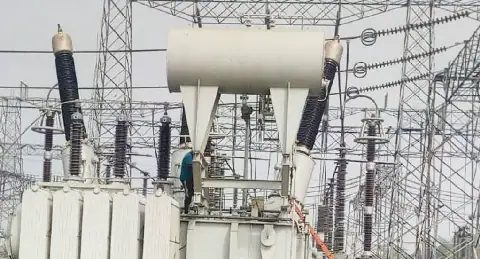
One of the primary agreements involves Russia assisting Ghana in constructing a 2,000-megawatt nuclear power plant to strengthen national energy security and drive industrial growth. This project revives a historical ambition dating back to Ghana's first president, Dr. Kwame Nkrumah, who initiated early work on a nuclear research facility before the 1966 coup. The nuclear power plant aims to provide a stable and reliable source of energy for Ghana's growing economy.
President Mahama also secured a new defence cooperation framework with Moscow to help Ghana acquire strategic military equipment and reinforce the capabilities of the Ghana Armed Forces. Additionally, the two nations plan to expand joint efforts to boost grain yields and improve fertilizer supplies, strengthening Ghana's overall food security. This military and agricultural collaboration is expected to have a positive impact on Ghana's development.
Educational exchanges are another key area of agreement, with Russia committing to offer more scholarships to Ghanaian students. Ghana already has the second-highest number of students studying in Russia among African nations. The two countries also discussed security concerns, particularly the involvement of Ghanaian citizens in the Russia-Ukraine conflict. President Putin declared that Ghanaians will no longer be permitted to participate in the conflict.
To implement these commitments, both governments agreed to reactivate the Permanent Joint Commission for Cooperation (PJCC), with Russia hosting the next PJCC session in the coming weeks. Ghana and Russia have maintained formal diplomatic ties since 1958. The reactivation of the PJCC aims to enhance cooperation and strengthen bilateral relations between the two nations.
During summit sessions with regional leaders, discussions centered on expanding economic sovereignty across the African continent. President Mahama advocated for settling cross-border trade in local currencies and developing independent digital payment mechanisms. He highlighted Ghana's strategic position as host of the African Continental Free Trade Area (AfCFTA) Secretariat.
The agreements between Ghana and Russia demonstrate a continued effort to deepen trade and strategic cooperation between both nations. President Mahama emphasized the broader vision of bilateral partnerships, noting that the most lasting expression of their friendship will be the progress their people can see in their communities and lives. The two nations are expected to work closely together to implement these agreements.
Key points
- Ghana and Russia have agreed to construct a 2,000-megawatt nuclear power plant to strengthen Ghana's energy security.
- The two nations have also agreed to expand joint efforts to boost grain yields and improve fertilizer supplies, strengthening Ghana's food security.
- Russia has committed to offering more scholarships to Ghanaian students, building on Ghana's existing student presence in Russia.