The Ghana AIDS Commission (GAC) is calling for stronger domestic financing and intensified prevention efforts to protect the gains made against the HIV epidemic in Ghana. Forty years after Ghana began its response to HIV and AIDS, the Commission emphasizes the importance of government taking greater responsibility for financing HIV prevention, testing, and treatment due to declining external funding. This call to action comes as the country marks four decades of the HIV response.
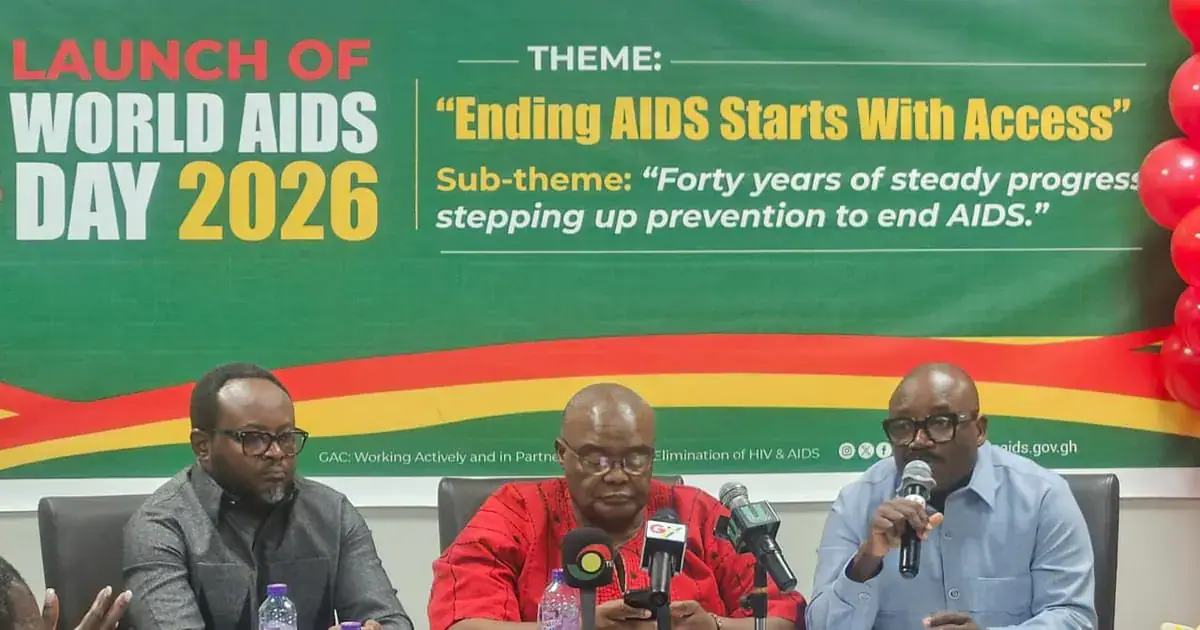
The 2026 World AIDS Day is being marked under the theme, "40 Years of Steady Progress: Stepping Up Prevention to End AIDS." For the Ghana AIDS Commission and its stakeholders, this milestone is not only about celebrating progress but also about ensuring that people, particularly those who remain vulnerable to HIV, can access prevention services without interruption. The challenge is to translate the gains in treatment and survival into stronger prevention, reduced stigma, and sustainable domestic financing.
Programme Manager of the National AIDS/STI Control Programme (NACP), Dr Emmanuel A. A. Teviu, noted that prevention messages, testing, and linkage to treatment will be brought closer to communities, making it easier for people to know their HIV status and access care. He emphasized that the programme is improving the redistribution of HIV commodities among regions to prevent facilities from running out of supplies due to poor stock management.
Dr Teviu explained that the global funding landscape has changed significantly, forcing countries to look inward to close the financing gap. He mentioned that the Government of Ghana has led initiatives over the past few months, including the Accra Reset Agenda, to ensure domestic financing for the HIV response. This shift in funding landscape requires Ghana to mobilize more resources locally to sustain its comprehensive HIV response.
Director-General of the Ghana AIDS Commission, Dr Kharmacelle Prosper Akanbong, stated that the government is taking steps to sustain the national response, including funding for HIV commodities and plans to integrate HIV services into the Free Primary Healthcare programme. This integration will allow community-based health workers to provide prevention education, testing, and referrals for treatment.
The GAC estimates that sustaining the country's comprehensive HIV response requires about $220 million, covering medicines, prevention commodities, treatment, human rights interventions, and other essential services. This funding is crucial to ensure continued access to services and medicines, determining whether people living with HIV can live healthy lives and whether new infections can be prevented.
As Ghana marks 40 years of responding to HIV and AIDS, the Ghana AIDS Commission and its stakeholders are emphasizing the need for sustainable domestic financing and intensified prevention efforts. The Commission's call for action highlights the importance of government commitment and community involvement in ending the AIDS epidemic in Ghana.
Key points
- The Ghana AIDS Commission calls for increased domestic financing to sustain the country's comprehensive HIV response.
- The global funding landscape has changed, forcing Ghana to look inward to close the financing gap.
- The GAC estimates that $220 million is required to sustain the country's comprehensive HIV response.