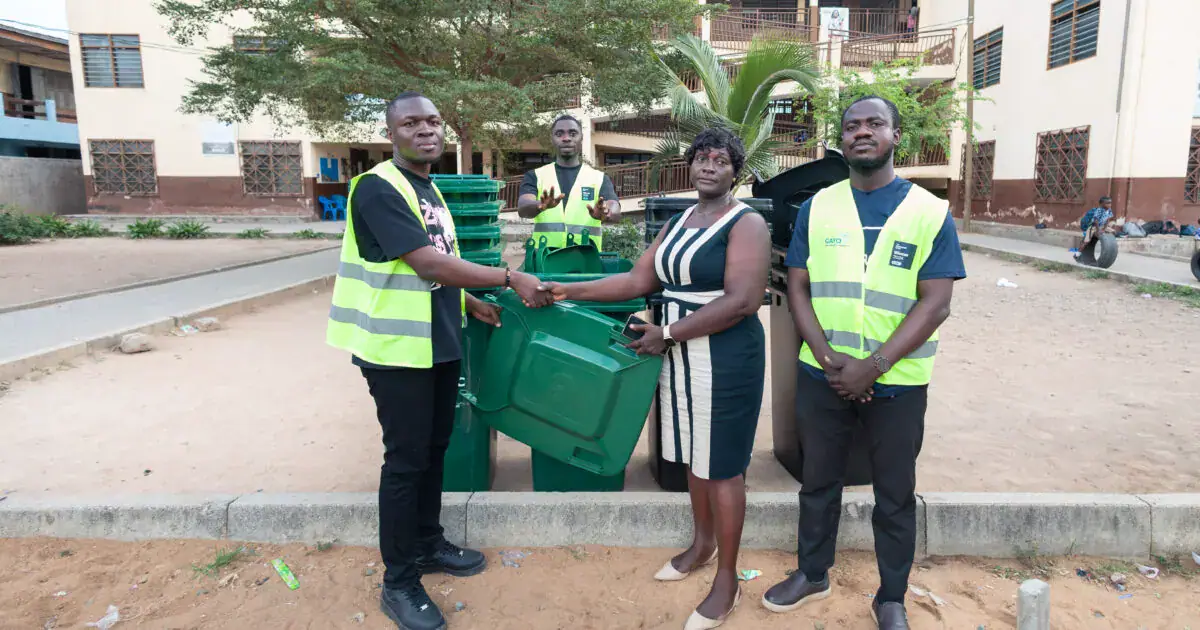
The Green Africa Youth Organization (GAYO) has launched a Zero Waste initiative to help schools in Accra manage their waste effectively. Under this initiative, GAYO will collect separated organic and plastic waste directly from schools in seven municipalities across Greater Accra. This move aims to address the challenges faced by schools that have been sorting their waste but have seen their efforts rendered ineffective due to collection trucks mixing the sorted rubbish back together.
Education officials in the La Dade Kotopon Municipality have expressed concerns about the waste management challenges faced by schools. According to Madam Habiba Kotomah, Education Director for the La Dade Kotopon Municipality, some schools had participated in a pilot project that provided bins for sorting, but the effort collapsed when collection trucks failed to separate the waste. As a result, many schools have stopped sorting their waste altogether.
The problem of waste management is a significant burden on local government, with about 60 percent of financial resources allocated to assemblies going into managing waste, mostly organic waste and plastics. Antonio Yayrator Korkuvi, a Project Coordinator on GAYO's Zero Waste portfolio, noted that schools are a major source of waste, with approximately 60 percent of waste generated in schools being organic.
The impact of poorly managed waste is evident, with the production of methane, a potent greenhouse gas, and visible costs such as flooding. Betty Adjei, Operations and Programs Director at GAYO, pointed to the floods in June and July, which were exacerbated by the presence of waste in communities. The push for schools to adopt composting and recycling comes ahead of a government directive requiring all households to start separating their waste from next year.
Under the initiative, GAYO is working with schools in several municipalities to set up sorting systems and train students. Separated organic waste is turned into compost for school gardens, while plastics are processed into pellets at GAYO's material recovery facility. Madam Kotomah noted that GAYO has agreed to collect the sorted waste from schools and pay them a token in return.
The initiative has already shown promising results, with the La Dade Kotopon Municipal Assembly's material recovery facility diverting more than 50 tonnes of waste a month. GAYO plans to extend the initiative to markets and other areas. At Forces Senior High School, Assistant Headmistress (Domestic) Rosina Lawal has built a culture of keeping bins within reach of every student, with the goal of having one bin per student.
The initiative is expected to have a positive impact on waste management in Accra, with GAYO and its partners working to promote a culture of sustainability and environmental responsibility. Key stakeholders are optimistic that the initiative will help Ghana achieve its target of cutting methane emissions from the waste sector by 30 percent by 2030 and provide a model for other schools and communities to follow.
Key points
- GAYO's Zero Waste initiative aims to collect separated organic and plastic waste directly from schools in seven municipalities across Greater Accra.
- The initiative has the potential to help Ghana achieve its target of cutting methane emissions from the waste sector by 30 percent by 2030.
- The program also aims to promote a culture of sustainability and environmental responsibility among students and the wider community.