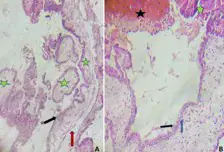
A recent study conducted at the Sourô Sanou University Hospital in Bobo-Dioulasso, Burkina Faso, has shed light on the significance of histopathological examination in detecting gestational abnormalities. The study, which analyzed 225 products of conception, found that the mean age of patients was 28.6 years, with the 26-30 age group being the most represented. The majority of patients, 75%, were multigravidae and 66% were multiparae.
The clinical diagnosis of the patients revealed that 53.18% had incomplete abortion, while 46.81% had complete abortion. However, upon histopathological examination, 17.33% of patients were found to have molar pregnancies, comprising 25 complete moles and 14 partial moles. This finding highlights the importance of histopathological examination in detecting gestational abnormalities that may go unrecognized during clinical and ultrasound evaluation.
The study, which was conducted from January 1, 2023, to December 31, 2025, aimed to describe the epidemiological and clinicopathological characteristics of products of conception received at the hospital. The study used descriptive methods and correlation coefficients to analyze the data, with significance set at p 0.05. The results of the study have significant implications for the management of patients with gestational abnormalities.
Abortions are a leading cause of maternal morbidity and mortality in sub-Saharan Africa. In Burkina Faso, the issue of abortion is a significant public health concern. According to the World Health Organization, unsafe abortions are a major cause of maternal mortality in the country. The study's findings emphasize the need for systematic histopathological examination of products of conception to detect gestational abnormalities.
The study's results also highlight the need for healthcare providers to be aware of the possibility of molar pregnancies in patients presenting with abortion. Early detection and management of these conditions can significantly reduce the risk of complications and improve patient outcomes. The study's findings have significant implications for the training of healthcare providers and the development of guidelines for the management of patients with gestational abnormalities.
The study was published in the Journal of Health Sciences and Diseases, a peer-reviewed journal that focuses on health sciences and diseases. The study's authors emphasize the need for further research on the topic to better understand the epidemiology of gestational abnormalities in Burkina Faso. The study's findings contribute to the growing body of evidence on the importance of histopathological examination in detecting gestational abnormalities.
The study's findings have significant implications for public health policy and practice in Burkina Faso. The results of the study highlight the need for policymakers and healthcare providers to prioritize the management of patients with gestational abnormalities. The study's authors emphasize the need for increased awareness and education on the importance of histopathological examination in detecting gestational abnormalities.
Key points
- 17.33% of patients had molar pregnancies, highlighting the importance of histopathological examination.
- The study found that 75% of patients were multigravidae and 66% were multiparae.
- The study emphasizes the need for systematic histopathological examination of products of conception to detect gestational abnormalities.