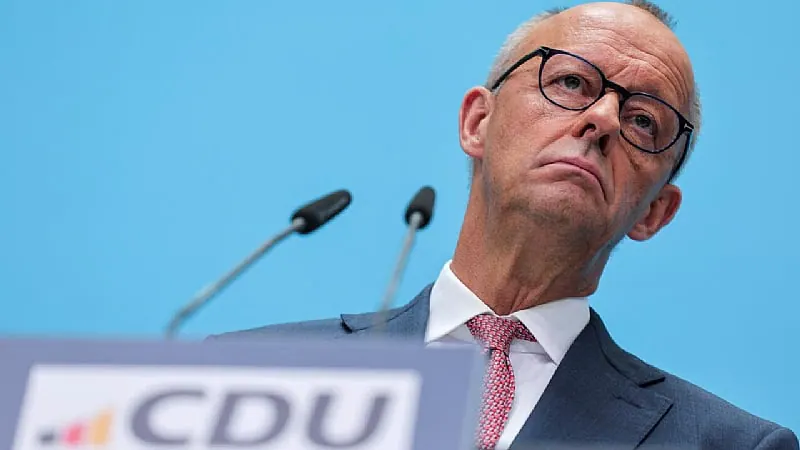
Germany's Chancellor Friedrich Merz has pledged to maintain his ruling coalition following significant losses in two recent regional elections. The centre-right CDU, led by Merz, suffered heavy losses in Sunday's votes, sparking speculation about his future. Merz emphasized the importance of the coalition between his CDU and the centre-left SPD, stating it is crucial for Germany's "democratic future." He acknowledged the challenges ahead, saying the coalition must address the country's historic responsibilities.
The far-right Alternative for Germany (AfD) achieved a significant victory in the northeastern state of Mecklenburg-Western Pomerania, securing first place. The CDU, however, experienced its worst election result since its founding in 1945, failing to secure a seat in the local parliament. Merz described the outcome as a "heavy blow" and a "profound turning point" for the CDU in Germany. This result has raised concerns about the party's future and Merz's leadership.
In the city-state of Berlin, the CDU was pushed into second place by the hard-left Die Linke party, while the AfD also made notable gains. Despite these setbacks, Merz reiterated his commitment to remaining in office and pushing through essential economic and social welfare reforms. He acknowledged the need to address people's worries and fears, emphasizing the importance of providing answers to their concerns.
The SPD also expressed its commitment to remaining in the coalition, despite the CDU's significant losses. However, the SPD hinted that it would push for changes to planned reforms. Merz attributed the election defeats to a broader transformation of the political party system in Germany and worldwide, rather than his own popularity ratings. He stated that the reasons for these results extend far beyond his person.
Merz's leadership has faced criticism following the election defeats, with some calling for his resignation. Nevertheless, he has maintained that he will continue to lead the coalition and work towards implementing crucial reforms. The Chancellor's ability to navigate these challenges and restore public confidence will be closely watched in the coming months.
The recent election results have significant implications for Germany's political landscape. The rise of the far-right AfD and the hard-left Die Linke party reflects a shift in the country's political dynamics. Merz's commitment to the coalition and his determination to push through reforms will be crucial in addressing these changes and ensuring stability in Germany.
As Germany navigates this complex political environment, Merz's leadership and the coalition's ability to work together will be essential. The coming months will be critical in determining the future of the CDU, the coalition, and Germany's democratic landscape. Merz's pledge to prioritize the country's democratic future underscores the importance of stability and cooperation in the face of significant challenges.
Key points
- Germany's Chancellor Friedrich Merz vows to maintain the ruling coalition despite significant losses in regional elections.
- The far-right Alternative for Germany (AfD) achieved significant gains in the northeastern state of Mecklenburg-Western Pomerania.
- Merz attributes the election defeats to a broader transformation of the political party system in Germany and worldwide.