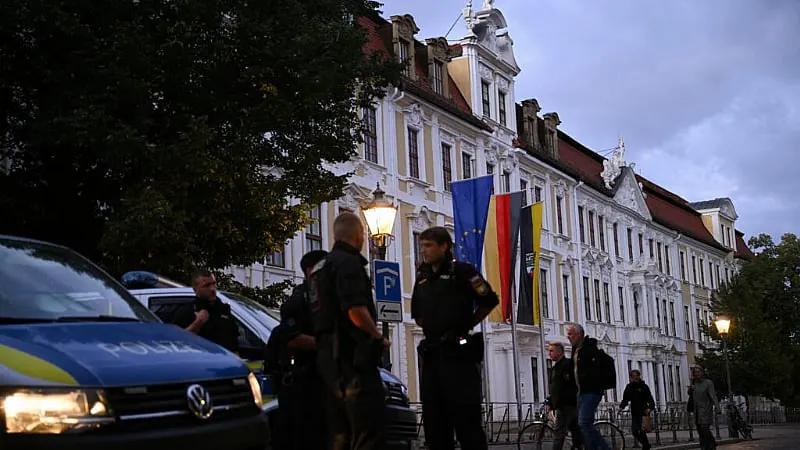
The Alternative for Democracy (AfD) party achieved a significant election win in Saxony-Anhalt, a small eastern German state, on September 6, 2026, securing 44% of the votes. This victory has raised concerns among German officials and EU allies about the party's potential access to sensitive intelligence gathered by domestic and external threat tracking agencies. The AfD's Moscow-friendly stance and alleged ties to Russia have fueled these concerns.
Germany's domestic intelligence service, the Federal Office for the Protection of the Constitution (BfV), has designated the AfD as a right-wing "extremist group" and has been monitoring the party. The BfV's latest annual report, published in June, noted a significant increase in right-wing extremists, with 58,700 individuals recorded last year. The party's Saxony-Anhalt chapter has a "confirmed extremist" label, meaning it is under surveillance by federal intelligence, including undercover agents.
If the AfD forms a coalition government in Saxony-Anhalt, it may gain access to intelligence gathered by agencies tracking domestic and external threats. This has sparked fears that the party could use routine intelligence sharing to identify undercover agents monitoring it. According to Jacob Ross, a Senior Research Fellow at the German Council on Foreign Relations, the AfD could potentially use its access to intelligence to scupper efforts to monitor it.
A greater concern for Germany and its allies is the possibility that sensitive information regarding German, European, and NATO security arrangements might end up in Russian hands. The AfD has repeatedly sparked alarm in Berlin by requesting information on vulnerabilities in German and NATO defenses that would be of interest to Russia. Defence Minister Boris Pistorius has opposed sharing classified information with AfD officials, citing their "close ties to (Russian President Vladimir) Putin."
Experts have noted that the AfD has extensive links with Russia, built over many years. Anton Shekhovtsov, director of the Austria-based Centre for Democratic Integrity, argued that the AfD is now the largest and strongest pro-Russian party in the European Union. This has raised concerns about the potential for sensitive information to be leaked to Moscow.
To address these concerns, the German federal government has drafted plans to block an AfD-led state government from reviewing sensitive intelligence. Measures include denying AfD officials access to a secret war plan drafted in 2024 and withholding intelligence concerning Russian subterfuge and investigations into far-right extremists. These steps aim to prevent sensitive information from being compromised.
There are precedents for European countries restricting access to intelligence when dealing with far-right parties seen as cozying up to Russia. For example, Austria's far-right Freedom Party was granted access to the interior ministry portfolio in 2017, leading some European partners to limit intelligence sharing. Similar concerns have been raised about the AfD's potential access to sensitive intelligence.
Key points
- The AfD's potential access to sensitive intelligence has raised concerns among German officials and EU allies about national security and the potential for information to be leaked to Russia.
- The party's alleged ties to Russia and Moscow-friendly stance have fueled concerns about its potential impact on Germany's relationships with EU allies.
- The German federal government has drafted plans to block an AfD-led state government from reviewing sensitive intelligence, including denying access to a secret war plan and withholding intelligence on Russian subterfuge.