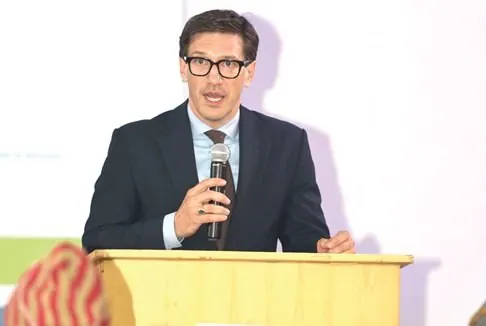
German Ambassador Frederik Landscoft announced that Berlin is transitioning from traditional aid to a strategic partnership with Ghana, focusing on business investment, security cooperation, and labour migration. This shift is driven by Ghana's stability, English-speaking workforce, and improving macroeconomic indicators, making it an attractive destination for German investors. Landscoft highlighted growing interest from German businesses, deepening security collaboration, and new initiatives for skilled Ghanaian labour to migrate to Germany.
Landscoft cited Ghana's democratic stability, longstanding bilateral ties with Germany, and favourable macroeconomic indicators as factors drawing German capital. He also noted that shifting conditions in Germany's traditional markets are pushing companies to diversify into Africa, with Ghana emerging as a preferred destination. North Shore Apparel, a German-linked venture in Tamale, exemplifies this shift, creating 2,300 jobs with potential expansion to 10,000-20,000 jobs.
Germany is strengthening security cooperation with Ghana, partly due to concerns over Sahel region instability and the risk of militant threats spilling into the Gulf of Guinea. While details on the security cooperation are scarce, Landscoft emphasized its importance. This development is part of a broader reset in Ghana's foreign partnerships, with President John Mahama recently defending his government's rejection of a proposed US Health Compact.
The proposed strategic partnership could bring new manufacturing jobs to Ghanaians, similar to those created by North Shore Apparel, as well as formal channels for skilled workers to migrate to Germany. However, Landscoft's remarks did not specify timelines, targeted sectors, visa quotas, or potential job numbers for the migration initiative. Ghanaians may benefit from these developments, but details remain scarce.
The Ghanaian government is recalibrating its engagement with traditional donor countries, as evident from the proposed US Health Compact and Germany's pivot toward a business-and-migration-focused relationship. While no explicit link exists between these developments, they suggest a shift in Ghana's foreign partnerships. Further details on the labour migration scheme and security agreements are pending.
No dates have been set for finalizing the labour migration scheme or further security agreements. The Ghanaian Times report does not indicate whether a formal bilateral agreement is being drafted or when additional details might be announced. As the situation develops, Ghanaians and international observers will be watching for concrete outcomes from the proposed strategic partnership.
The implications of Germany's strategic partnership with Ghana are multifaceted. If successful, the partnership could drive economic growth, create jobs, and enhance security cooperation between the two nations. However, challenges and uncertainties remain, particularly regarding the specifics of the labour migration scheme and security agreements. As Germany and Ghana move forward, their partnership will likely have far-reaching consequences for both countries and the broader region.
Key points
- Germany is shifting its focus from traditional aid to a strategic partnership with Ghana, emphasizing business investment, security cooperation, and labour migration.