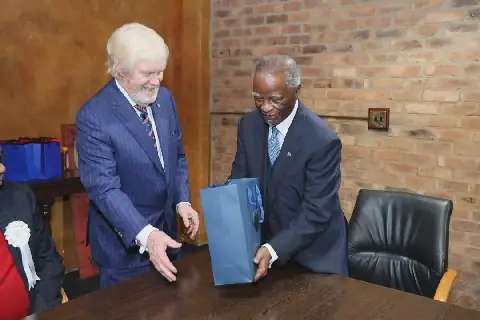
German Ambassador to Togo Stefan Anton Messerer has called for the development of a dual vocational training model that is adapted to Togo's economic realities and business needs. This was during the opening of a regional meeting on technical and vocational education and training (EFTP) in dual mode in the digital era. The meeting, which took place in Lomé, brought together participants from several West African countries.
The German cooperation has been supporting the development of vocational training in Togo for several decades, particularly through programs implemented by the German Development Institute (GIZ). This collaboration has enabled over 1,000 young people to be trained and certified in various trades such as carpentry, automobile and motorcycle mechanics, sewing, and electricity. Ambassador Messerer emphasized that the dual model of vocational training should be adapted to the local context.
According to Ambassador Messerer, the dual model of vocational training cannot be imported as is, but rather adapted to the local context. He stressed that the rapidly changing job market requires workers with new skills, particularly in the context of digital transformation and artificial intelligence. The German ambassador encouraged Togo to continue its efforts to strengthen vocational training by increasing the involvement of the private sector.
The regional meeting on EFTP in dual mode brought together about fifty participants from Burkina Faso, Côte d'Ivoire, Mauritania, Niger, Nigeria, and Togo. The participants discussed issues such as the involvement of the private sector in vocational training, the professional insertion of graduates, and the digital transformation of training. The meeting aimed to share experiences and best practices in implementing dual vocational training models.
Germany's support for Togo's vocational training sector is part of a broader effort to promote economic development in West Africa. By strengthening vocational training, Togo and other countries in the region can equip young people with the skills needed to access the job market. The German cooperation has already achieved significant results in Togo, with over 1,000 young people trained and certified in various trades.
The involvement of the private sector is crucial in the development of vocational training programs, according to Ambassador Messerer. He emphasized that the private sector has a key role to play in identifying the skills needed in the job market and providing training that meets those needs. By working together, the government, private sector, and development partners can help Togo address its skills gap.
The regional meeting on EFTP in dual mode concluded with a call to action for countries to prioritize vocational training and work together to address common challenges. The participants agreed to share best practices and experiences in implementing dual vocational training models and to explore opportunities for collaboration and partnership.
Key points
- Germany advocates for a dual vocational training model tailored to Togo's economic realities and business needs.
- The German cooperation has trained and certified over 1,000 young people in Togo in various trades.
- The private sector has a key role to play in identifying the skills needed in the job market and providing training that meets those needs.