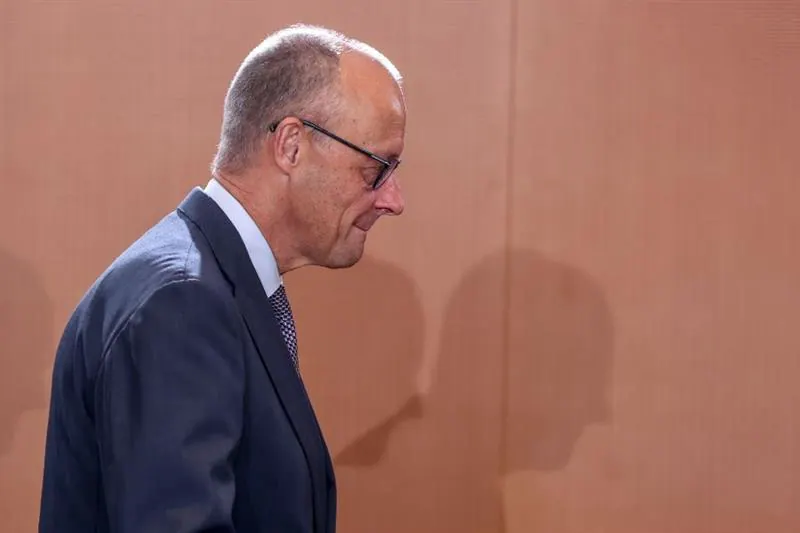
Germans began voting on Sunday, September 20, 2026, in two state elections that could have significant implications for Chancellor Friedrich Merz's government. The elections in Berlin and Mecklenburg-Western Pomerania come at a time when Merz's approval ratings are at an all-time low, and his party, the centre-right CDU, is facing challenges from both the far-right Alternative for Germany (AfD) and the far-left Die Linke. Merz has cleared his calendar for the next few days to deal with the potential fallout from the elections.
The AfD has been gaining ground in recent weeks, and polls suggest that it could make further gains in Sunday's elections. However, it is unlikely to come close to winning power in either state. In Mecklenburg-Western Pomerania, the AfD is polling at 36 percent, while the centre-left SPD is at 37 percent. The CDU, led by Merz, is polling at just 6 percent, and could potentially miss the 5 percent hurdle needed to stay in the state parliament.
In Berlin, the CDU is facing a neck-and-neck race against Die Linke, which has promised to tackle the city's dire housing crisis. Die Linke is popular with young people and has vowed to curb corporate power and lean towards Moscow. A CDU defeat in Berlin would be another blow to Merz, who has struggled to push through promised economic and social welfare reforms with his coalition partners.
Merz has received some support from CDU powerbrokers, with eight state premiers declaring that Germany needs stability now more than ever. However, they refrained from issuing a personal endorsement for Merz. The chancellor's approval ratings have nose-dived in recent months, and he has faced criticism for his occasionally blunt and abrasive comments.
The elections come at a time of significant challenges for Germany, including the ongoing cost-of-living crisis and worries about Russia. The Ukraine and Middle East wars have sent energy prices surging, and Germany is in the midst of a massive rearmament drive. Chancellor Merz has vowed to reboot the economy, rebuild the military, and reduce irregular immigration.
Some commentators have pointed out that many of Merz's problems have originated abroad. The surge in petrol prices and the public debate about his future are exacerbating his travails. However, Berenberg bank chief economist Holger Schmieding believes that Merz is likely to weather the current political storm and serve out his term until 2029.
The outcome of the elections will be closely watched, both in Germany and abroad. A poor result for the CDU could lead to further speculation about Merz's leadership and potentially even trigger a crisis within the party. As the polls close, attention will turn to the results and their implications for the future of German politics.
Key points
- The far-right Alternative for Germany (AfD) is gaining ground in the polls.
- Chancellor Friedrich Merz's approval ratings are at an all-time low.
- The elections could have significant implications for Merz's government and the future of German politics.