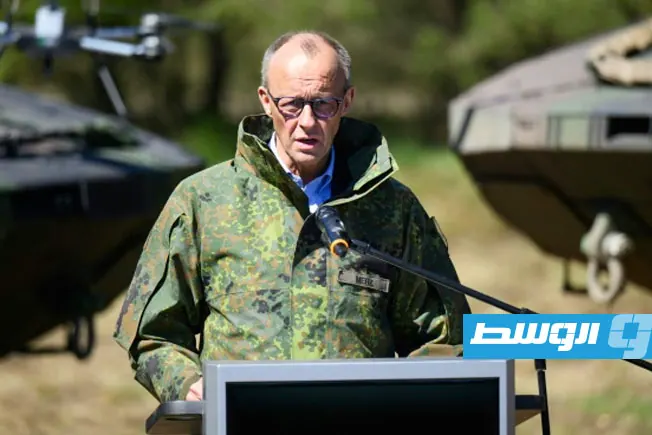
German Chancellor Friedrich Merz has acknowledged a significant defeat for his Christian Democratic Union (CDU) party in recent local elections. The party suffered a substantial loss in the eastern state of Mecklenburg-Vorpommern, with the far-right Alternative for Germany (AfD) party securing the highest percentage of votes. Merz attributed the loss to a 'disaster' for his party, while vowing to continue with planned reforms.
The local elections in Mecklenburg-Vorpommern saw the AfD party garner around 38% of the vote, surpassing the Social Democrats, who secured approximately 36%. This significant shift in voter support has raised concerns about the growing popularity of far-right and left-wing parties in Germany. Merz's CDU party secured around 5% of the vote in the state, a substantial decline from previous elections.
In the capital city of Berlin, the left-wing Die Linke party emerged as the leading force, with its candidate Elif Errol securing around 25% of the vote. The CDU party trailed behind, securing 20% of the vote. The outcome of the Berlin elections may lead to a change in the city's leadership, with Die Linke potentially forming a coalition with other left-wing parties.
Merz has faced intense scrutiny over his leadership and the CDU's declining popularity. Despite this, he has pledged to continue with his agenda, emphasizing the need for reforms to address the country's challenges. The Chancellor's commitment to his role comes amid speculation about his potential departure, which he has now seemingly ruled out.
The rise of far-right and left-wing parties in Germany has been attributed to growing concerns about immigration, economic stability, and social issues. The AfD party's success in the local elections has been seen as a significant threat to the traditional centrist parties, including the CDU and Social Democrats.
The outcome of the local elections has sparked concerns about the potential for increased polarization in German politics. The CDU and other centrist parties may need to reassess their strategies to address the growing appeal of far-right and left-wing parties. Merz's leadership and the CDU's future direction will likely be subject to intense debate in the coming weeks.
As the German government navigates this complex and changing political landscape, Chancellor Merz has emphasized his commitment to pushing forward with reforms. The CDU's performance in future elections will be closely watched, as will the ongoing developments within the German political scene.
Key points
- German Chancellor Friedrich Merz concedes a significant defeat for his CDU party in local elections.
- The far-right AfD party secured a significant share of the vote in Mecklenburg-Vorpommern.
- The CDU party faces challenges in addressing the growing popularity of far-right and left-wing parties.