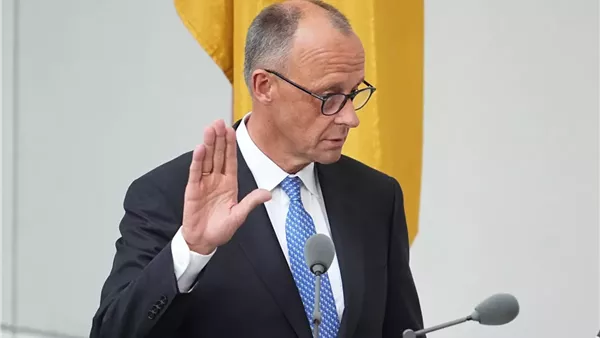
German Chancellor Friedrich Merz held a press conference on Sunday, September 20, 2026, where he acknowledged that his party, the Christian Democratic Union (CDU), had suffered a significant loss in local elections. The CDU, a center-right party, failed to clear the 5% threshold required to enter the state parliament in Mecklenburg-Vorpommern. Merz took full responsibility for the loss and pledged to continue with the announced reforms.
According to initial polls, the far-right Alternative for Germany (AfD) party won approximately 38% of the vote in Mecklenburg-Vorpommern, while the CDU garnered just over 5%. The AfD's victory was seen as a significant upset, with the party expected to dominate the local elections. Merz stated that he would continue to push for reforms, saying, "Reforms will continue. I take full responsibility because I want to drive our country forward."
The local elections in Mecklenburg-Vorpommern were seen as a significant test for the CDU, which has been struggling to regain popularity. The party's loss was attributed to various factors, including its stance on key issues and the rise of the AfD. The AfD's success has been linked to its anti-immigration and nationalist platform, which has resonated with some voters.
In another development, the far-left party appeared to win the most votes in the Berlin state election, which took place on the same day. However, the party will likely need coalition partners to form a government and appoint a mayor. If confirmed, this would mark the first time since German reunification in 1990 that a left-wing party has held power in the capital.
The CDU's loss in Mecklenburg-Vorpommern has raised concerns about the party's future prospects. The party has been struggling to regain its footing since its poor performance in recent federal elections. Merz's leadership and the party's policies have been subject to scrutiny, with some critics calling for a change in direction.
The AfD's success has also sparked concerns about the rise of far-right sentiment in Germany. The party's victory in Mecklenburg-Vorpommern has been seen as a worrying trend, with some warning that it could embolden other far-right parties across Europe. The German government has faced criticism for its handling of the far-right movement, with some accusing it of being too soft on extremist groups.
The local election results have significant implications for German politics, with the CDU and other parties facing challenges to regain voter trust. The AfD's success has highlighted the need for mainstream parties to address voter concerns and develop policies that resonate with a wider audience. As the German government looks to the future, it will need to navigate the complexities of a shifting political landscape.
Key points
- The far-right Alternative for Germany party won approximately 38% of the vote in Mecklenburg-Vorpommern.