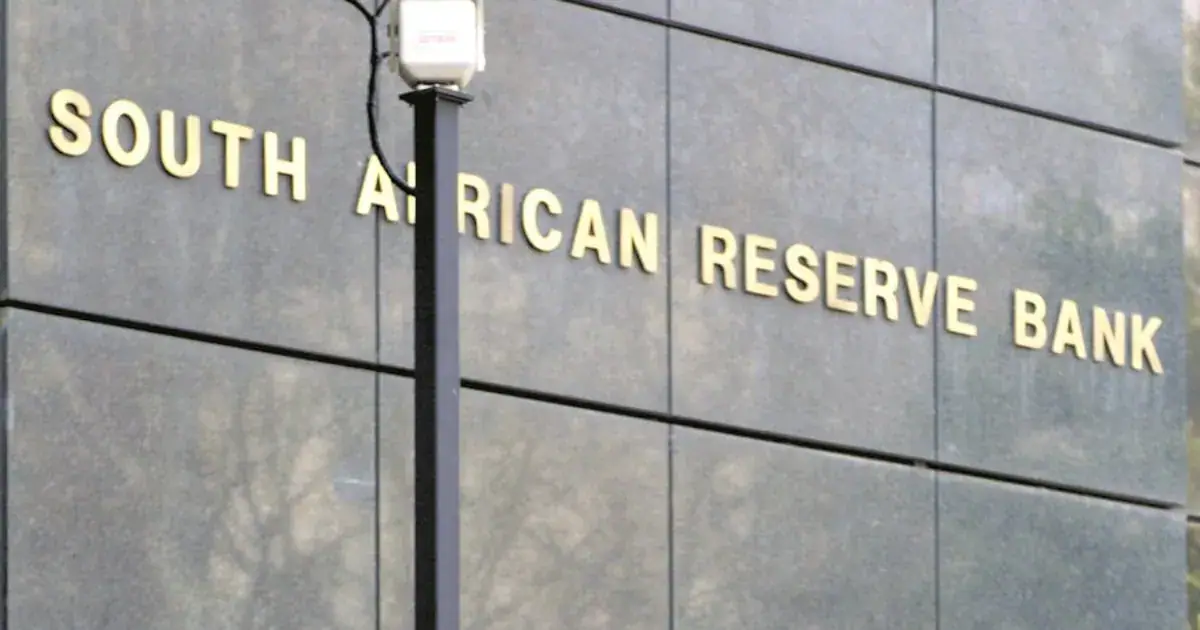
The South African Reserve Bank (Sarb) has warned that geopolitical conflicts and policy uncertainty continue to pose significant risks to the country's domestic financial system. According to its latest financial stability review, low economic growth, high inequality, and structural concentration in the economy and financial system remain persistent vulnerabilities. These factors could potentially undermine the stability of the financial system.
Despite these challenges, the Sarb noted that the South African financial system remains resilient, with financial institutions being well-capitalized and liquid. The bank publishes its financial stability review twice a year and has observed that the financial system has demonstrated its ability to absorb shocks. However, it also identified potential risks associated with advances in artificial intelligence (AI), including an asset valuation channel and an operational channel.
The Sarb highlighted that rapid advances in AI offer substantial productivity gains but also introduce significant risks. More capable AI models can support increasingly sophisticated cyberattacks, as seen in several incidents this year. Financial risks arise from increased market concentration, elevated valuations in AI-linked sectors, and the growing financing needs associated with large-scale AI investment.
The bank warned that a reassessment of expectations regarding AI adoption, profitability, or future cash flows could trigger abrupt adjustments in global asset prices and credit conditions, with spillovers to South African markets and institutions. This could have far-reaching consequences for the country's financial stability.
The International Monetary Fund (IMF) has also weighed in on South Africa's financial stability, applauding the country's supervisory authorities for prudently managing financial sector risks. According to the IMF, systemic risks to financial stability remain manageable, and the banking system is sound, profitable, liquid, and well-capitalized.
The IMF noted that financial stability is supported by a strengthened resolution framework, the establishment of a deposit insurance scheme, and the increase in banks' countercyclical capital buffer and the ongoing issuance of new loss-absorbing instruments. The fund also suggested that payment system reforms and measures to improve small firms' access to credit could help broaden the financial sector's contribution to inclusive growth.
The Sarb's financial stability review and the IMF's statement highlight the ongoing efforts to maintain financial stability in South Africa. While there are potential risks and vulnerabilities, the country's financial system appears to be resilient, and authorities are taking steps to mitigate potential risks and promote inclusive growth.
Key points
- The South African Reserve Bank has identified potential risks associated with advances in artificial intelligence, including an asset valuation channel and an operational channel.
- The International Monetary Fund has applauded South Africa's supervisory authorities for prudently managing financial sector risks.
- The country's financial system remains resilient, with financial institutions being well-capitalized and liquid.
Reporting sources
- Geopolitical uncertainty poses risks to domestic financial system, Sarb says · The Rand Daily Mail